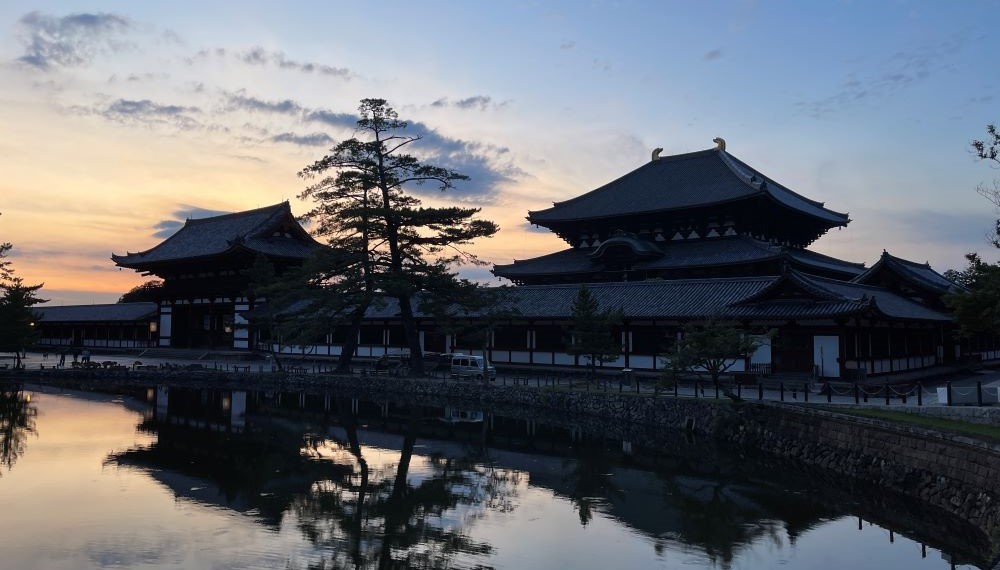
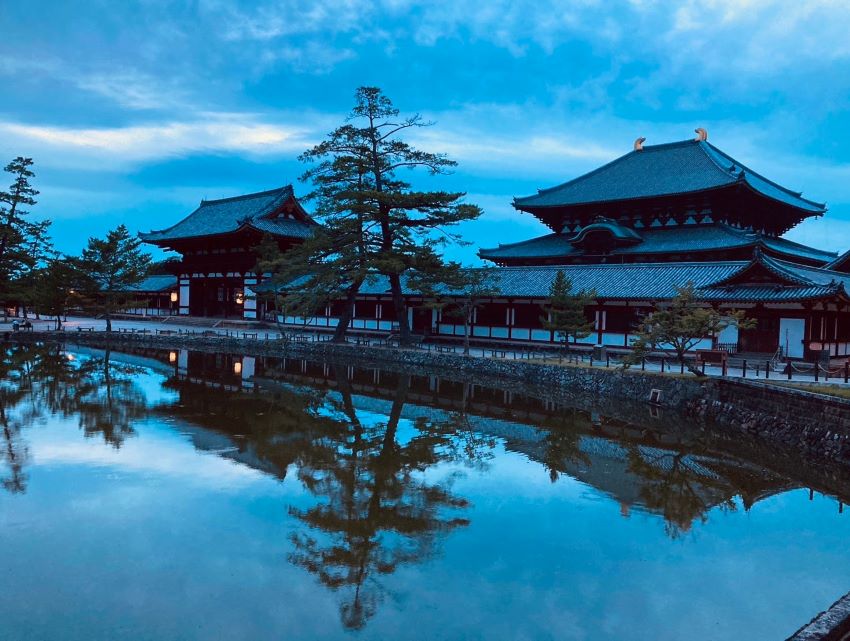
The Great Buddha Hall of Todaiji Temple closes at 17:00. The temple, which was bustling with activity during the day, comes to life with a sense of tranquility. There are many nighttime attractions at Todaiji. One of them is the huge temple bell, a national treasure dating back to the Nara period (710-794). Every night at 20:00, the city of Nara is filled with the sound of ancient times.
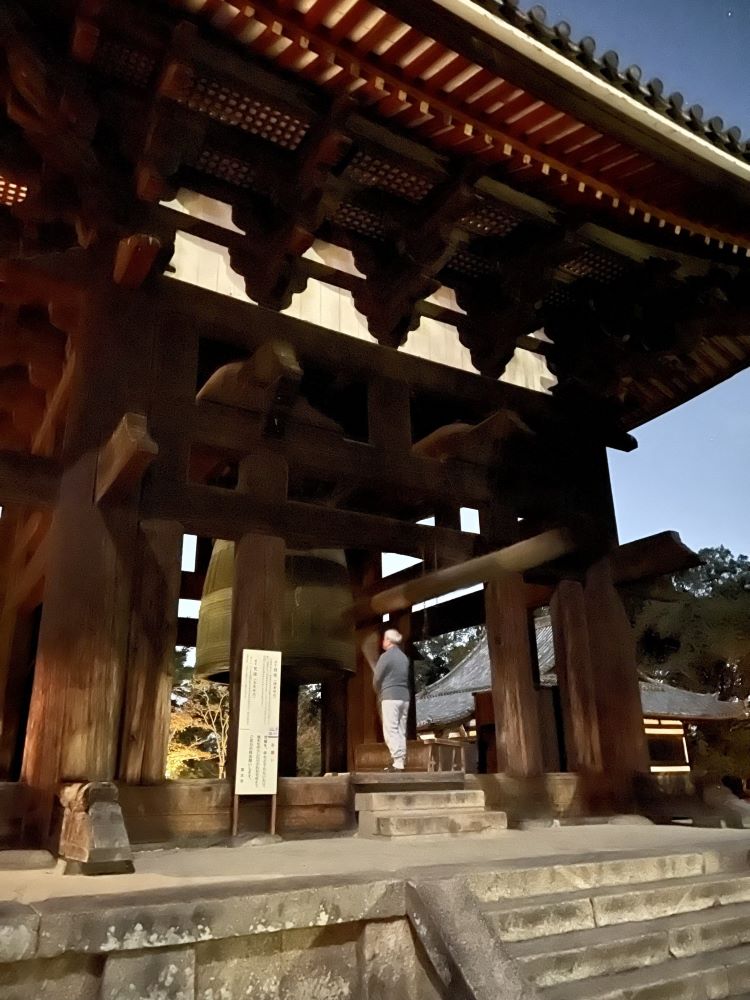
A national treasure, the temple bell has been in use for 1,300 years since the Nara period
Climbing the hill leading from the Daibutsuden to Nigatsudo, you will find the oldest working bell in an area called Shorogaoka. This bell rings every night at 20:00. If you ask the temple keeper, you can stand directly under the bell and feel the sound with your whole body. Be aware, however, that flashes and lights are prohibited so as not to disturb the striking of the bells.
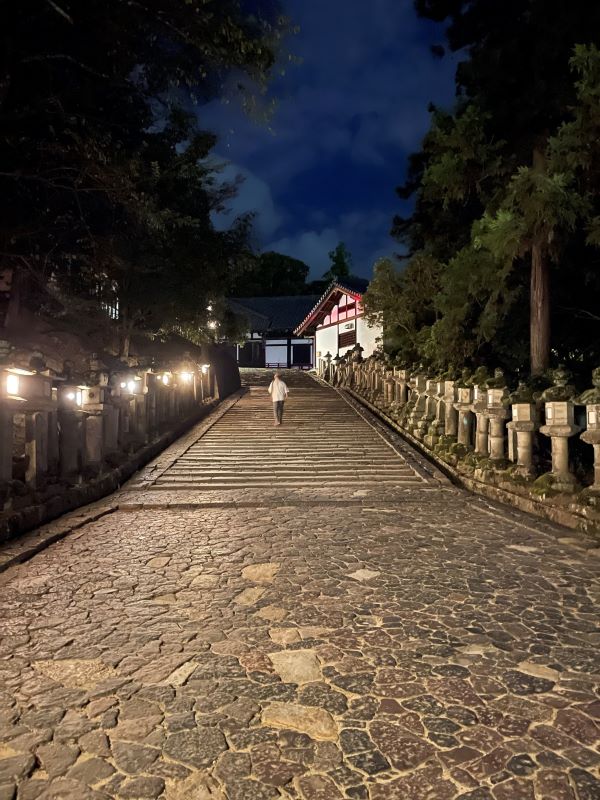
Only a few bells designated as national treasures are still in use.
There are 14 national treasure temple bells in Japan. Most of them are kept in museums and storage facilities, and fewer are used as temple bells in active use. There are only three locations in Japan, and in western Japan, the bell can only be seen here at Todaiji Temple.
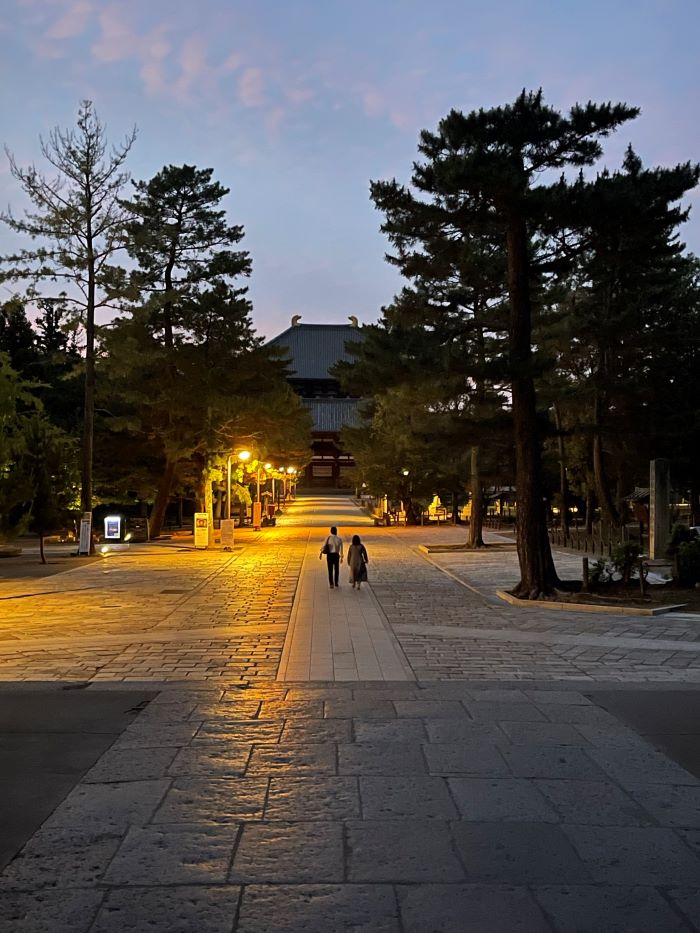
The temple bell rings 18 times at 20:00 every night. Of these, the bell is struck twice before and after each strike, so the actual number of times the bell is struck is 14. The exact origin of these 14 strikes is not known, but I have discussed it in my column, so please read it if you like.
The temple bell of Todaiji Temple, which has continued for 1,300 years, is a precious existence that tells us about the history of Japan itself.
A family that preserves the tradition of striking the bell at night
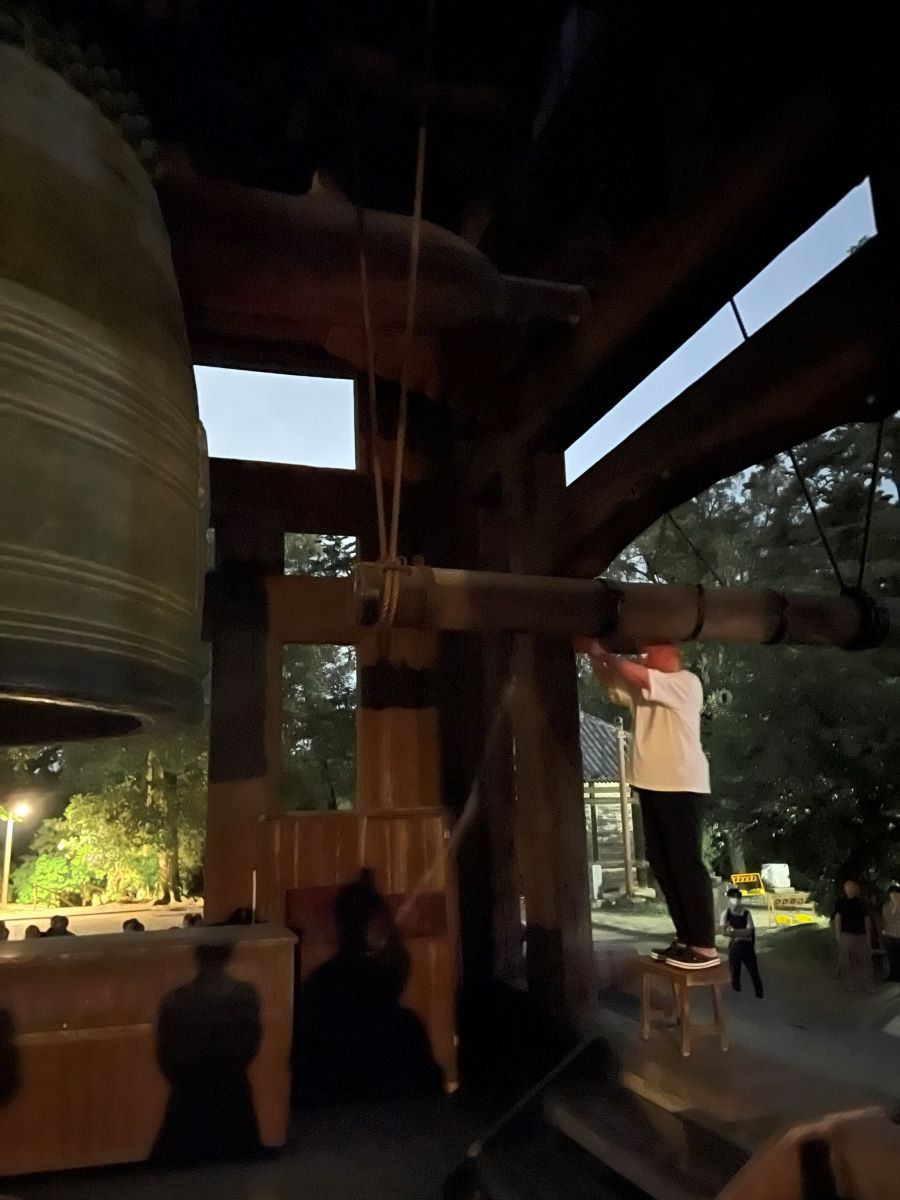
The person in charge of striking the bell at 8:00 p.m. each night is the temple staff member who manages the temple buildings. They are generally called “Odoumori-san. The temple bell-keeper in charge of the Todaiji bell is specially called “Oganeya. The current Oganeya has been in the family for six generations since the early Meiji period, and the tradition has been passed down through the generations. Every night at a fixed time, the “Oganeya” appears from the direction of Nigatsudo, carrying a cue cord on his shoulder.
The temple bell weighs 26 tons, and the crescents alone weigh 200 kilograms.
The erected belfry from which the large bell is suspended is also designated as a National Treasure. The present bell tower is a building that dates from the Kamakura period (1185-1333). This is the only place in Japan where both the bell tower and the temple bell are designated as national treasures as a valuable cultural heritage.
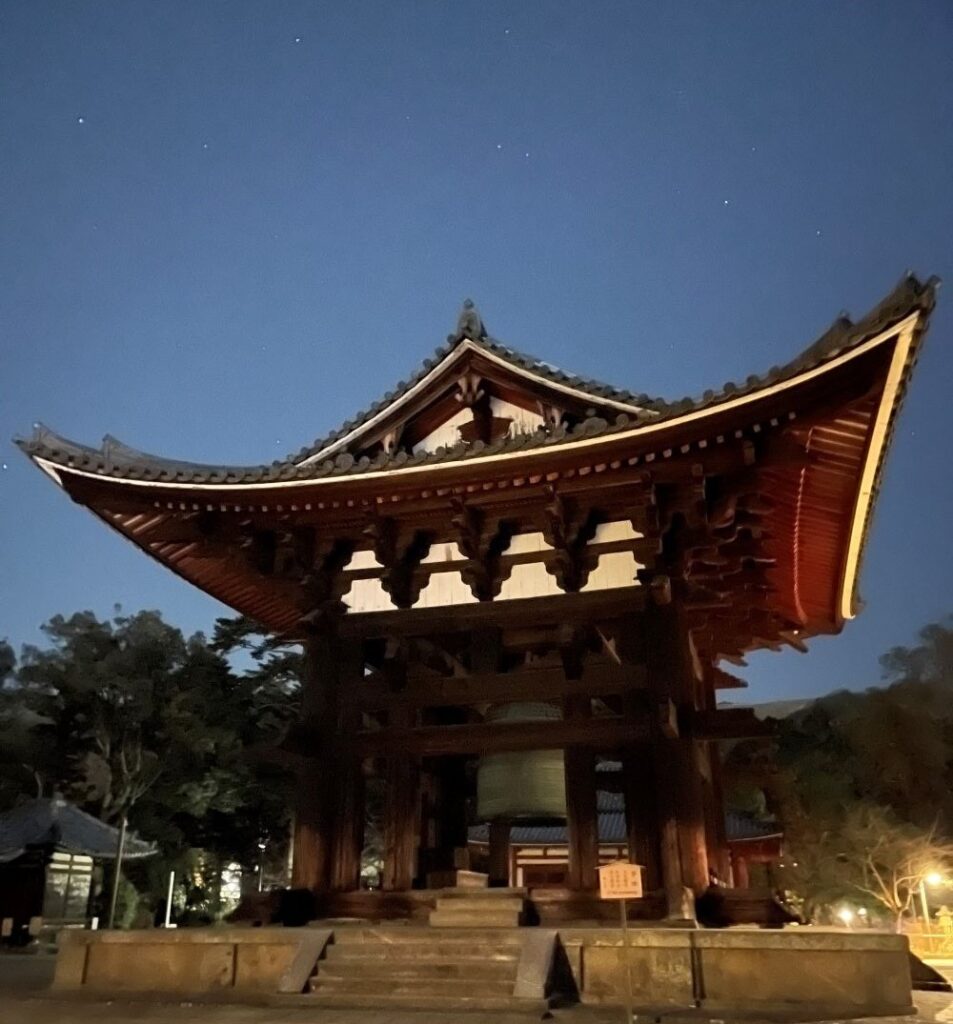
The bell tower is a large size and weighs 26 tons, which is out of the standard for ancient bells from the Nara period when bell making began in Japan. The wood used for striking the bell is said to weigh 200 kilograms. The bell was the largest in Japan for about 900 years until the bell of Houhiroji Temple, which triggered the downfall of the Toyotomi family, appeared.
Night view from Nigatsudo, a local favorite
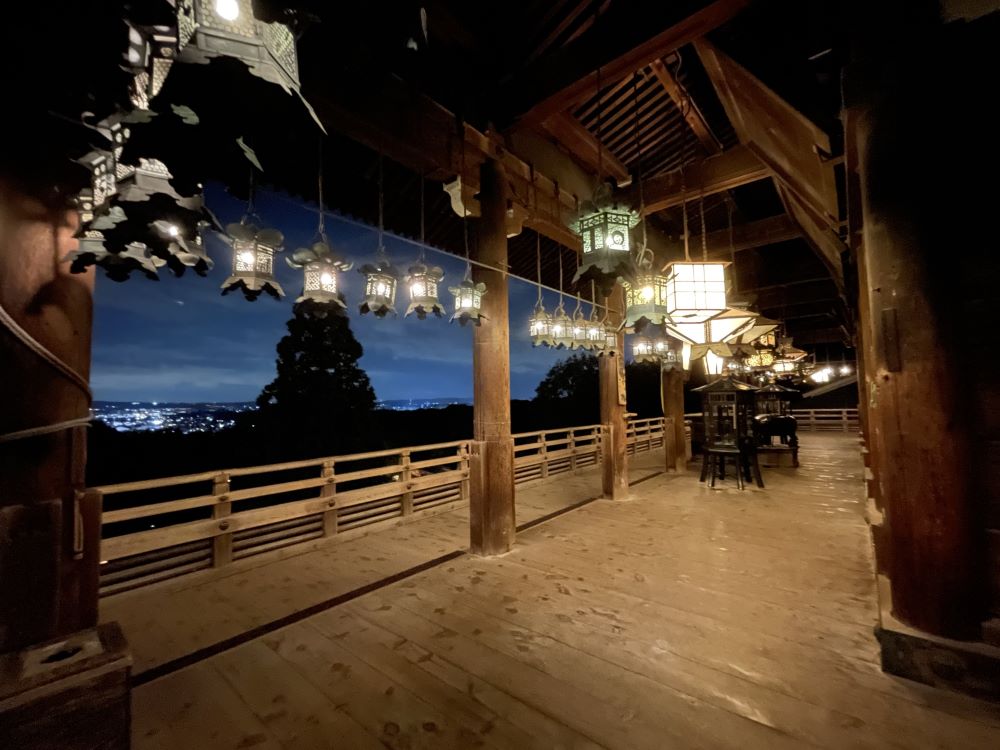
Enjoying the night view of the ancient capital is another attraction of Todaiji Temple. Nigatsudo Hall, located further up the hill from the bell tower hill, is brightly lit throughout the night and is guarded by police officers. The terrace of Nigatsudo, which commands a panoramic view of central Nara and Mt. Ikoma, is a favorite night view spot for locals.
Access
The grounds of Todaiji Temple are very vast. It takes about 15 minutes just to reach the bell tower hill from the entrance. If you go on foot from the nearest station, Kintetsu Nara Station, you will need about 30 minutes in total. It is very nice to take a walk in Nara with Kofukuji Temple and the National Museum on the side and deer relaxing.

For easier access, take a 10-minute bus ride from JR Nara Station or Kintetsu Nara Station. Buses to Todaiji Temple run frequently, and during the day you can wait about 5 minutes to get on. Both stations have bus stop information centers, so ask at either station.