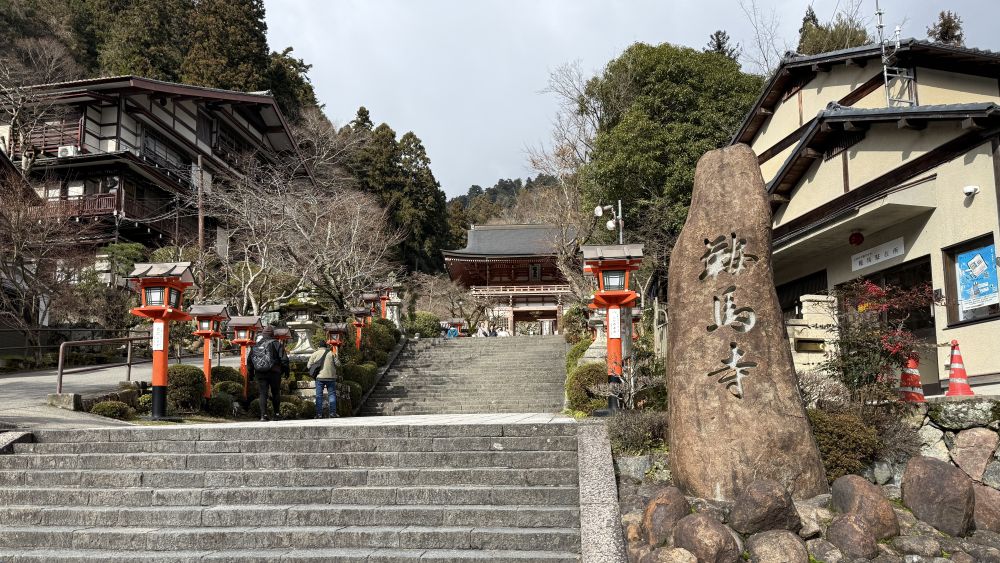
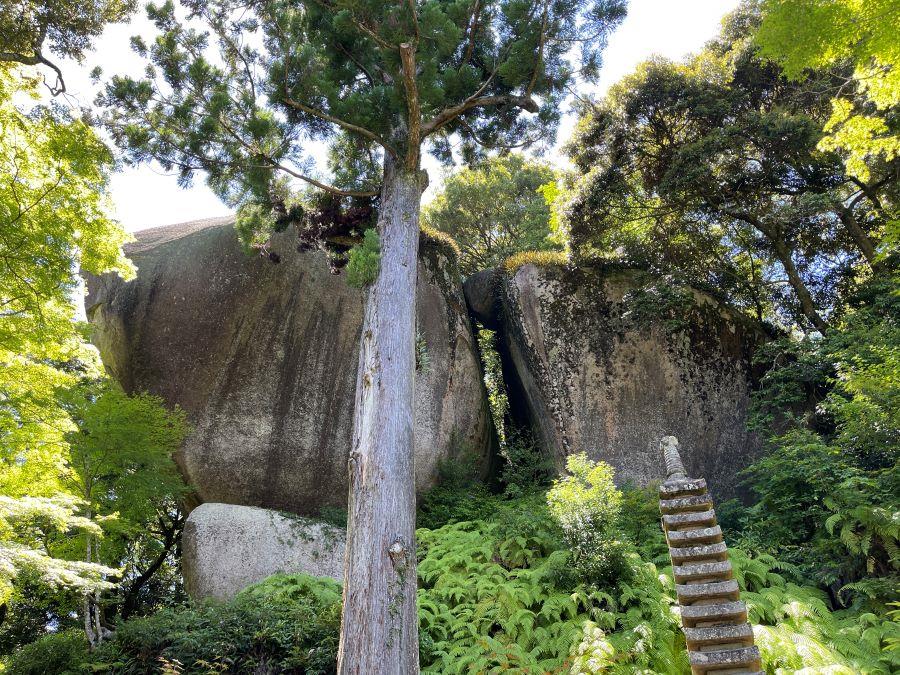
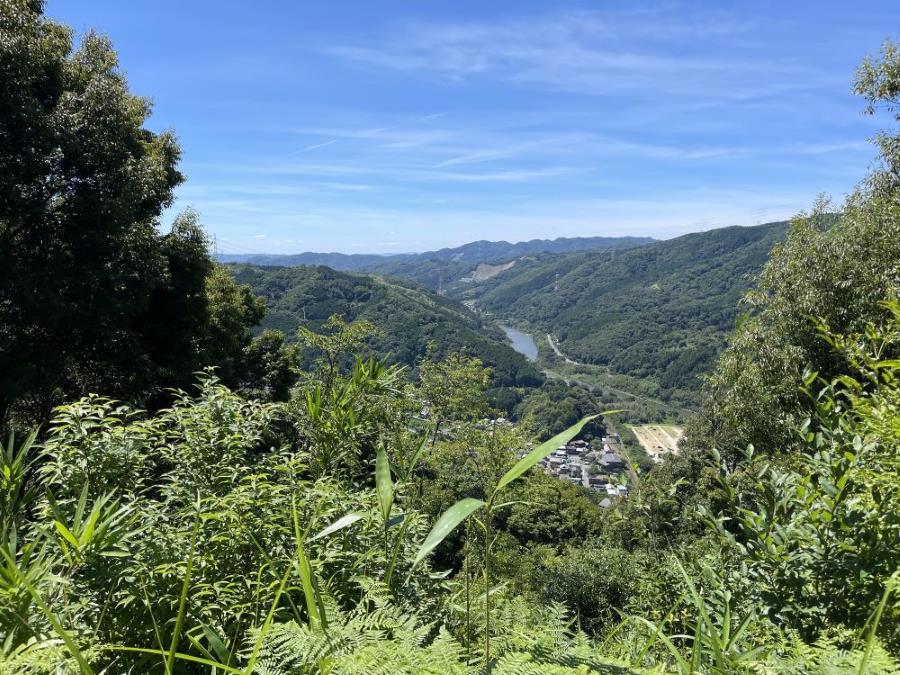
High in the misty hills of southern Kyoto lies Kasagidera Temple, a spiritual retreat with over a thousand years of history. Surrounded by castle ruins and the flowing Kizu River, Mt. Kasagi has been revered since the Yayoi period as a sacred place where nature and faith meet. Its long history is intertwined with the great temples of Nara, including Tōdaiji and Kōfukuji, which helped shape early Japanese Buddhism.
Faith Carved into Stone
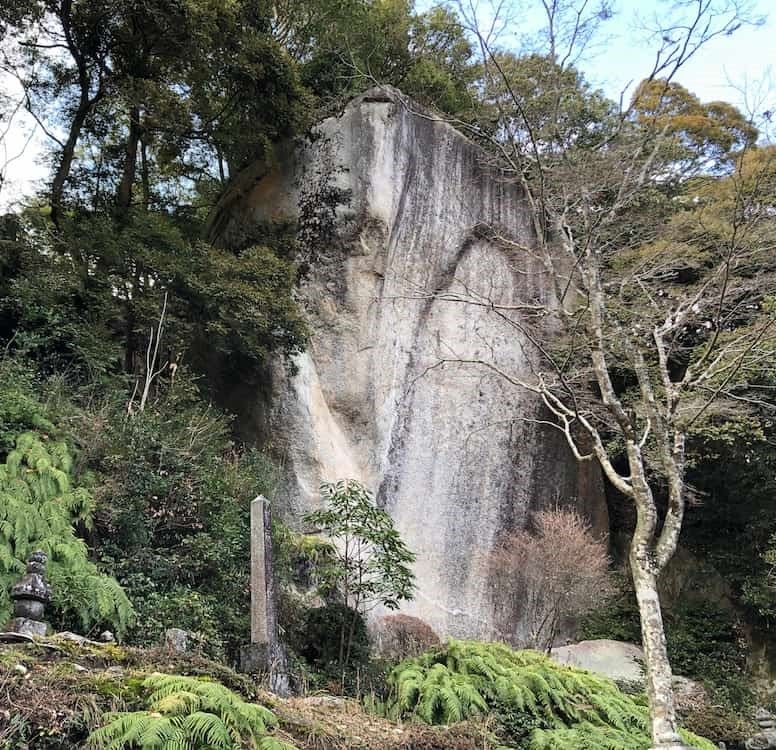
Kasagi’s earliest worship centered on massive boulders believed to embody divine spirits. Within the temple grounds remain two grand cliff carvings of Buddhist figures. The Miroku (Maitreya) Buddha, facing the January’s Hall, is said to have been created under Emperor Tenmu in the Asuka period. Though the rock surface was later damaged by fire during the battles against the Kamakura shogunate, the faint outline of the Buddha still appears on the granite — a haunting trace of ancient devotion.
Temple Bell
Story
The Emperor’s Last Fortress
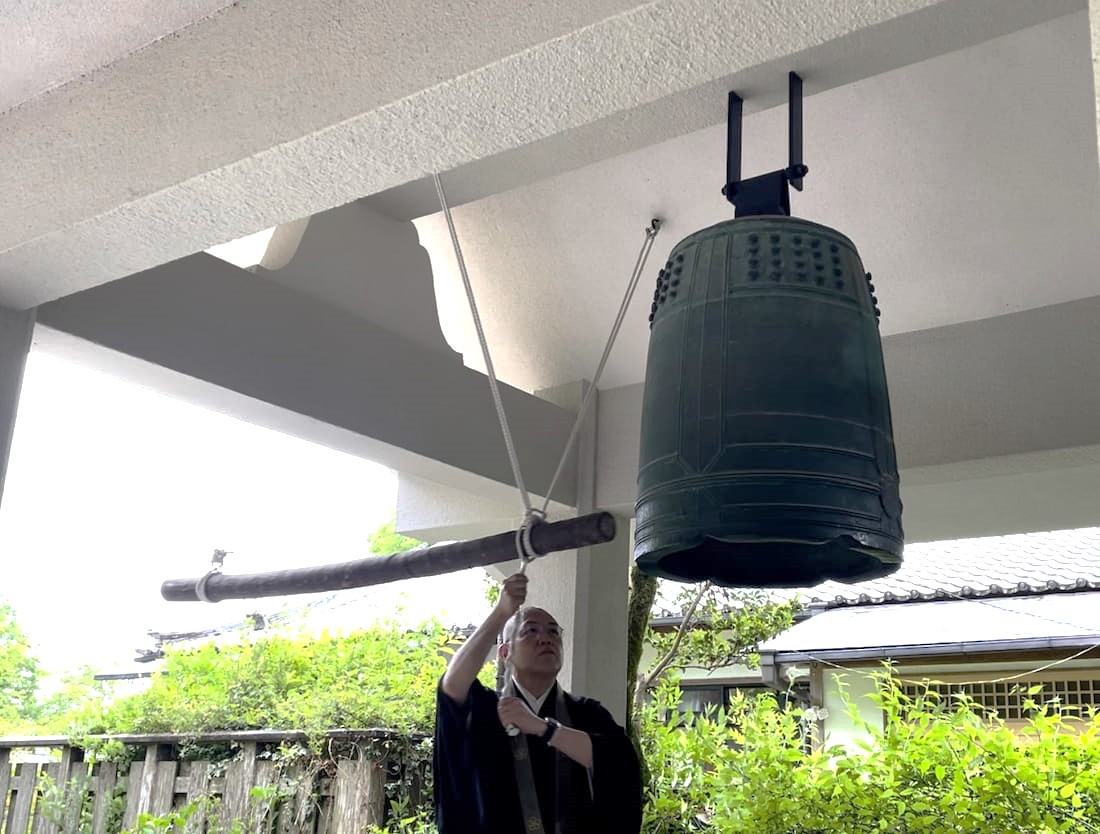
In the late Kamakura period, Emperor Go-Daigo rose against the shogunate and turned Mt. Kasagi into his mountain stronghold. After a month of fierce fighting, the imperial forces were defeated, and the temple burned to the ground. Miraculously, one relic endured the flames — the great bronze bell. Its deep tone still seems to carry echoes of that age of turmoil and faith.
The Six-Petal Lotus Bell
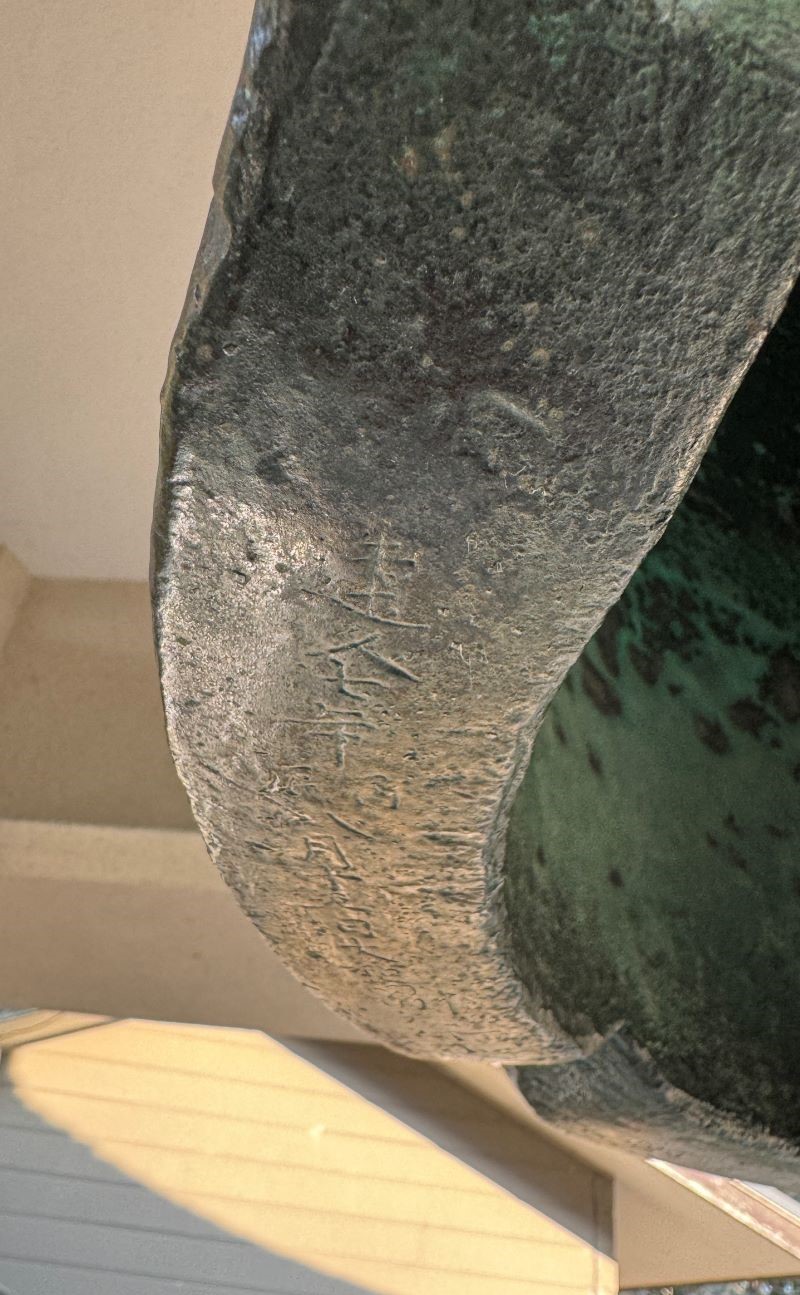
The temple’s bell, known as the Gedatsu Bell, is one of Japan’s most valued cultural treasures. It was created when Gedatsu Shōnin, a monk who had served at Kōfukuji, became abbot of Kasagidera. Its refined design, modeled after Chinese Tang-dynasty bells, is said to have been supervised by Chōgen Shōnin of Tōdaiji. The inscription on its rim records that the bell was cast in 1196 (Kenkyū 7). Decorated with six lotus petals symbolizing enlightenment, it reflects the deep spiritual bond linking Kasagidera with the great temples of Nara.
The Legend of the Hidden Gold
A centuries-old legend tells that when the bell was cast, sacred gold dust called Enbudakon was mixed into the bronze. The gift was said to have come from King Enma, ruler of the underworld, who rewarded Kaidatsu Shōnin after hearing his sermon in the afterlife. Locals still say, “Even in hell, gold has its say.”
Perhaps, when our time of judgment comes, the gentle chime of Kasagidera’s bell will bring mercy and peace.

Access
Kasagidera Temple
Kasagi-dera Temple, Kasagi-cho, Sagara-gun, Kyoto, Japan