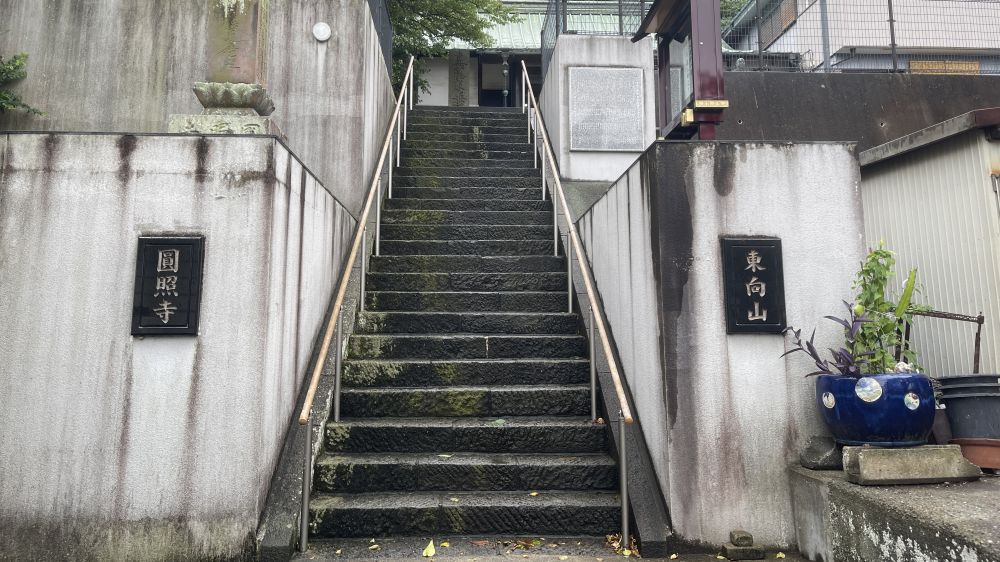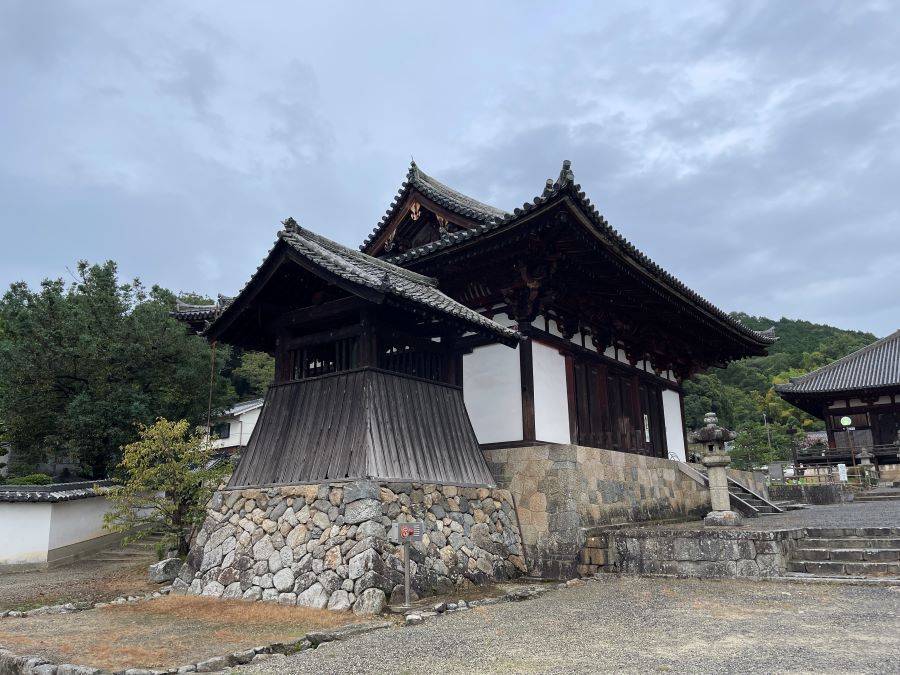
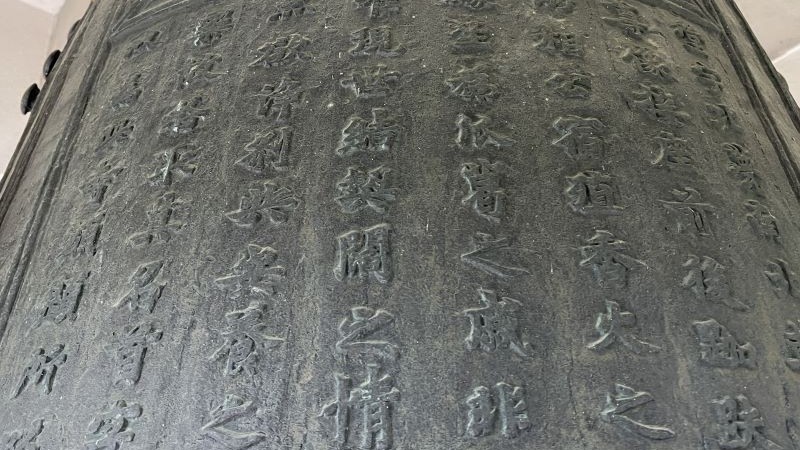
In the quiet city of Gojō, Nara Prefecture, stands Eisan-ji Temple, home to a temple bell (bonshō) celebrated for the beauty of its inscription. This inscription, recognized as a National Treasure of Japan, records that Fujiwara Michiaki and Tachibana Kiyosumi collaborated to create a masterpiece known as the Eisan-ji Bell.
Yet, legend whispers of another name hidden behind this work of art — Sugawara Michizane, the scholar-statesman who later became Japan’s god of learning, Tenjin. Could Michizane have written the poetic inscription himself?
From the “Three Geniuses’ Bell” of Jingo-ji to the Eisan-ji Bell
Half a century before Eisan-ji’s bell was cast, another masterpiece was born — the Jingo-ji Bell (875 CE), inscribed by three of the Heian period’s most brilliant literary figures: Fujiwara Toshiyuki, Tachibana Hirosada, and Sugawara Koreyoshi, Michizane’s father. The trio’s collaboration earned it the title “The Bell of the Three Talents.”
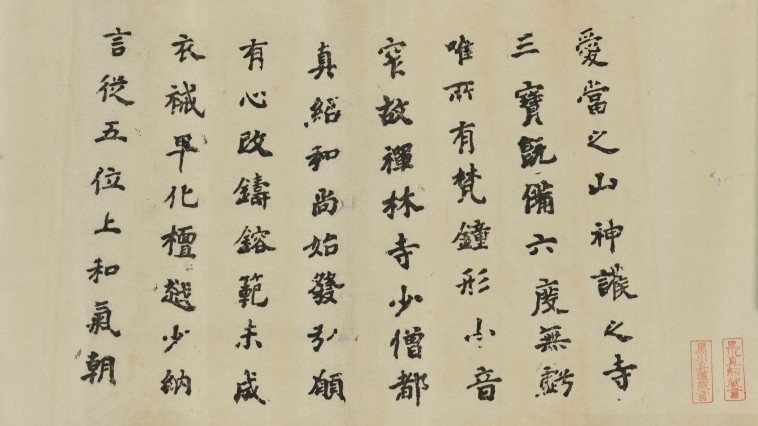
When the Eisan-ji Bell was completed in 917 CE, it bore the names of Fujiwara and Tachibana — but the Sugawara family was conspicuously missing. Why?
| Fujiwara Nan-ke | Tachibana-ke | Sugawara-ke | |
|---|---|---|---|
| Jingoji(875年) | Fujiwara no Toshiyuki | Tachibana no Hiromi | Sugawara no Koreyoshi |
| Eizanji(917年) | Fujiwara no Michiaki | Tachibana no Sumikiyo | ? |
A Collaboration Silenced by Exile
Historical context offers a clue. Around 901 CE, Michizane, then Minister of the Government and one of the era’s foremost scholars, was exiled to Dazaifu after being accused of plotting against the throne — a political scheme widely attributed to Fujiwara Tokihira. Stripped of position, he died in disgrace two years later.
Given this, it would have been politically impossible for Michizane’s name to appear on a prestigious religious object commissioned by the Fujiwara and Tachibana families. Yet, the stylistic similarities between the Eisan-ji and Jingo-ji inscriptions strongly suggest a common literary hand — possibly Michizane’s own.
The Hidden Code of “Peace and Joy”
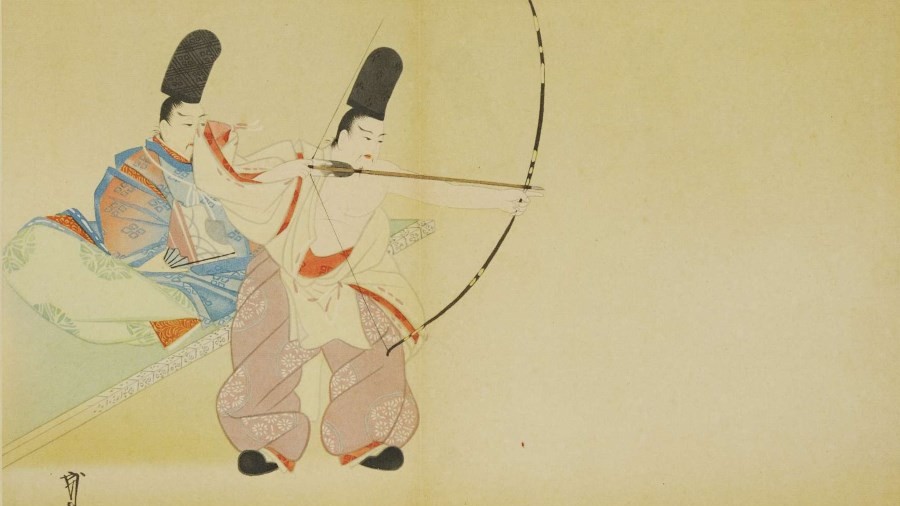
After Michizane’s death, calamities struck the court. His rivals — Tokihira and others — died young. Rumors spread that his angry spirit had returned to haunt the capital. To appease him, those connected to the bell are thought to have inserted a cryptic prayer within the inscription:
“Though we cannot meet in this world, may we share peace and joy together in the Pure Land.”
The words “peace” (安) and “joy” (楽) subtly echo Anraku-ji, the temple where Michizane was buried — a hidden plea for his forgiveness.
The Rise of Tenjin and the Legacy of the Bell
But the disasters continued — the deaths of two crown princes and a lightning strike that killed courtiers inside the emperor’s palace. Fearing divine punishment, the court posthumously restored Michizane’s titles, and by the mid-10th century, he was enshrined as Tenjin, the deified spirit of scholarship, at Kitano Tenmangū Shrine in Kyoto.
Seen in this light, the Eisan-ji Bell stands at a turning point in Japanese history — a time when literature, politics, and the supernatural converged. The bell’s inscription may well serve as both a poetic masterpiece and an encoded act of repentance, immortalizing the spirit of a man whose wrath reshaped the faith of a nation.
The Unsettled Wrath of Sugawara Michizane
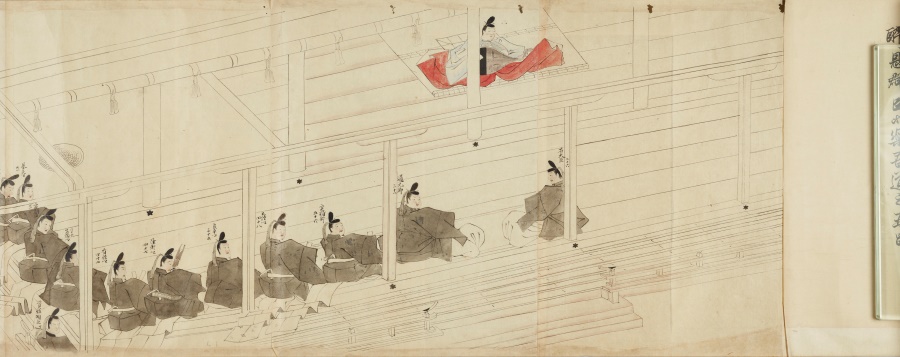
Michizane’s posthumous restoration did little to quell the fear surrounding his spirit. In 923, Prince Yasuakira, nephew of Fujiwara Tokihira, died suddenly at the age of twenty. Alarmed, the court formally revoked Michizane’s demotion and restored him to the rank of Udaijin, implicitly acknowledging his innocence.
Yet calamities continued. Two years later, the young crown prince Noriyori died at five, and in 930 lightning struck the Seiryōden, killing several courtiers, including Fujiwara Kiyotaka. In the Heian court, death within the imperial palace was an unimaginable disaster.
From a modern perspective, these events may appear coincidental. In the early tenth century, however, they were interpreted through the pervasive belief in vengeful spirits (onryō). Michizane’s restless soul came to embody the era’s anxieties, blurring the boundary between political misfortune and supernatural retribution.
Pacifying Michizane: The Fujiwara Clan’s Response
For the Fujiwara clan, the threat was existential. A mere restoration of titles was no longer enough; visible acts of appeasement were required. In 947, a shrine-temple complex was established in Kyoto to enshrine Michizane, later reorganized under Fujiwara Michinaga as Kitano Tenmangū, where Michizane was elevated from wronged courtier to deity.
The process culminated in 993 with his posthumous promotion to Daijō-daijin, the highest office of the state. This was a remarkable gesture: Michinaga himself would not attain that rank for another thirty years. Occurring ninety years after Michizane’s death, the act symbolically closed a cycle of fear, guilt, and reconciliation.
Against this backdrop, the bell of Eisan-ji belongs to a particularly sensitive transitional moment, when Michizane’s transformation into an onryō was only beginning. His anger needed to be pacified, yet an open apology would have forced the Fujiwara to admit political wrongdoing.
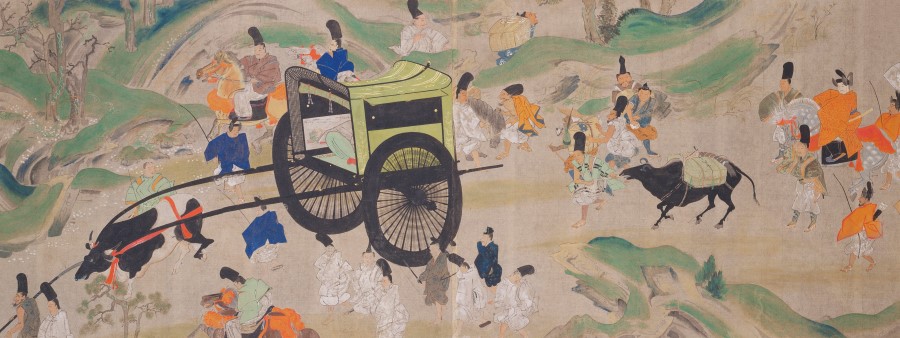
In this dilemma, the court may have turned to a bell project in which Michizane had once been involved. By completing it in accordance with his intentions and inscribing the encoded phrase anraku (“peaceful repose”), they could honor his spirit without explicit confession. Seen this way, the Eisan-ji Bell was not merely a ritual object, but a carefully calibrated act of remembrance — one meant to console the dead while preserving the fragile balance of power among the living.