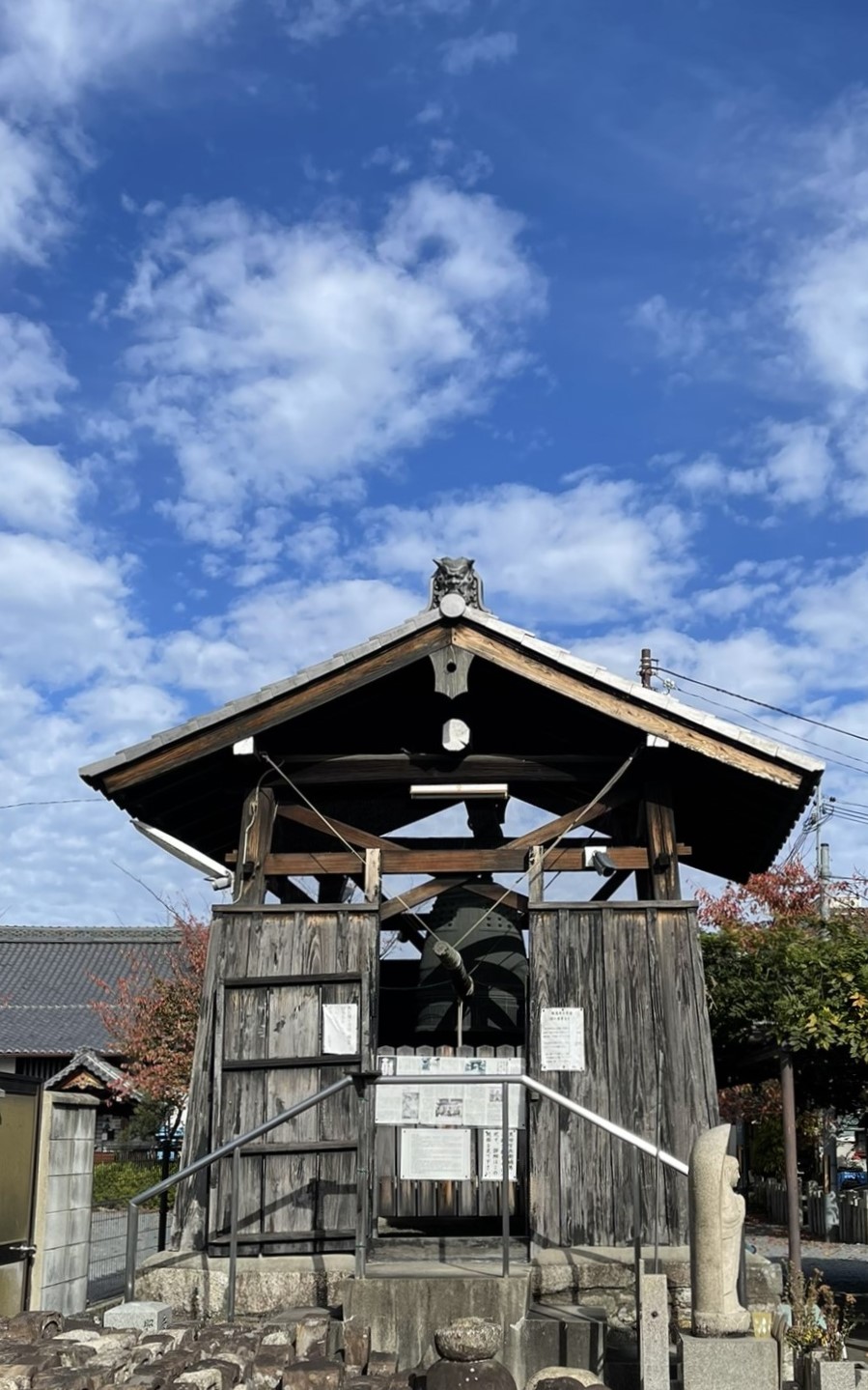
Tucked in a quiet corner of Kyoto’s Nishijin weaving district stands a bell that no one dares to strike.
Cast in the late Heian period — over eight centuries ago — the bronze bell of Hoon-ji Temple is designated an Important Cultural Property of Japan. It bears rare Sanskrit inscriptions, and scholars regard it as one of the oldest surviving bells from the ancient capital of Heiankyo. By every measure, it should be rung with pride.
Instead, it hangs in silence.
The bell earned its grim nickname — Tsukazu no Kane, “the bell that is not struck” — after a young woman took her own life at its tower following a bitter quarrel. Since that day, the bell has been considered cursed. Ringing it, so the legend goes, invites misfortune. For centuries, it has been left untouched — except on New Year’s Eve, when the old rule is briefly, carefully, set aside.
This is the story of that bell, and the temple that has kept its secret for eight hundred years.
A Temple with a Warlord’s History
Hoon-ji traces its origins to the Muromachi period, when it stood near Ichijo-Karasuma as a temple blending Tendai and Pure Land teachings. In 1501, by imperial decree of Emperor Go-Kashiwabara, the monk Keigo re-established it as a Pure Land (Jōdo-shū) temple at its new location near Horikawa-Imadegawa, renaming it Hoon-ji. In 1585, Toyotomi Hideyoshi ordered it relocated to its present site in Kamigyo Ward.
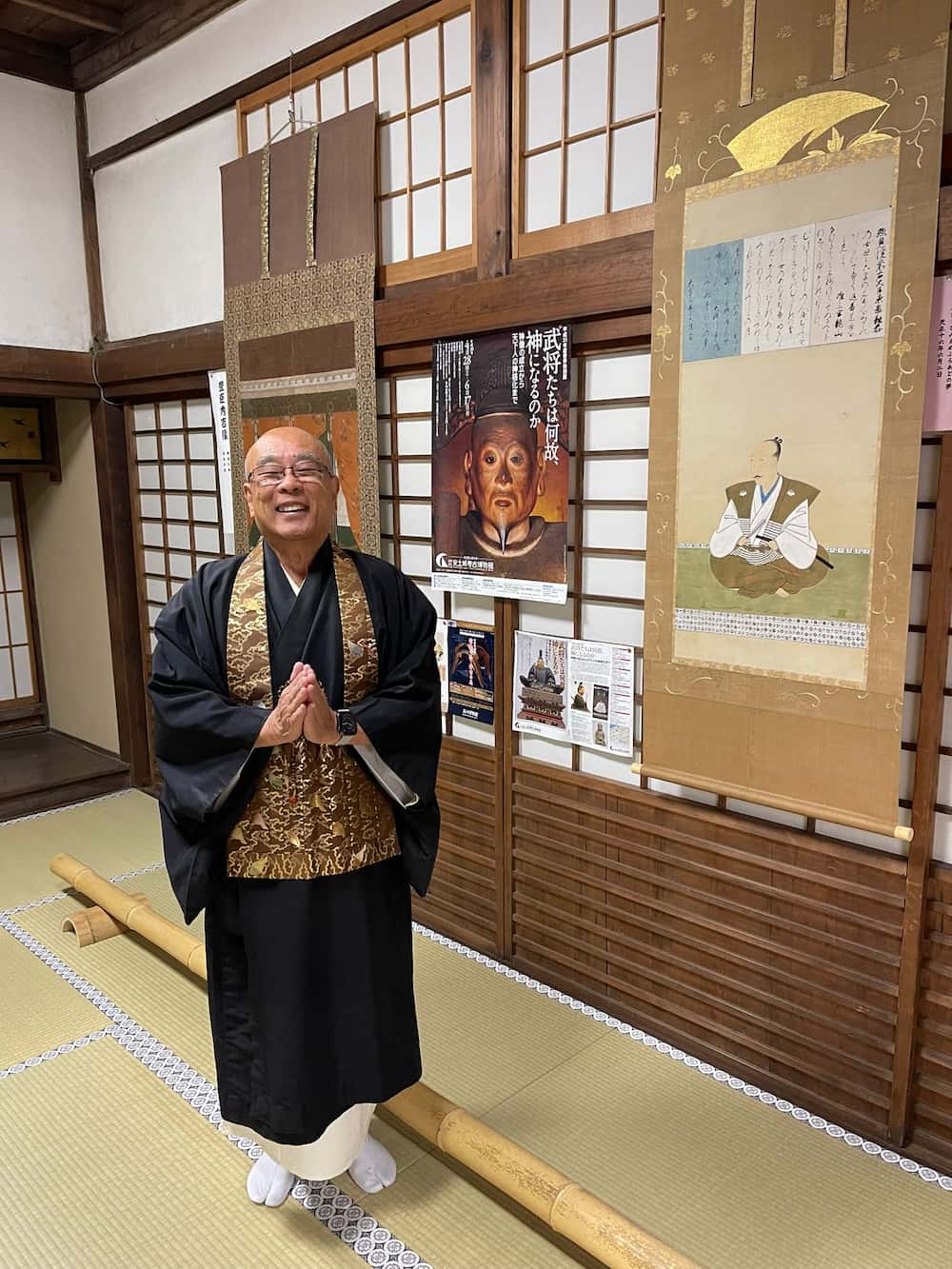
The temple also holds deep connections to the warlord Kuroda Nagamasa (1568–1623), the first lord of the Fukuoka domain. On a visit to Kyoto in 1623, Nagamasa fell gravely ill and died in the temple’s guest quarters. The room where he passed away has been preserved, and the memorial tablets of both Nagamasa and his father Kuroda Kanbei (Josui) are enshrined here.
The “Crying Tiger” — Why This Temple Has Its Nickname
The temple’s nickname comes from one of Japan’s most memorable warlord anecdotes. Among Hoon-ji’s treasures is a painting of a fierce tiger, rendered by the Chinese artist Shimei Tōitsu. In 1501, Emperor Go-Kashiwabara bestowed this painting upon the temple.
When Hideyoshi visited and was captivated by the tiger’s uncanny realism, he brought it back to his Jurakudai palace. That night, the sound of a tiger’s roar echoed through the halls, and Hideyoshi could not sleep. He promptly returned the painting to the temple — and silence was restored.
The original painting is displayed only during the first three days of the New Year in a Year of the Tiger, making the next viewing opportunity 2034. However, a full-scale digital reproduction can be arranged for viewing by appointment at any time.
Temple Bell
Story
The Bell That Brings Bad Luck — Tsukazu no Kane
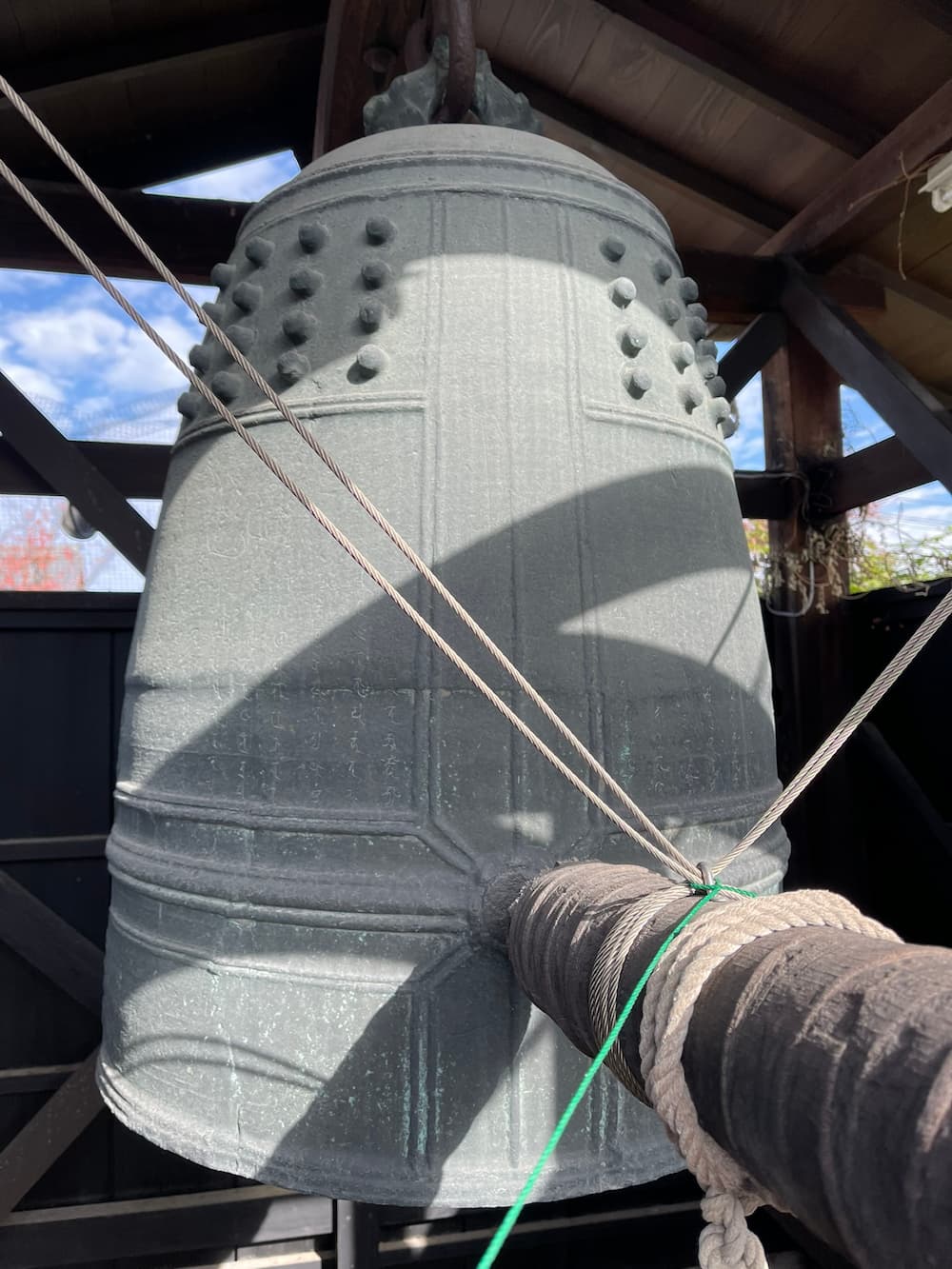
The second legend belongs to the temple’s bronze bell, designated an Important Cultural Property of Japan.
Cast in the late Heian period (late 12th century), the bell is considered among the oldest surviving bells in the former capital of Heiankyo. Its surface bears an unusual and scholarly distinction: engraved Sanskrit seed syllables representing the Four Buddhas of the Diamond Realm (金剛界四仏), along with nine dhāraṇī passages in Sanskrit characters. Artistically and historically, it stands as an exceptional example of Heian-period bell craft.
Yet the bell carries a dark reputation. It is known locally as the Tsukazu no Kane — literally, “the bell that is not struck.”
The legend tells of a long-ago time when the bell was rung morning and evening to signal the start and end of the working day for the weavers in the surrounding Nishijin district. One day, a dispute broke out between a young apprentice and a weaving girl over how many times the evening bell had rung. When the count went against her, the weaving girl took her own life at the bell tower. After that tragedy, the bell fell silent in daily life. Today it is rung only on New Year’s Eve (joya no kane) and at the installation ceremony of a new head priest.
On New Year’s Eve (approximately 11:45 PM–1:00 AM), members of the public are welcome to strike the bell.

Architectural Notes: The Snake-Shaped Roof Tile
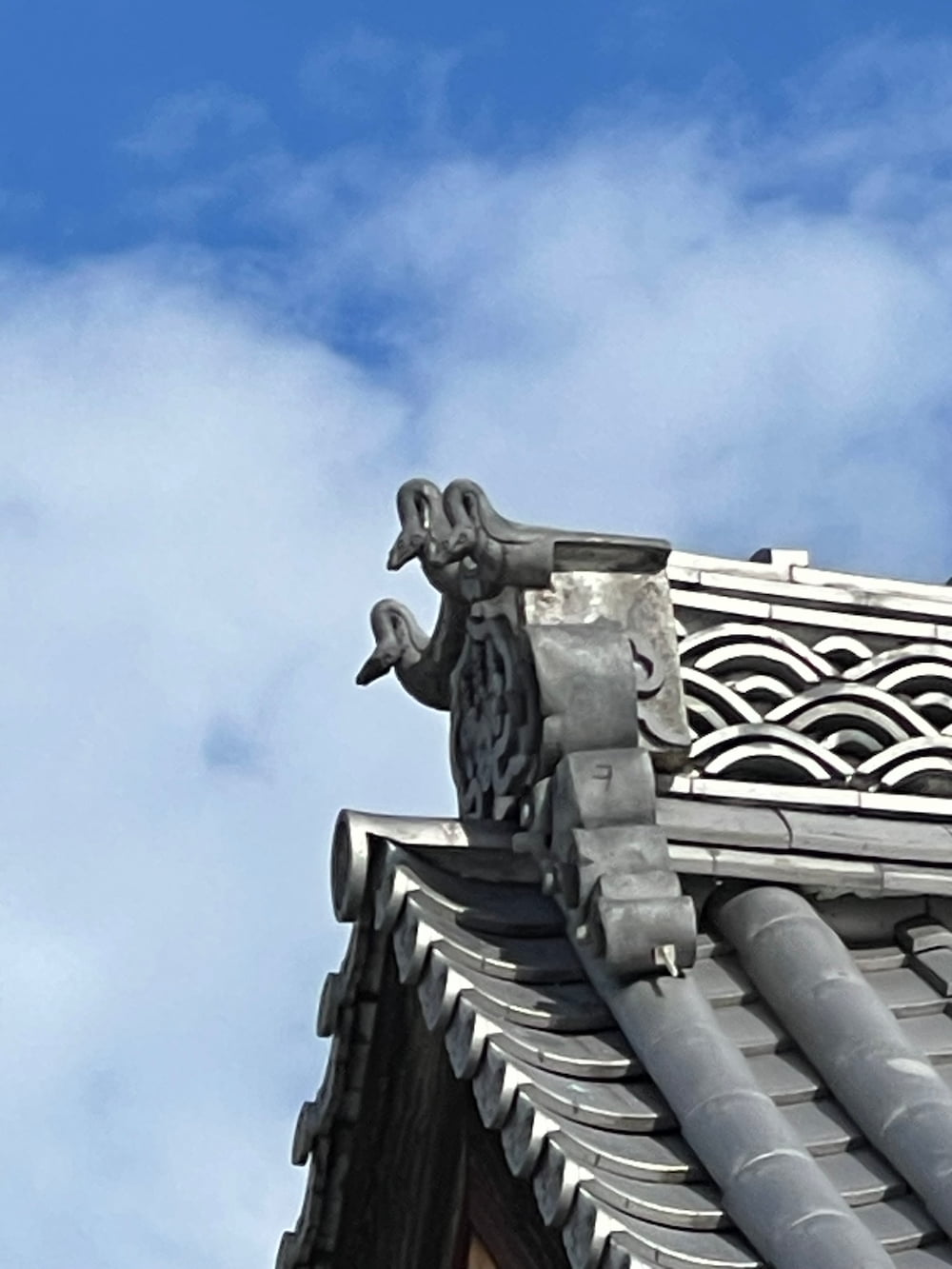
One small but intriguing detail awaits observant visitors: the temple’s decorative roof tiles (oni-gawara) are carved in the form of snakes rather than the conventional swirling tomoe pattern. The tomoe motif — found on roof tiles at countless Japanese temples — is itself thought to derive from serpent imagery. Hoon-ji’s snake tiles may represent a rare surviving glimpse of that older iconographic tradition.
Access
Nakitora Hoon-ji
Ibacho, Ogawa-dori Teranochi-sagaru, Kamigyo-ku, Kyoto