A bell cast in 1140 to consecrate one of Japan’s greatest mountain sanctuaries outlasted the temple that housed it, outlasted the monks who rang it, and outlasted 880 years of Japanese history. It still hangs in the same place. No one has struck it in living memory.
A Mountain That Changes the Air
The approach to Yoshino rewards patience.
From Tokyo, the journey takes the better part of a day: the shinkansen to Kyoto, a train to Nara, another train to Kashiharajingū, and finally a slow ride south into the mountains to Yoshino Station. By the time you step off at the terminus, you have already spent three hours leaving the city behind — and you are not yet there.
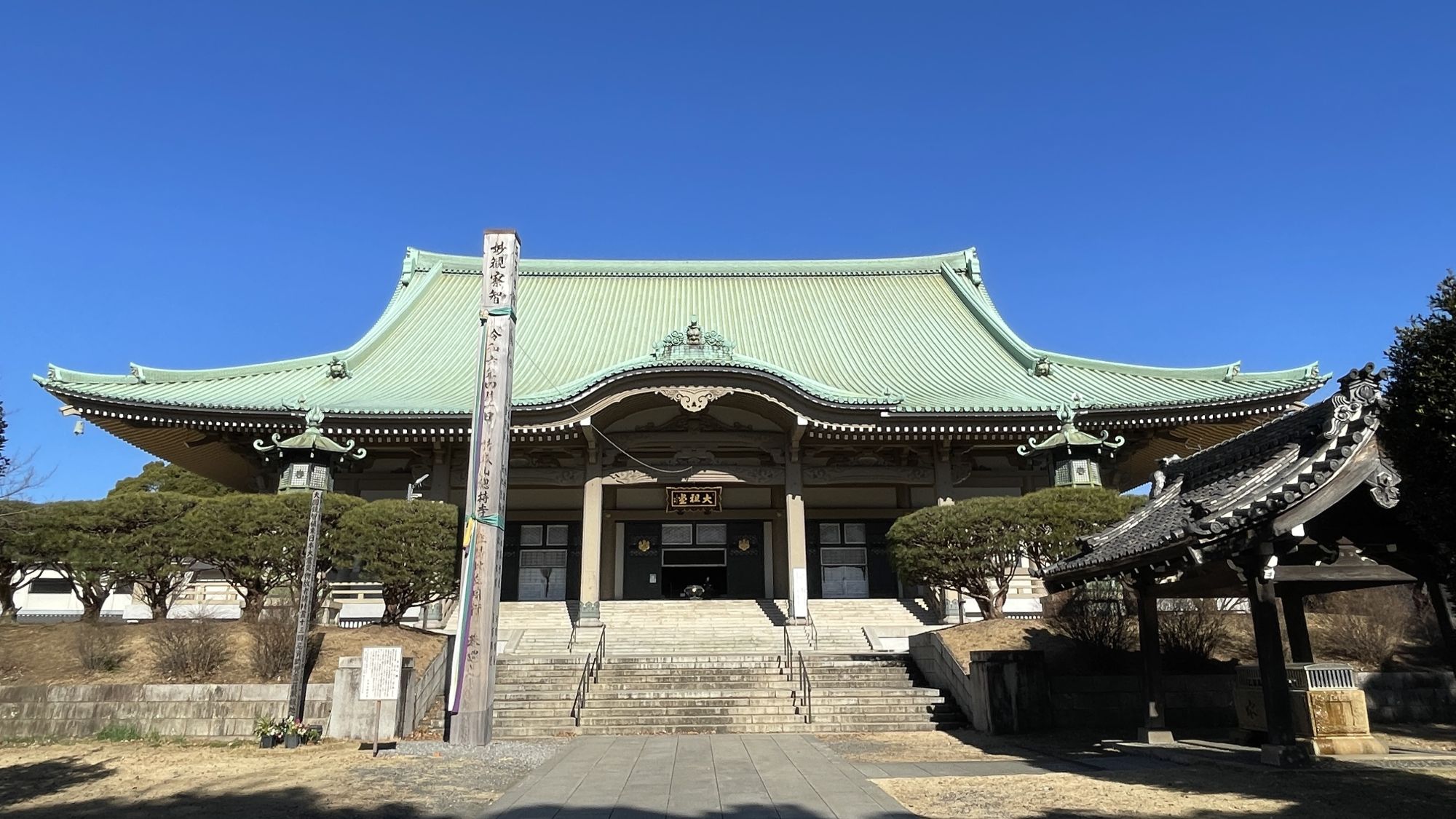
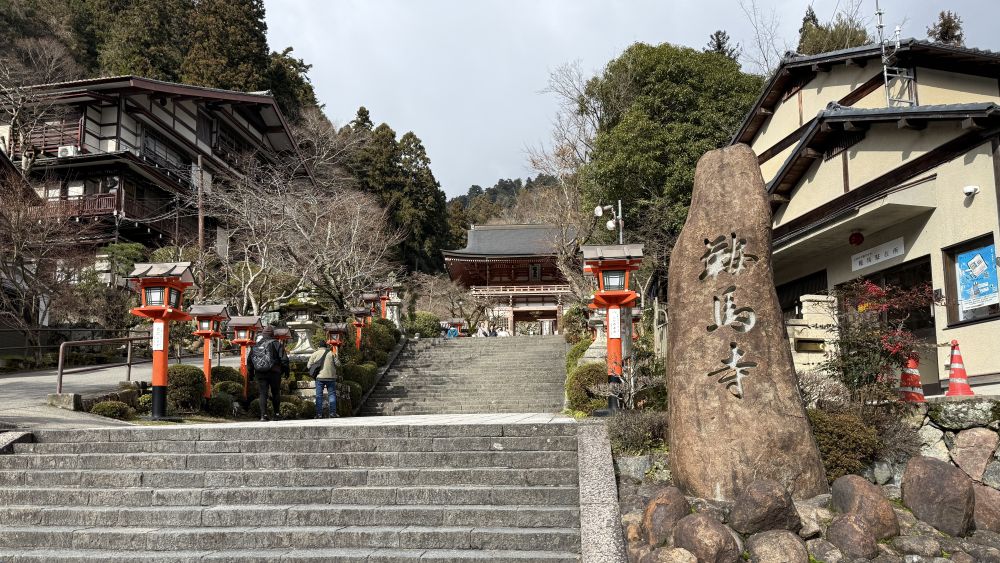
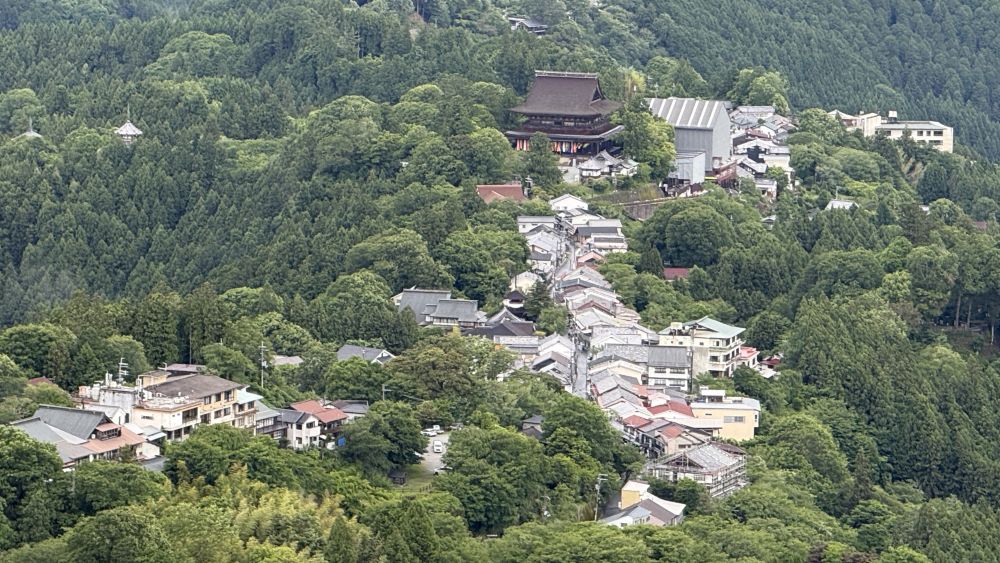
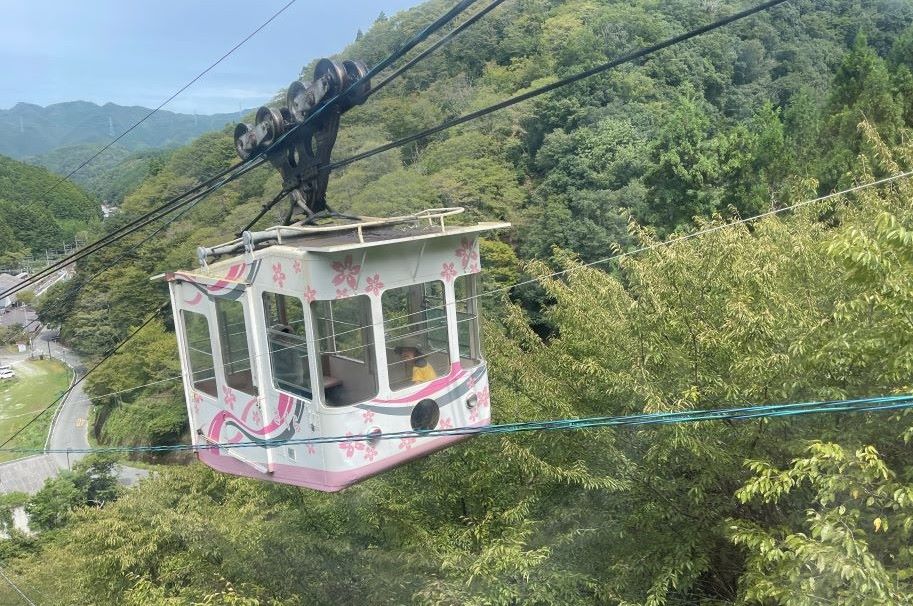
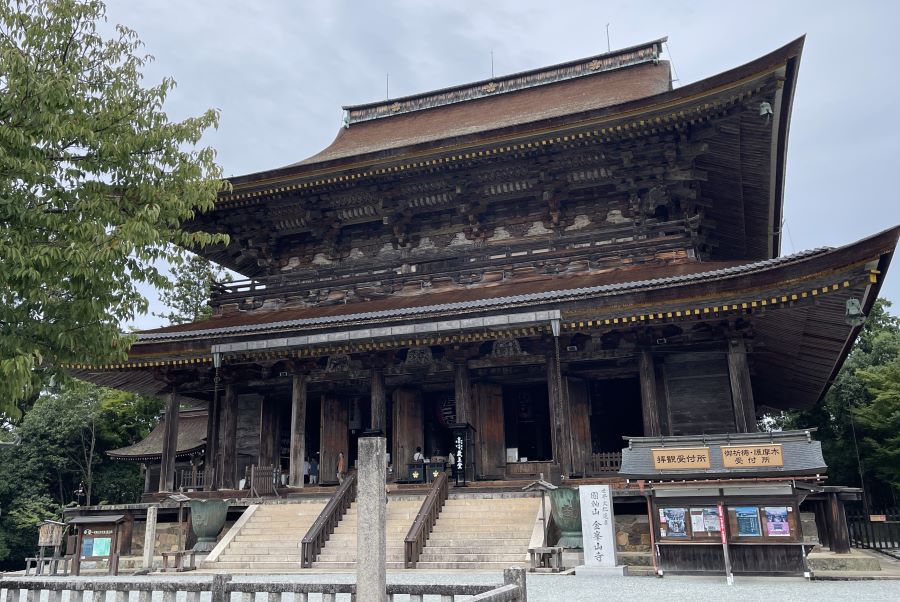
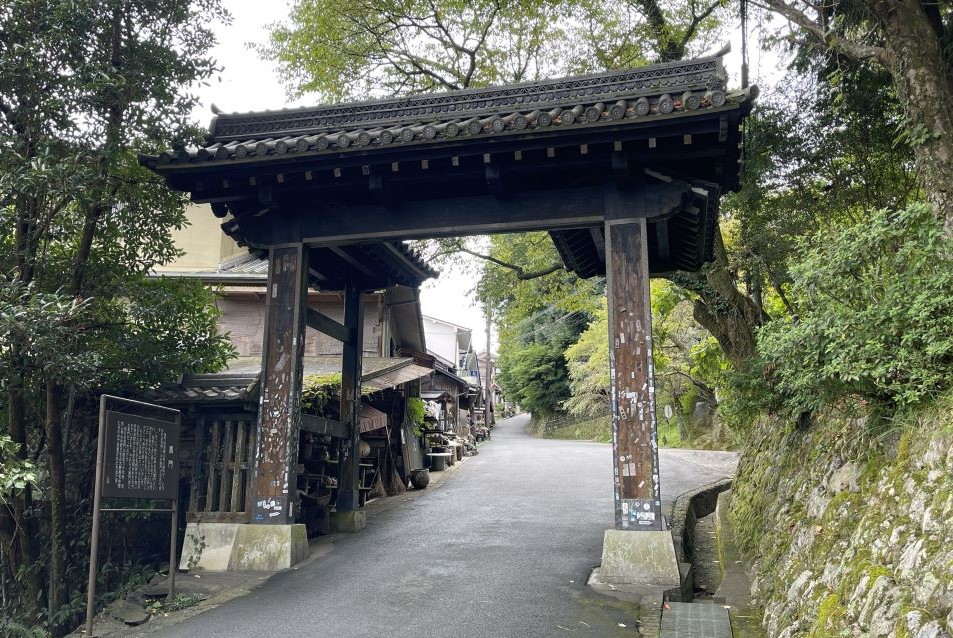
From the station, a ropeway climbs the lower slope. Then a path winds upward through the village that clings to the ridge, past shops and guest houses and the great gate of Kinpusen-ji, the temple complex that has defined this mountain for more than a thousand years. The crowds thin as you climb. Past the main hall of Kinpusen-ji — the Zaō-dō, a structure of extraordinary scale, housing three seven-meter statues of the Zaō Gongen deity — the path continues upward into country that feels increasingly removed from ordinary time.
The air changes. Anyone who has climbed Yoshino knows the moment when it changes.
A Sacred Mountain Through the Ages
Yoshino is not merely beautiful. It appears, with regularity, at the turning points of Japanese history.
In the seventh century, Prince Ōama — the future Emperor Tenmu — concealed himself in these mountains before launching the Jinshin War that would reshape the imperial succession. In the fourteenth century, Emperor Go-Daigo established the Southern Court here after being driven from Kyoto, making Yoshino briefly the legitimate capital of Japan. Toyotomi Hideyoshi, at the height of his power, brought an entourage of five thousand people to Yoshino to view the cherry blossoms — not as a pleasure trip but as a demonstration that the mountains themselves would receive him.
The pattern reveals something. These were not people who chose Yoshino for its scenery. They chose it because the mountain was already sacred — a site of concentrated spiritual power that could legitimize those who came to it, shelter those who fled to it, and amplify whatever was brought before it.
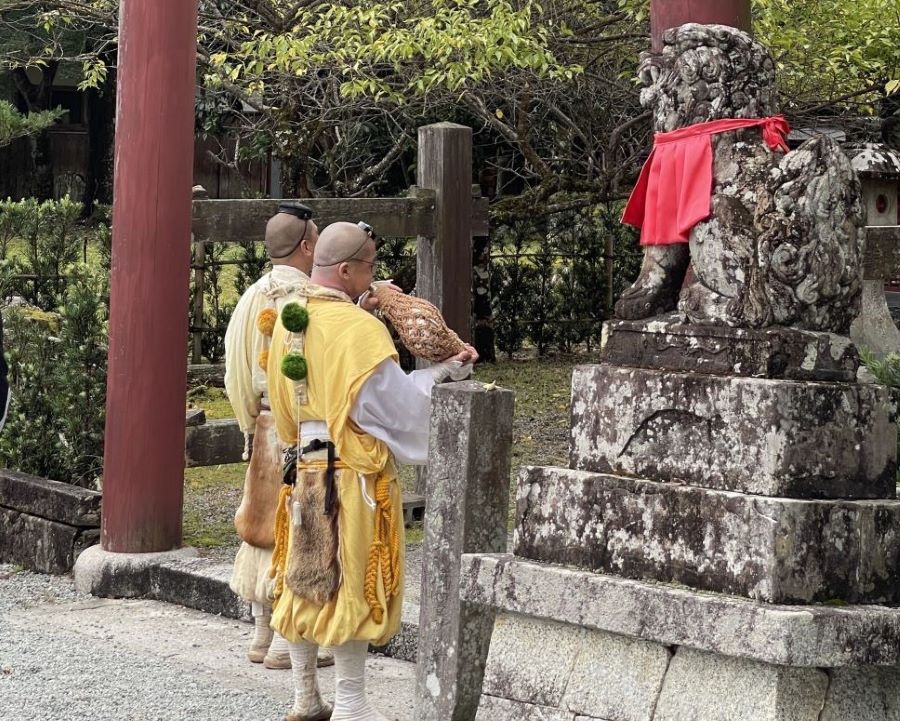
That power was rooted in Shugendo: the mountain ascetic tradition that blends Buddhism, Shinto, and nature worship into a discipline of physical ordeal. Kinpusen-ji has been the starting point of the Ōmine Okugake-dō — a 170-kilometer route through the mountains to Kumano — for over a millennium. Yamabushi, the mountain ascetics in their white robes, still walk that route today, still blowing their conch shells as they depart from the same gates their predecessors have departed from since the time of Yoshino’s founder, the legendary En no Gyōja.
Yoshino is a UNESCO World Heritage Site. That designation tells you something. Walking the mountain tells you more.
Temple Bell
Story
Three Brothers
In the older literature of Japanese Buddhist bells, three bells are named as siblings.
Nara Tarō — “Eldest Son of Nara” — is the great bell of Tōdai-ji, cast in the era of the Great Buddha, symbol of the ancient southern capital. Kōya Jirō — “Second Son of Kōya” — is the bell of Kongōbu-ji on Mount Kōya, representing the stronghold of Esoteric Buddhism that Kūkai established in the ninth century. And Yoshino Saburō — “Third Son of Yoshino” — is the bell of Yoshino mountain, the representative bell of the Shugendo tradition.
Three bells, three sacred sites, named as brothers. The choice of names — eldest, second, third — encodes a judgment about spiritual rank and historical primacy. That the makers of that judgment placed Yoshino third in the sequence was not a slight. These are the three great mountain sanctuaries of Japanese religious culture, and Yoshino’s bell was considered worthy of standing in that company.
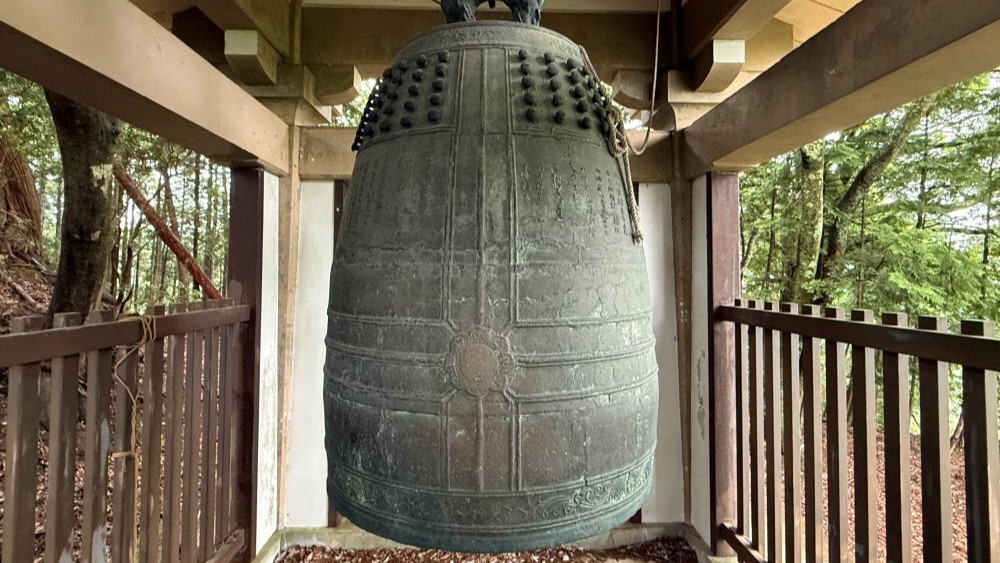
The Yoshino Saburō is the surviving bell of the former Sesonji temple. It was cast in Hōen 6 — the year 1140 — and it is designated an Important Cultural Property of Japan. Its height is 207 centimeters.
The Bell and Its Inscription
The bell’s inscription names a donor: Harima no Kami Taira no Ason Tadamori — Taira no Tadamori, governor of Harima Province, father of the great Taira no Kiyomori.
The year 1140 was a moment of balance before collapse. The Fujiwara regency that had dominated the imperial court for generations was beginning to lose its grip. The warrior clans — Taira and Minamoto above all — were accumulating the power that would eventually sweep away the old court order and establish the first military government. Tadamori was a key figure in that transition: a man who had made himself indispensable to the retired emperor Go-Shirakawa, who had earned court rank at a time when warriors were rarely admitted to aristocratic circles, and who had laid the groundwork for the dominance his son would achieve.
Whether Tadamori himself commissioned the bell, or whether later generations inscribed his name in tribute, is not known with certainty. The historical record does not resolve the question. What it does confirm is that someone considered the connection between Tadamori and this bell worth making permanent in bronze — and that the name has remained legible in that bronze for 885 years.
The bell was recast in 1160 and again in 1245. What hangs in the bell tower today is the bell of 1245 — 780 years old, not 885, though the original dedication and the name it carries are older still.
The Bell Without a Striker
Sesonji was abolished in 1875, in the wave of anti-Buddhist measures that accompanied the new Meiji government’s effort to disentangle Shinto from Buddhism and assert the primacy of the state Shinto it was constructing. Thousands of temples across Japan were closed, merged, or destroyed in those years. Sesonji was among them.
The monks left. The buildings, in time, came down or fell.
The bell stayed.
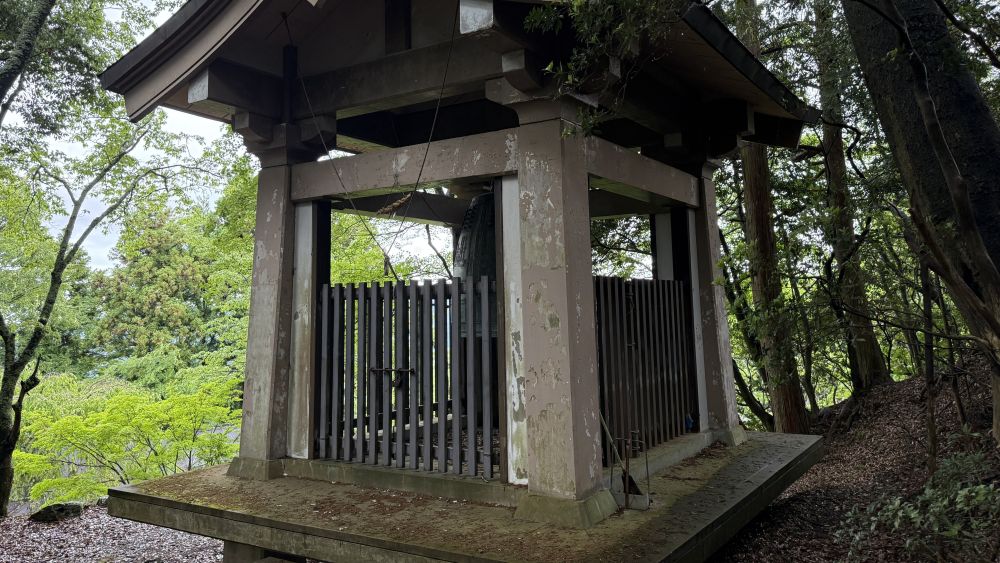
It hangs today in a bell tower beside Yoshino Mikumari Shrine — a three-minute walk from the main complex of Kinpusen-ji, up a slope that grows quiet very quickly. There is no striking log. The bell has not been rung within living memory. It does not mark the hours, does not sound for ceremonies, does not call monks who no longer exist to a hall that no longer stands.
It is simply there.
The silence around it is of a particular quality. Yoshino has layers of quiet — the quiet of the mountain itself, the quiet of elevation, the quiet of a place that has absorbed centuries of prayer. The silence of the Yoshino Saburō sits within all those layers and adds one more: the silence of a voice that once spoke and no longer does.
The Shrine Beside the Bell
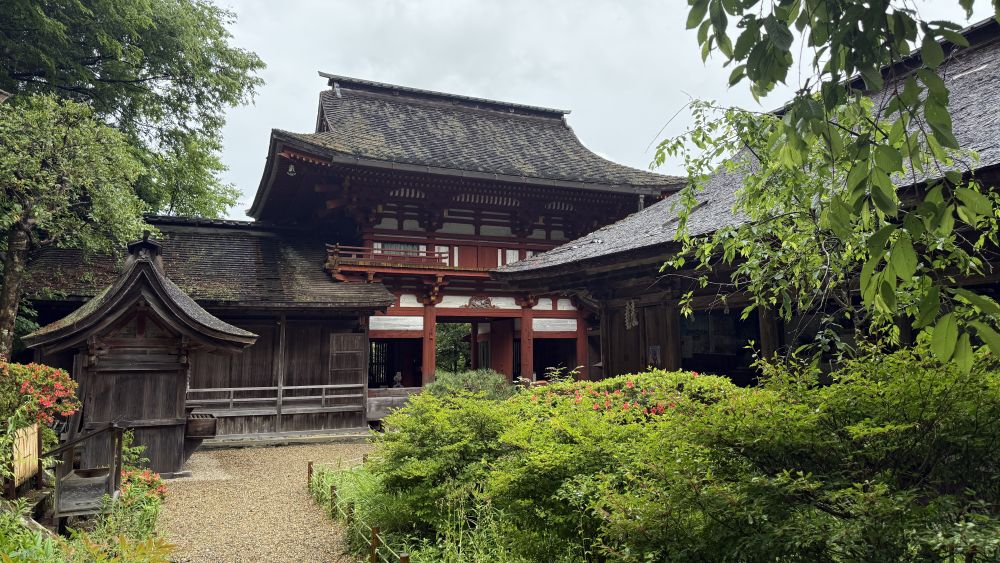
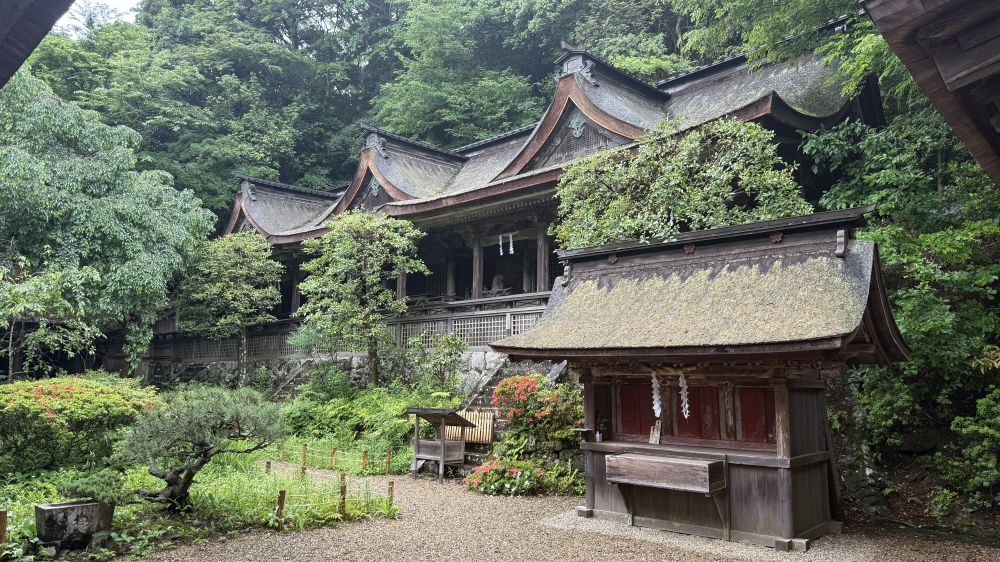
Yoshino Mikumari Shrine stands immediately adjacent to the bell tower. The main hall is a Keichō-era structure — rebuilt in the early seventeenth century — and the elaborately decorated portable shrine within was donated by Toyotomi Hideyori, Hideyoshi’s son, in 1605.
The shrine’s name carries a pun that has made it famous: mikumari, “water division,” sounds in Japanese like miko-mori, “child guardian.” The association with fertility and safe childbirth drew pilgrims for centuries. Fujiwara no Michinaga — the most powerful man of his age — made the arduous journey from Kyoto to Yoshino in the year 1007, a thirteen-day round trip over roads that barely deserved the name, to pray at this very shrine for a male heir for his daughter Shōshi. The prayers were answered: Shōshi gave birth to two emperors, and the Fujiwara family reached the apex of its power.
The shrine today receives few visitors. The precincts are immaculate, the buildings substantial, the silence complete. A structure that shelters a mikoshi donated by the last Toyotomi heir stands next to a bell inscribed with the name of a Taira patriarch. The mountain accumulates these traces of the powerful and the devout, and holds them without comment.
A Thousand Yen for Ten Minutes of Transcendence
Before the path climbs toward the upper reaches of Yoshino, the main street of the temple village passes the entrance to Nakai Shunpūdō.
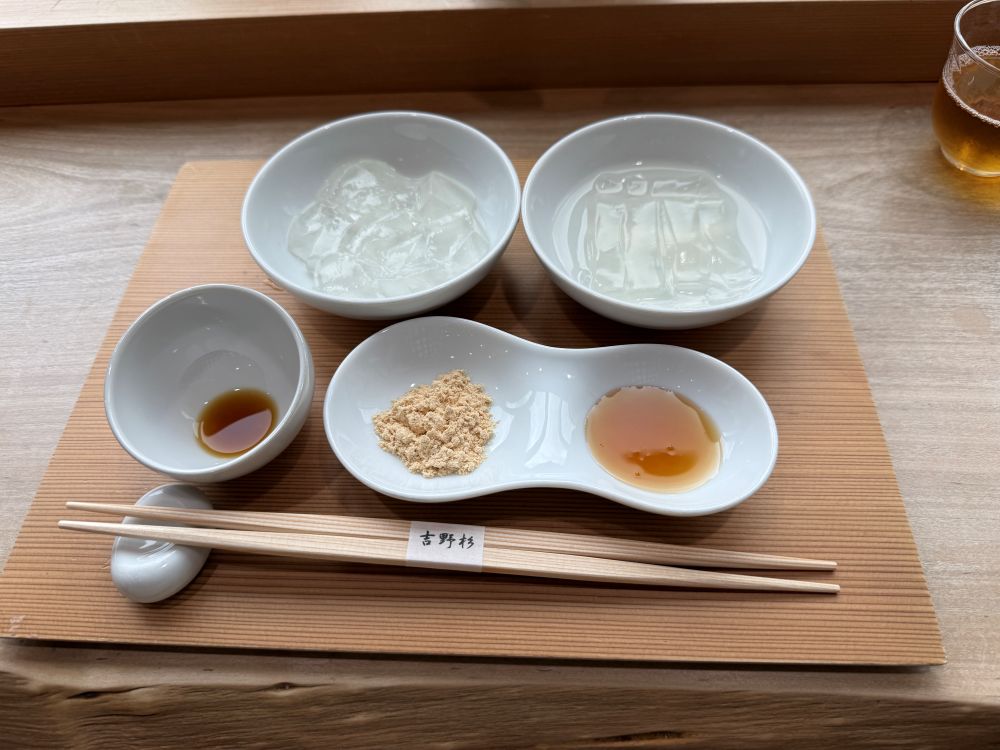
The shop has no reservations. It serves one thing: Yoshino kuzu — arrowroot starch, harvested from the mountains of this region, considered the finest in Japan. The kuzu-kiri (noodles) and kuzu-mochi (cakes) sold here are made to order, from a starch so pure it is effectively transparent.
The stated expiration time for the kuzu-kiri is ten minutes. This is not hyperbole. The texture of freshly made Yoshino kuzu — its translucency, its specific resistance and yield — changes measurably as it sits. What the shop sells is an experience that cannot be packaged, preserved, or replicated elsewhere. You eat it there, in the allotted time, in the shadow of the Zaō-dō, and then it is gone.
On most days, the line is long. The patience required to reach the counter is part of the experience.
The Bell Today
The path to Yoshino Saburō rewards the same patience the mountain itself demands.
Past Kinpusen-ji, past the village shops, up the slope toward Mikumari Shrine — the crowds thin steadily, until by the time the bell tower comes into sight there is often no one else visible in any direction. The bell hangs in open air, visible from outside the tower, its surface the deep grey-green of very old bronze.
It is not rung. There is nothing to strike it with. The temple that commissioned it, the monks who rang it, the institutional structure that gave it purpose — all of these are gone. What remains is the bell itself, the inscription with Tadamori’s name, and the silence that has accumulated around it for 150 years since the last monk left.
The three great bells of Japan’s sacred mountains: Nara’s eldest son still rings at Tōdai-ji, 49 strokes each New Year’s Eve. Kōya’s second son still marks the hours on Mount Kōya. Yoshino’s third son hangs mute above a ruined temple, in a corner of the mountain where almost no one comes.
It is still, by any measure, worth the journey.
Access
Yoshino Saburō Bell (Former Sesonji Temple Ruins)
Yoshinoyama 1711, Yoshino-cho, Yoshino-gun, Nara
Adjacent to Yoshino Mikumari Shrine. From Kinpusen-ji Zaō-dō, follow the main path uphill approximately 10 minutes. The precinct is quiet; visit outside peak cherry-blossom season for the full effect of the isolation.