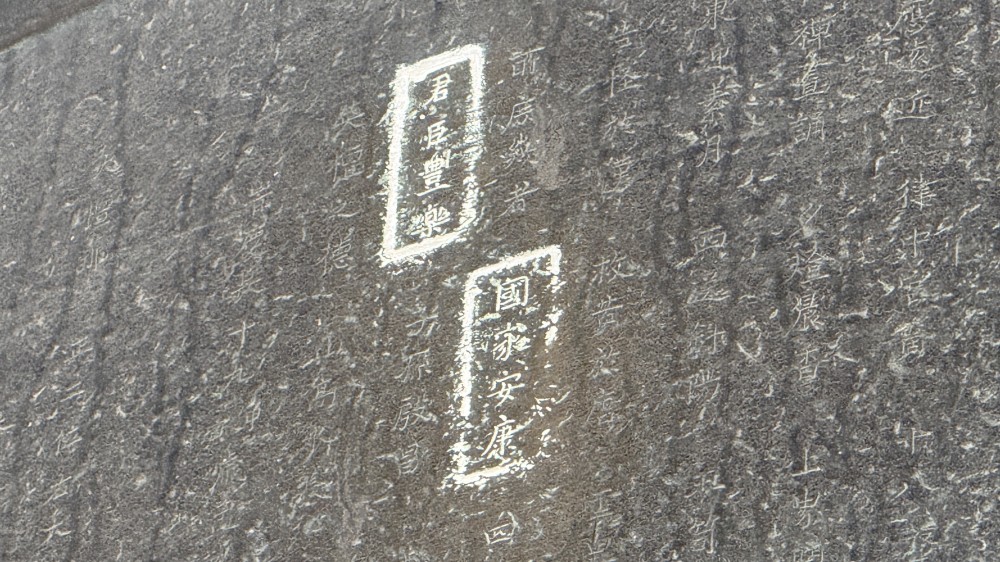
A bell cast in 1614 to consecrate the grandest Buddhist hall in Japan ended up triggering the destruction of the family that built it. Four centuries later, the bell still hangs in the same place — and the eight characters that caused all the trouble are still perfectly legible.
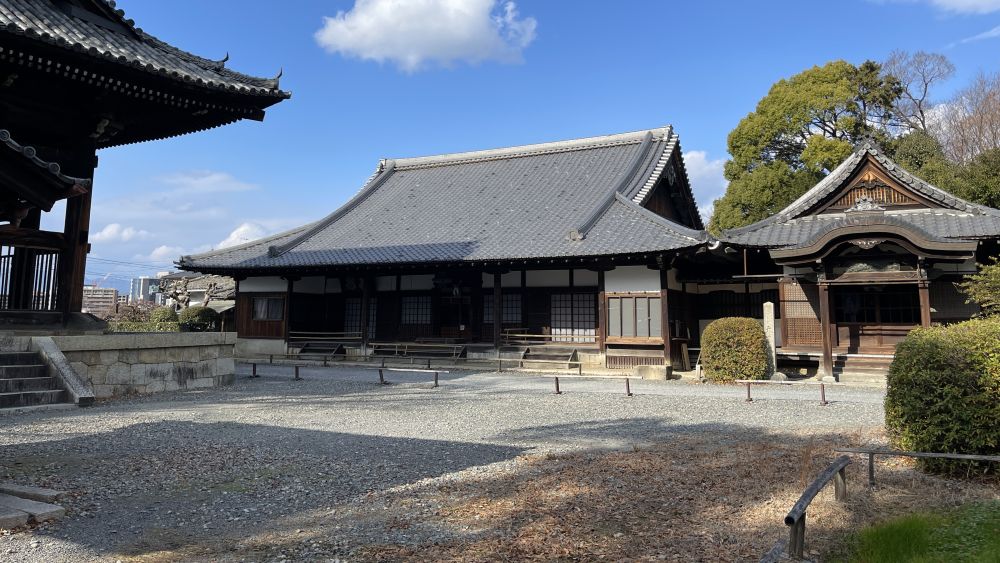
A Temple That Surprises by Its Smallness
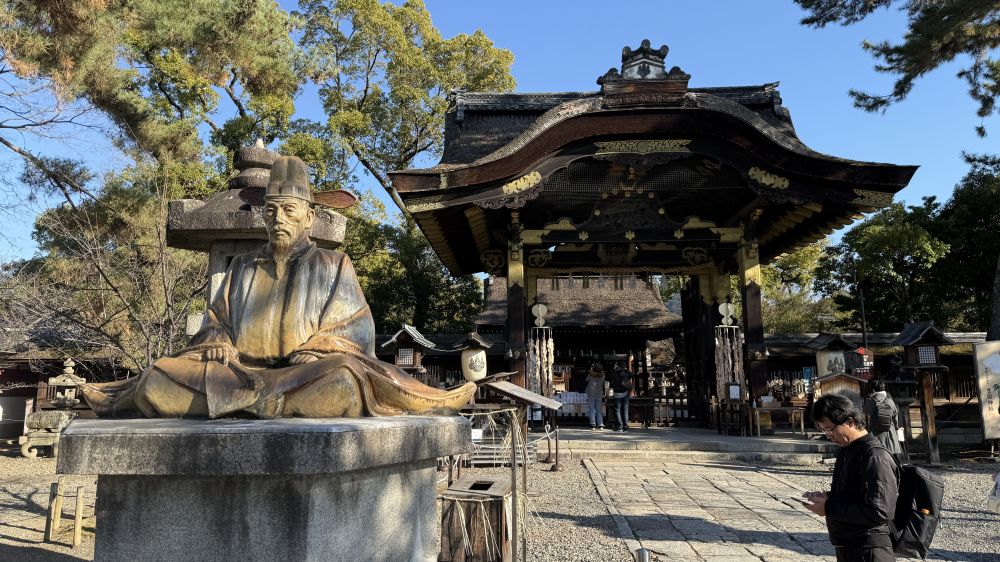
Just north of the Kyoto National Museum, in the Higashiyama district of eastern Kyoto, stands a temple called Hōkōji. The precinct is startlingly compact. First-time visitors often stop at the entrance, look around the modest grounds, and feel a faint sense of disorientation: this is the place?
The disconnection between what the visitor expects and what they find is not a mistake of navigation. It is, rather, a consequence of history — specifically, of catastrophe. Hōkōji was once one of the most enormous religious complexes in Japan, home to a Great Buddha Hall (Daibutsu-den) that rivaled anything at Nara. That hall no longer exists. Nor does the colossal gilt statue that it sheltered. What remains is a shrunken remnant of a site that, at its height, embodied the full force of Toyotomi ambition.
What also remains is the bell.
Hideyoshi’s Monument and Hideyori’s Completion
The original Hōkōji was commissioned by Toyotomi Hideyoshi in 1586, conceived as a statement of political legitimacy translated into sacred architecture. Hideyoshi, a man of peasant birth who had unified Japan by force of will and military genius, wanted a Great Buddha to rival the ancient Tōdai-ji in Nara — and, if possible, to surpass it. The statue he ordered cast was, by most accounts, larger than Nara’s. The hall built to contain it was immense.
It did not survive. An earthquake in 1596 brought the hall and statue down. Hideyoshi ordered reconstruction, but died in 1598 before it could be completed. The project passed to his son, Toyotomi Hideyori, then just five years old.
Hideyori grew up under the regency of Tokugawa Ieyasu, who had consolidated power after the Battle of Sekigahara in 1600. The Toyotomi family, though reduced in real political authority, retained enormous wealth, a loyal following, and the prestige of Hideyoshi’s name. Completing his father’s great temple was, for Hideyori, both an act of filial piety and a public affirmation that the Toyotomi line still mattered.
The bell was cast to mark that completion.
The Bell: Dimensions of a Different Era
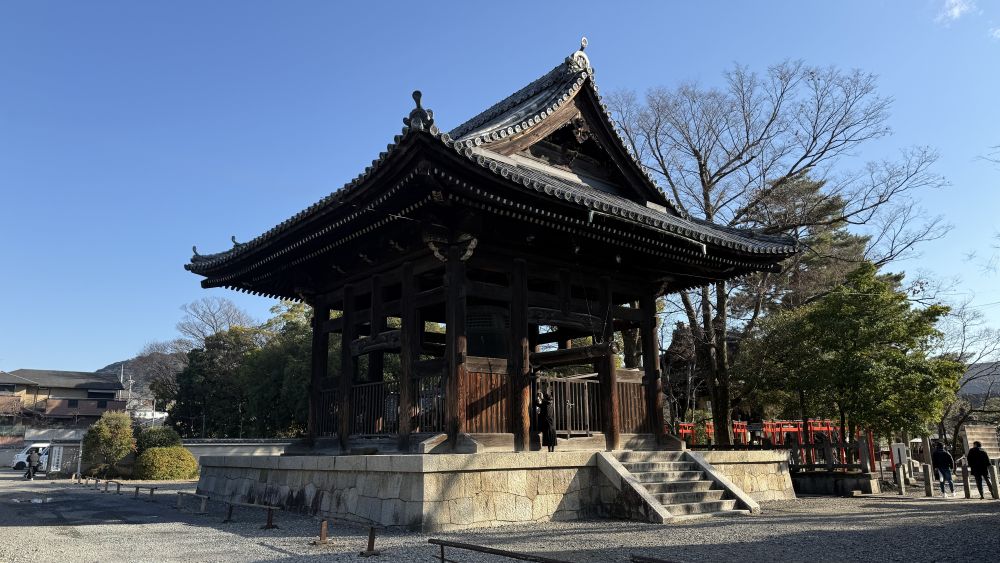
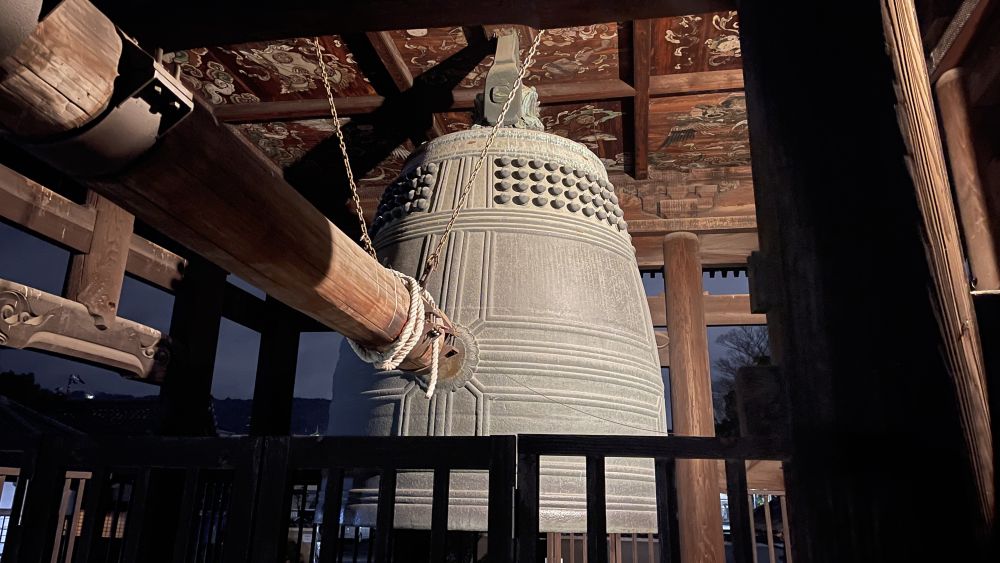
The Hōkōji bell was completed on the sixteenth day of the fourth month of Keichō 19 — April 16, 1614 — cast as the bonshō (ritual bell) for the newly reconstructed Daibutsu-den.
Its dimensions remain exceptional by any standard:
- Total height: approximately 4.2 meters
- Mouth diameter: 2.88 meters
- Wall thickness: 27 centimeters
- Weight: 82.7 metric tons
Together with the bells of Tōdai-ji in Nara and Chion-in in Kyoto, it is counted among Japan’s Three Great Temple Bells (Nihon sandai bonshō). In terms of sheer weight, the Hōkōji bell is the heaviest of the three.
The design follows the classical conventions established at Tōdai-ji — the model for large-scale bells in the Japanese tradition — while scaling those conventions to extraordinary proportions. The casting itself, managing 82 metric tons of molten bronze, represented a formidable technical achievement.
A monk who examined the inscription shortly after its completion reportedly observed that he had never seen a bell inscription of such length — more like a founding document or a votive sutra than the few lines typically found on temple bells.
Temple Bell
Story
The Eight Characters in Context
The bell’s body carries a long Chinese poem of more than forty lines, composed by Bun’ei Seikan (文英清韓), a Rinzai Zen monk who had served as abbot of both Tōfuku-ji and Nanzen-ji — among the most distinguished ecclesiastical positions available in late medieval Japan. Seikan was known as one of the foremost scholars of his era and as a master of the Tang Chinese calligraphic style.
The poem is a formal dedicatory text: it recounts the religious merit of constructing the bell, invokes Buddhist blessings, and closes with a series of prayers for the well-being of the realm. Near the end, in the prayer section, appear the lines that would transform the bell from a religious object into a political flashpoint:
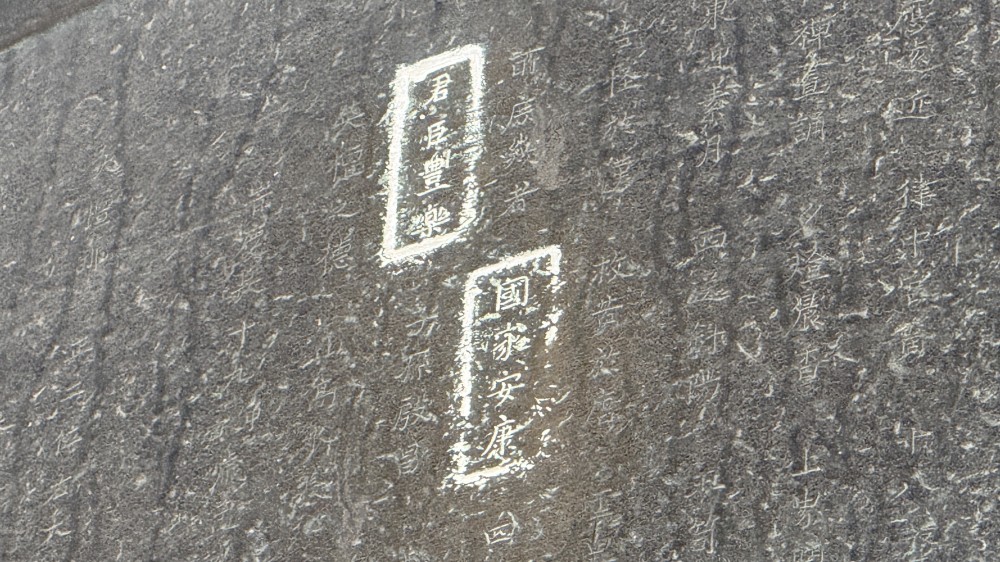
所庶幾者 国家安康
四海施化 万歳伝芳
君臣豊楽 子孫殷昌
“May it be wished: that the realm be at peace and at ease; that teaching spread across the four seas and a good name be transmitted for ten thousand years; that lord and retainer share in prosperity and joy; that descendants flourish and thrive.”
Read as a prayer, these lines express nothing beyond conventional religious blessing. The phrase kokka ankō (国家安康, “the realm at peace and at ease”) and kunshin hōraku (君臣豊楽, “lord and retainer share in joy”) belong to a standard vocabulary of official Buddhist petition. Seikan himself would later argue exactly this point.
Ieyasu read them differently.
The Kanen Incident: A Controversy That Changed History
In the seventh month of Keichō 19 (1614), with the date for the bell’s consecration ceremony already fixed and the hall effectively complete, Tokugawa Ieyasu ordered the ceremony postponed. His stated objection was the inscription.
The accusation, as articulated by the Tokugawa Confucian scholar Hayashi Razan, ran as follows:
Kokka ankō — the characters 家 and 康 (the two characters of Ieyasu’s personal name, Ieyasu, written 家康) appear in this phrase split apart, with the character 安 inserted between them. To divide a person’s personal name — their imina, the name so intimate it was taboo to speak directly — and insert a character between the two halves was, Razan argued, an act of ritual dismemberment. A curse.
Kunshin hōraku — this phrase could be read as “making the Toyotomi (豊臣) the lord (君) and taking pleasure (楽) in that.” An affirmation of continued Toyotomi supremacy, encoded in verse.
And one further reading, the most aggressive: the phrase Ubokunsha Minamoto Ason Ieyasu-kō (右僕射源朝臣家康公) — Ieyasu’s full formal name and title as it appeared in the inscription’s preface — contains the character 射 (sha, “to shoot”). Read with sufficient ingenuity, Razan suggested, this could be parsed as “to shoot the Minamoto” — that is, to shoot Ieyasu, whose clan was of Minamoto lineage.
Of these three objections, even sympathetic contemporaries found the third difficult to take seriously. The historian Goza Yūichi has noted that the Gozan Buddhist monks consulted for their opinion were willing to criticize the use of Ieyasu’s personal name in the inscription — genuinely irregular by the etiquette of the period — but stopped well short of endorsing the accusation of curse. The monks of Shōkoku-ji went further, noting in an addendum that there was no tradition within the Five Mountain temples of avoiding the writing of personal names. It was Razan, and only Razan, who declared the inscription a deliberate act of black magic.
Ieyasu adopted Razan’s interpretation.
What Seikan Actually Said
Bun’ei Seikan submitted a formal defense of his composition — preserved in the Sessen Jitsuroku — in which he explained the literary techniques at work.
The embedding of Ieyasu’s name in kokka ankō, he argued, was an instance of kakushidai (隠し題) — a poetic technique, well established in classical waka and renga, of weaving a person’s name or a significant word into verse as a hidden compliment. Far from an act of disrespect, embedding a superior’s name in this way was a gesture of homage, a conventional literary mark of honor.
As for ubokunsha (右僕射, the title rendered in the Chinese reading before Ieyasu’s name): this Chinese court title carried auspicious associations. In ancient Chinese court ceremonial, an official bearing this title was charged with shooting a ritual arrow to drive away evil spirits at the birth of a royal child. Seikan had chosen the title precisely because it conveyed the idea of warding off harm on Ieyasu’s behalf.
Seikan’s case was not frivolous. The literary techniques he described were real, the precedents he cited were genuine, and his stated intentions — blessing both the Tokugawa and the Toyotomi — were at minimum plausible. Several of the Buddhist scholars consulted were visibly reluctant to condemn him.
None of it was enough.
The Tragedy of the Two Envoys
Recent historical scholarship has complicated the older narrative in an important way. That narrative — Ieyasu seized on a pretext, refused all explanation, and engineered a war he had always intended — turns out to be difficult to reconcile with the primary sources.
The diary of Konchiin Sūden (金地院崇伝), one of Ieyasu’s principal advisors and the official who oversaw the investigation of the inscription, contains copies of letters sent to the Kyoto deputy governor Itakura Katsushige. In an entry dated the twenty-second day of the eighth month of Keichō 19, Ieyasu’s position is recorded with unexpected leniency:
Katamori (片桐且元, Katanagiri Katsumoto, the Toyotomi senior retainer who had overseen the bell project) is blameless in this matter, runs the summary of Ieyasu’s stated view. That he could not himself evaluate the quality of the inscription is entirely understandable. And, most strikingly: the inscription may simply be ground away from the bell.
Not destruction. Not war. Ground away. The bell would remain; the offending characters would be removed.
A subsequent entry, from the eighth of the ninth month, records Ieyasu’s vision of a formal meeting between Tokugawa Hidetada and Toyotomi Hideyori — a reconciliation that would reset the relationship between the two great houses.
These are not the words or the plans of a man who had already decided on annihilation.
What changed was the mission of the two envoys the Toyotomi sent to Ieyasu’s residence at Sunpu.
Katsumoto traveled to Sunpu and was received by Ieyasu’s advisors, not by Ieyasu himself. He was presented with three conditions: that Yodo-dono (Hideyori’s mother) be sent to Edo as a hostage; that Hideyori himself come to Edo in personal attendance; or that the Toyotomi relocate entirely from Osaka Castle. Any of the three would constitute formal submission.
Ōkuradō-no-tsubone — Yodo-dono’s personal attendant and most trusted confidante — traveled to Sunpu and was received by Ieyasu himself, graciously and without apparent tension. The inscription was not mentioned. Ieyasu spoke warmly of Hideyori as his son-in-law (Hidetada’s daughter was Hideyori’s wife) and expressed no hostile intentions whatsoever.
The two women returned to Osaka with incompatible reports.
Yodo-dono believed the woman she trusted completely. If Ieyasu had expressed no grievance to Ōkuradō-no-tsubone, then the three harsh conditions Katsumoto had received must have been Katsumoto’s fabrication — evidence that Katsumoto had turned against his own lord and was conspiring with the Tokugawa. Katsumoto was suspected of treason, stripped of his role, and effectively expelled from Osaka Castle.
In doing so, the Toyotomi destroyed the one channel through which a negotiated resolution might still have been reached.
When word reached Ieyasu that Katsumoto had been expelled, he concluded that the Toyotomi had chosen defiance. In the tenth month of Keichō 19 — October 1614 — he issued mobilization orders to the domain lords. The Siege of Osaka (Winter Campaign) began.
What the Inscription Actually Cost
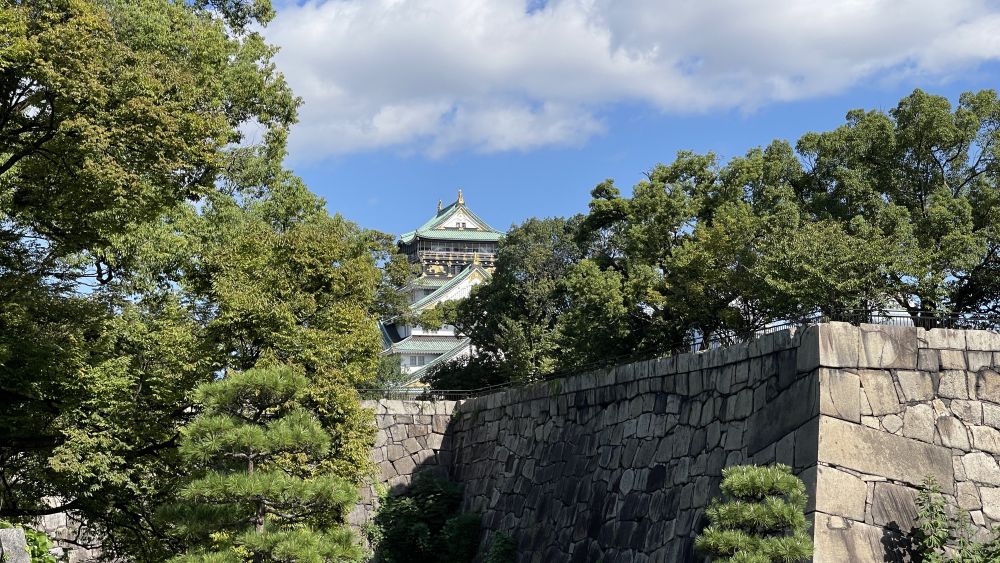
The war unfolded in two stages. The Winter Campaign of 1614 ended in an armistice — but an armistice whose terms required the filling-in of Osaka Castle’s outer moats, eliminating the fortress’s defensive depth. The Summer Campaign followed in the fifth month of Keichō 20 (1615). Osaka Castle fell. Hideyori and Yodo-dono died in the ruins. The Toyotomi line was extinguished.
Bun’ei Seikan, the author of the inscription, had taken refuge inside Osaka Castle during the siege. He was captured after the fall, held under house arrest at Sunpu, and died there in Genna 7 (1621).
Katsumoto, expelled by the Toyotomi on suspicion of treachery, fought with the Tokugawa forces in both campaigns. He died twenty days after the fall of Osaka Castle, at the age of sixty. He had once been counted among the Seven Spears of Shizugatake — the elite warriors of Hideyoshi’s early campaigns — and had served Hideyori as guardian and administrator. He ended his life in arms against the house he had devoted himself to protecting.
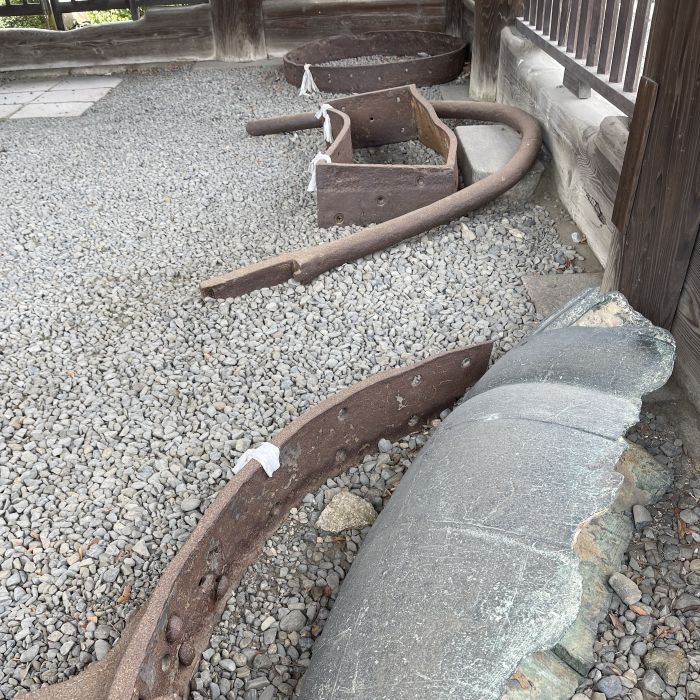
Toyotomi Hideyoshi, who had commissioned the temple, was stripped of his divine title (Hokoku Daimyōjin) by Tokugawa order. The Hokoku Shrine that had venerated him was abolished. His name was officially replaced by a Buddhist posthumous title. The Daibutsu-den — the great hall completed at such effort and expense, consecrated with such ceremony — burned during the fighting and was never rebuilt.
The Bell That Was Never Erased
In the middle of all this destruction, one object remained undamaged.
Ieyasu himself, in the document recorded by Sūden, had said the inscription could simply be ground off the bell’s surface. It never was. Whether the question became moot as events escalated, or whether the physical scale of the work made it impractical, or whether some deliberate decision was taken to leave the bell intact — the historical record does not say. What the record shows is that the bell survived the siege, the burning, the confiscations, and the four centuries that followed, without alteration.
The eight characters — 国家安康, 君臣豊楽 — are still there, as legible as when Seikan composed them in 1614. So is the line at the bell’s base that reads: Bugyō: Katanagiri Higashiichishō Toyotomi Katsumoto (奉行 片桐東市正豊臣且元) — the name of the administrator who oversaw the project — and, below it, Zen’jū Tōfuku, Kōjū Nanzen, Bun’ei-sō Seikan Kinsha (前住東福後住南禅 文英叟清韓謹書) — the name of the monk who wrote the words.
The bell that started a war bears the names of the men it destroyed.
Was It a Pretext?
The textbook account frames the Kanen Incident as a clear case of manufactured grievance: Ieyasu wanted a war, found a convenient excuse in the inscription, and proceeded to manufacture one. This account has the advantage of narrative clarity, and it is not entirely wrong.
But it is incomplete.
The etiquette violation embedded in Seikan’s inscription was, by the standards of the time, genuine. Writing a superior’s personal name — the imina — directly into a public document, without permission and without the conventions that might have softened the intrusion, was considered a serious lapse. That Seikan did it twice — once in the hidden form of kokka ankō and once explicitly in the preface — made it, from a contemporary standpoint, difficult to dismiss as inadvertent.
At the same time, Ieyasu’s initial response — ground off the inscription, arrange a meeting between Hidetada and Hideyori — does not read like a man preparing a predetermined war. The war came, in the end, not from Ieyasu’s initial position but from the collapse of the channel that might have resolved the crisis: Katsumoto’s expulsion, the mutual incomprehension of the two envoys, and a decision made inside Osaka Castle that cannot be laid at Ieyasu’s feet.
None of this absolves the Tokugawa of the political calculation that ran through every step of the affair. But it does complicate the story.
History rarely cooperates with simple villains. What the Kanen Incident shows is something more characteristic of how catastrophes actually unfold: a genuine misunderstanding, a genuine grievance, a genuine opportunity for de-escalation, and then a cascade of human failures — suspicion, miscommunication, pride — that swept past every available exit.
The Bell Today
The Hōkōji precinct is easy to miss even when you are looking for it. The temple sits in the shadow of the Kyoto National Museum, its entrance modest, its grounds compact. The Daibutsu-den that once dominated this corner of Higashiyama is gone; only fragmentary stone foundations survive to indicate its scale.
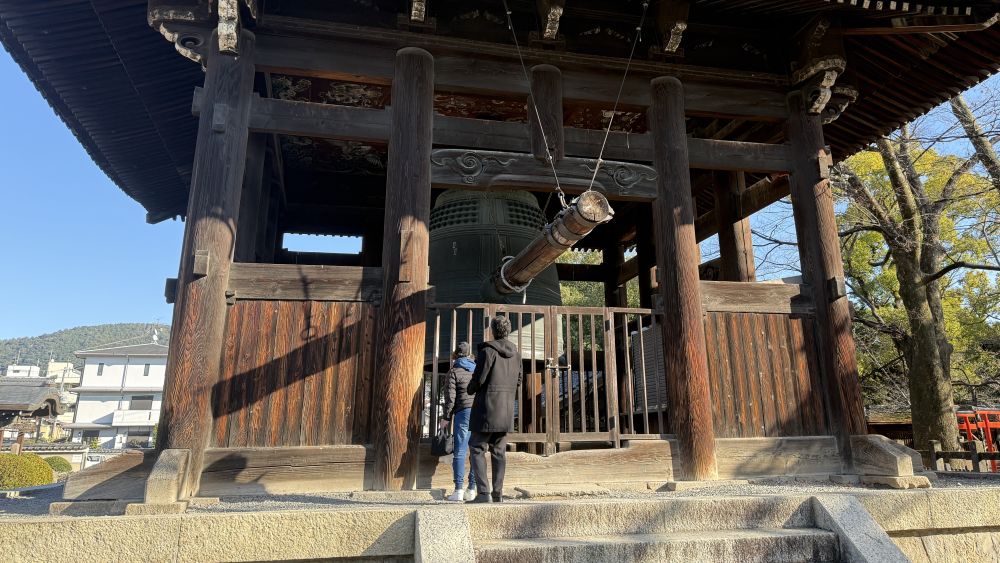
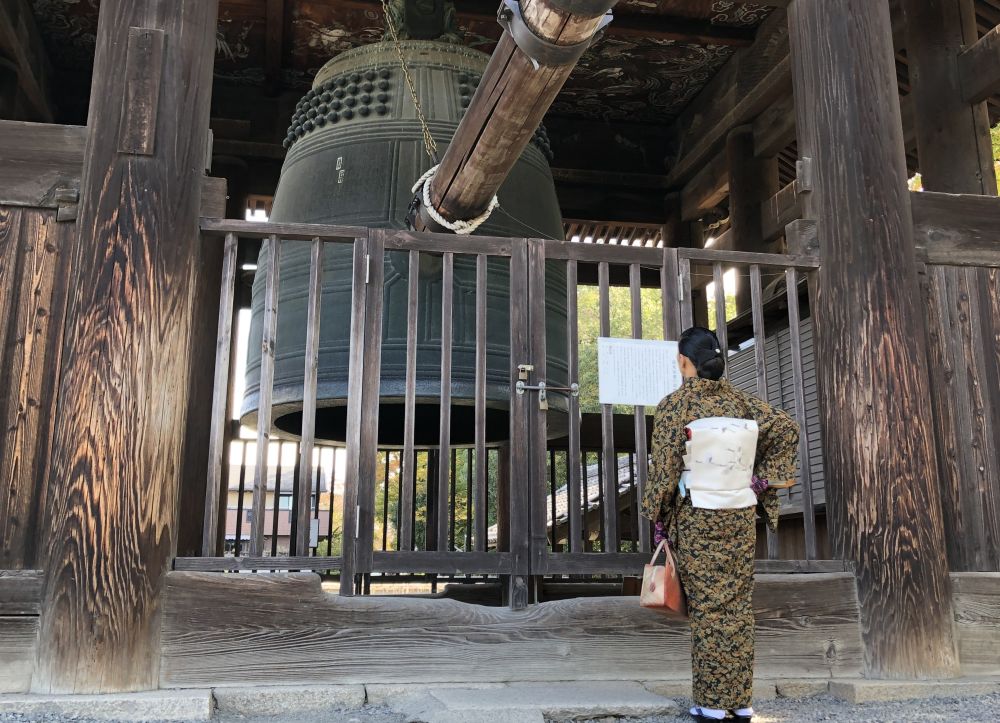
The bell tower stands at the far end of the small inner precinct. The bell that hangs there — cast in 1614, 82.7 metric tons of bronze, 4.2 meters tall — is the original. It has not been replaced, not been melted down, not been retired to a display case.
It is rung only once a year, on New Year’s Eve — and not every year.
The eight characters are visible from outside the tower. So are the names of Katsumoto and Seikan, inscribed at the base, as they have been for more than four centuries.
Access
Houkouji Temple
657 Yamato-ōji Higashi-iru, Masuyachō, Higashiyama-ku, Kyoto
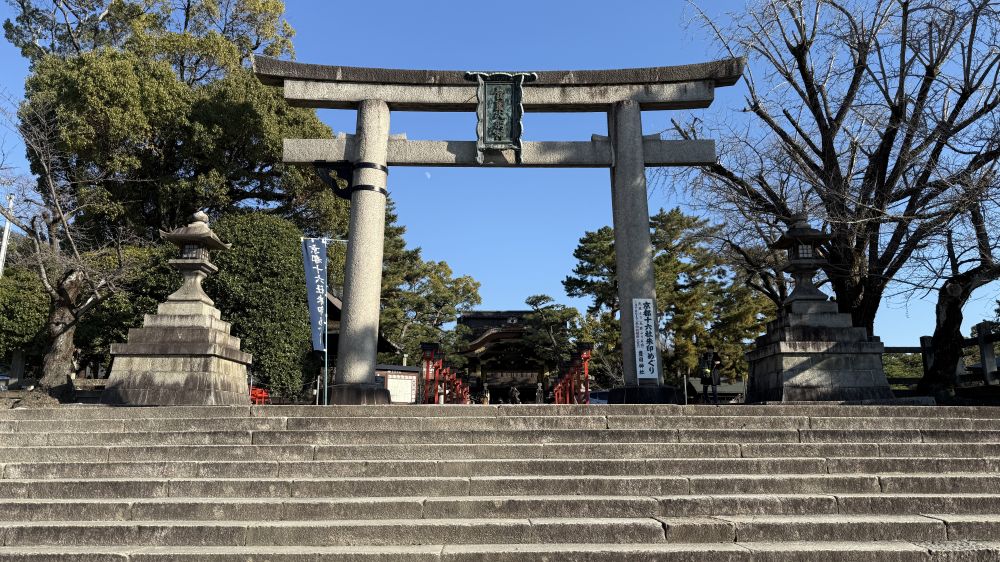
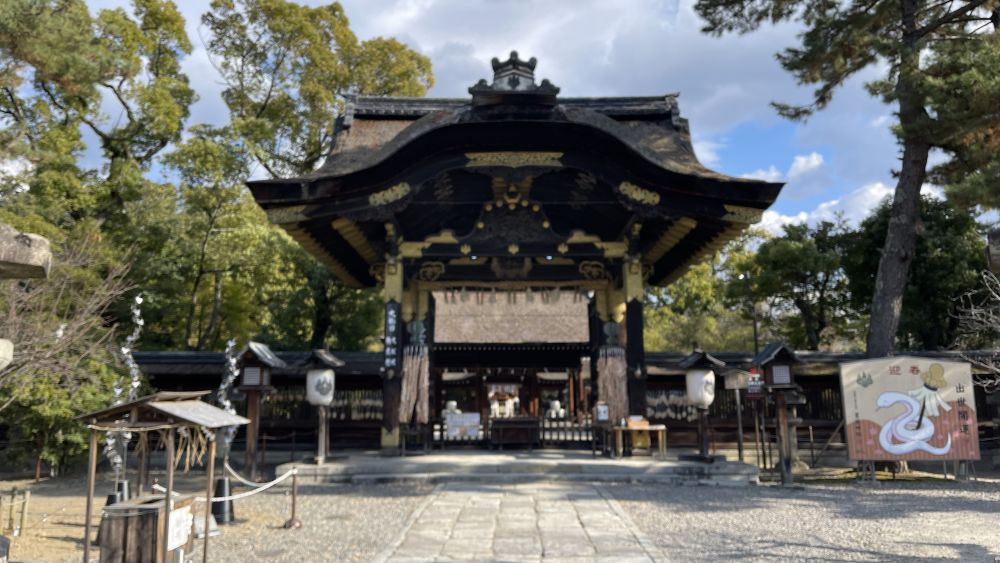
Adjacent to the Kyoto National Museum. The Hokoku Shrine, dedicated to Toyotomi Hideyoshi, stands immediately to the south; the great torii of the shrine is visible from the temple precinct.