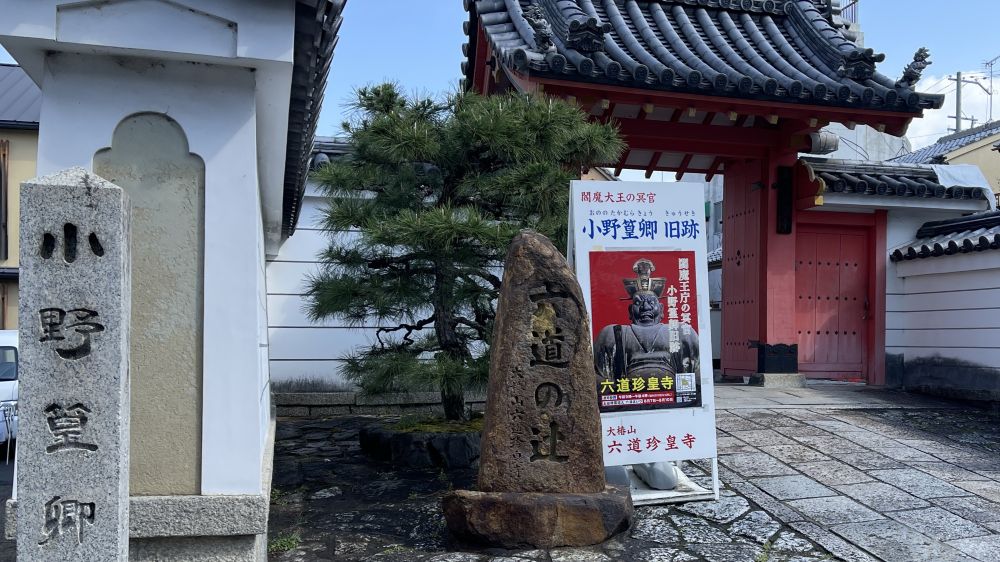
Step into Rokudou Chinno-ji in Kyoto’s mysterious Rokudo district — where a legendary courtier commuted to the underworld nightly, two ancient wells still connect the living to the dead, and a single toll of the “Welcoming Bell” is said to summon ancestral spirits from beyond. Discover the temple’s eerie history and its rare, publicly ringable bonshō.
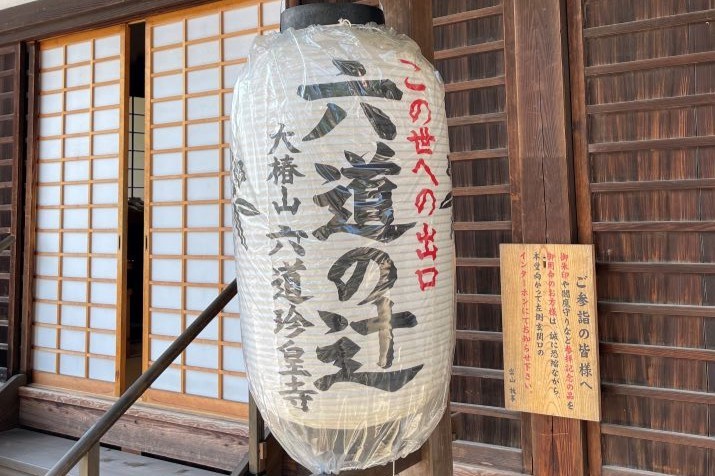
A Crossroads Between Two Worlds
Tucked into the eastern backstreets of Kyoto, in a district known as Rokudo no Tsuji — literally, “the crossroads of the six realms” — stands one of Japan’s most unsettling sacred sites. Rokudou Chinno-ji doesn’t announce itself loudly. The surrounding neighborhood is, surprisingly, cheerful: small shops, locals on bicycles, the smell of tofu and incense drifting together. But step through the temple gate and the atmosphere shifts.
This is a place where the boundary between the living and the dead has always been considered dangerously thin.
In Buddhist cosmology, the six realms (rokudō) are the six planes of existence through which all beings cycle: the realms of heavenly beings, humans, fighting demons, animals, hungry ghosts, and hell. The crossroads at this location — on the edge of what was once Kyoto’s primary burial ground, the Toribeno cremation fields — was believed in the Heian period (794–1185) to be the precise point where the recently deceased passed out of the human world and began their journey through those realms. Grieving families would come here to bid farewell to the newly dead. It was not a place you lingered after dark.
It still feels that way.
Ono no Takamura: The Man Who Clocked In at the Gates of Hell
The figure at the heart of Rokudou Chinno-ji’s legend is Ono no Takamura (802–852). Takamura was a pillar of the imperial court — a senior official (sangi) of impeccable lineage. His great-great-grandfather was Ono no Imoko, the celebrated diplomat who traveled to Tang Dynasty China as one of Japan’s first official envoys. Takamura himself was a gifted poet, selected for inclusion in the Hyakunin Isshu — the celebrated anthology of one hundred poems by one hundred poets that still forms the backbone of traditional Japanese poetic culture today. He was educated, aristocratic, and deeply embedded in the machinery of power.
He was also, according to legend, moonlighting in hell.
The story goes that every night, Takamura descended through a well located in what is now the temple’s rear garden, traveled to the underworld, and served as an assistant to Emma-Ō — the great King of Hell, judge of the dead, arbiter of karmic fate. There, he helped review the deeds of the deceased and assign their destinies in the afterlife. When dawn approached, he returned to the human world through a separate well, resumed his court robes, and carried on with the day’s administrative duties as if nothing had happened.
This is, on its face, absurd. It is also, in the context of Heian-era court culture, entirely consistent with how people understood the world. The boundary between realms was porous. Spirits, demons, and divine figures moved through it constantly. That a sufficiently learned and spiritually potent individual might travel between worlds was not considered impossible — merely unusual.
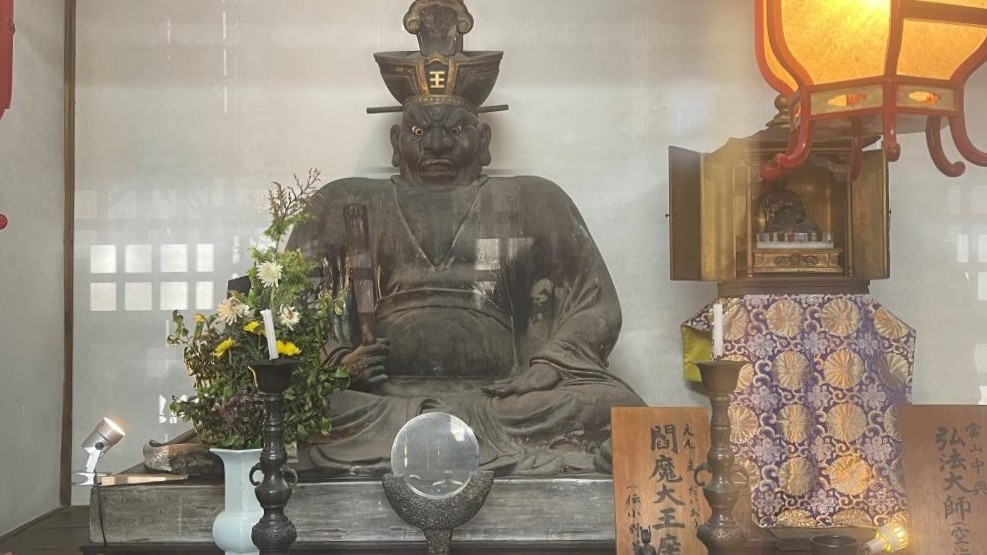
The temple enshrines a wooden statue of Takamura believed to have been carved by Takamura himself — an image of Emma-Ō created at the king’s own request, as thanks for his loyal service. It is one of the oldest surviving Emma-Ō statues in Japan.
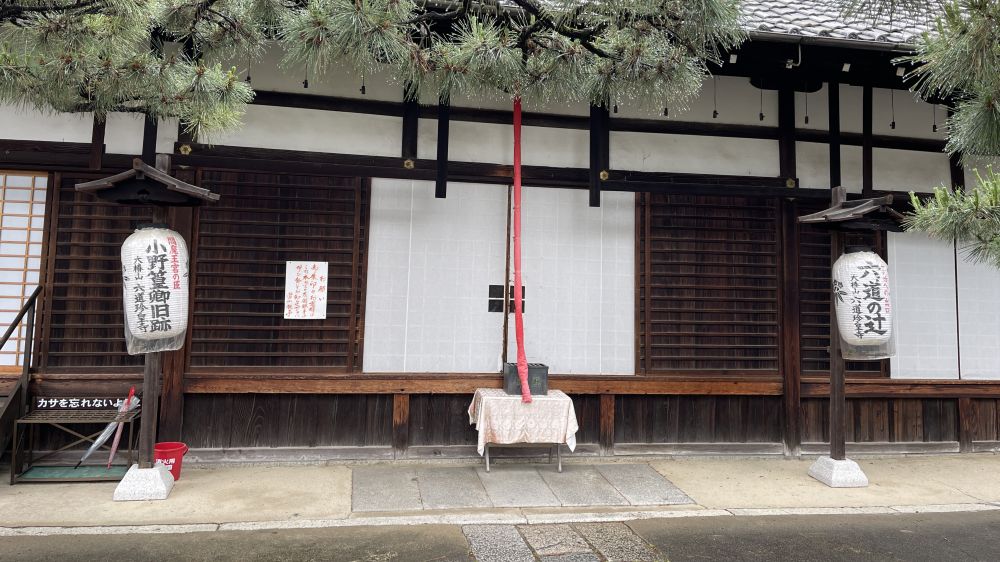
The Wells: Physical Evidence of an Impossible Commute
The most viscerally striking thing about Rokudou Chinno-ji is that the wells are still there.
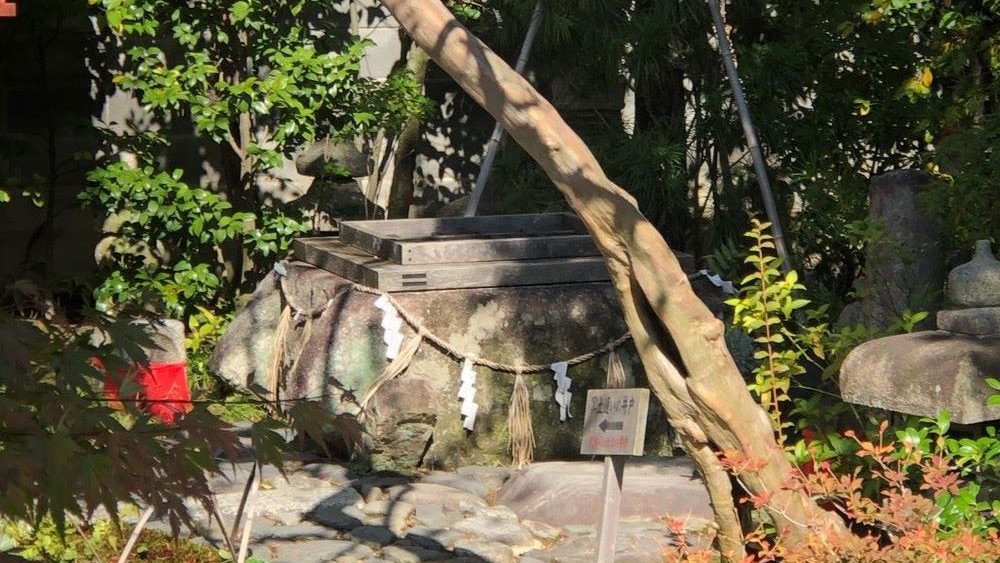
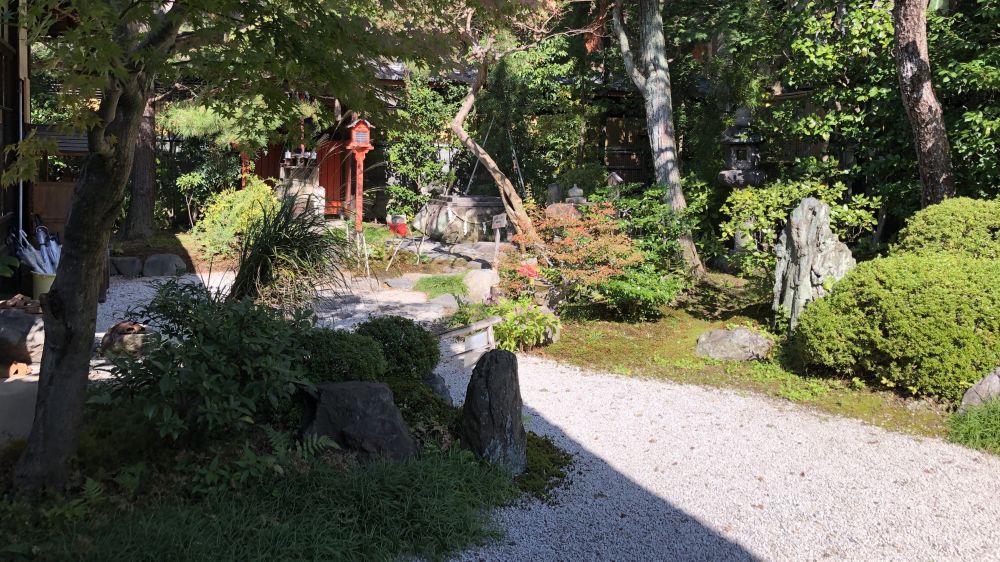
The Well of the Underworld Journey (Meido-kayoi no Ido) sits in the temple’s rear garden, accessible to view from the corridor of the main hall. Visitors cannot approach it directly, but they can photograph it. It is a simple stone-rimmed well, moss-covered and ancient-looking, recessed into the garden ground. It looks exactly like what it is: a very old well. And yet knowing what it allegedly was — the hole through which a Heian courtier climbed down each night into the land of the dead — makes it impossible to look at neutrally.
The Well of Return (Yomigaeri no Ido) is even more recent in its discovery. About ten years ago, during construction work on a property adjacent to the temple, workers uncovered an old well that had long been buried and forgotten. Some scholars and temple authorities have suggested this may be the well through which Takamura returned each morning — resolving a longstanding puzzle, since old texts placed his return route in the Sagano district of Kyoto, impractically far away. The return well is generally not open to visitors, though special events occasionally allow viewing. Photography is not permitted.
Two wells. One for going down, one for coming back. The underworld, it seems, was organized.
Murasaki Shikibu and the Geography of Guil
Ono no Takamura appears in one more remarkable story connected to this area of Kyoto, and it involves the most famous author in Japanese literary history.
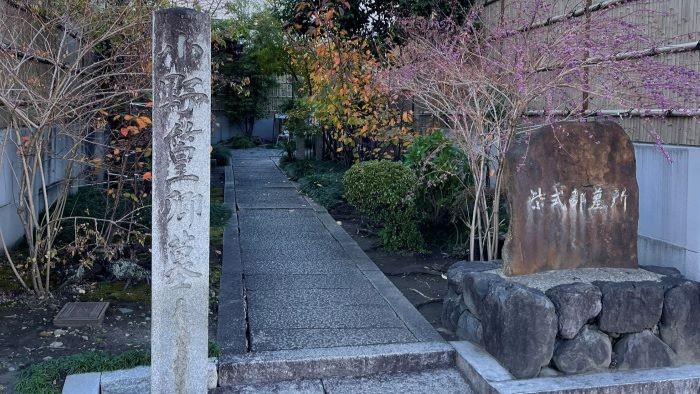
A short distance from Rokudou Chinno-ji — near Horikawa Kita-Oji — two stone monuments stand side by side: the Grave of Ono no Takamura and the Grave of Murasaki Shikibu. Their proximity is not coincidence. It is theological.
Murasaki Shikibu, the 11th-century court lady who wrote The Tale of Genji — often cited as the world’s first novel — was, in the view of medieval Buddhist thinkers, in serious spiritual jeopardy. Her masterwork is a story of romantic entanglement, court intrigue, and erotic poetry. Beautiful, yes. Morally instructive, no. The practice known as Genji-kuyō — the ritual memorial service for The Tale of Genji and its author — developed from the belief that Murasaki had endangered her own soul by writing fiction that stirred passions and distracted readers from Buddhist practice.
The solution, apparently, was to move her grave next to Takamura’s. As the man with the ear of Emma-Ō himself, Takamura was perhaps uniquely positioned to intercede on her behalf. Whether it worked is a matter of faith. Whether the graves are authentic is a matter of historical debate. But the juxtaposition — the moonlit bureaucrat of hell placed beside the greatest novelist in Japanese history, as her supernatural advocate — is one of those details that could only come from a culture as imaginatively rich as Heian Japan’s.
The Bell and Its Chamber
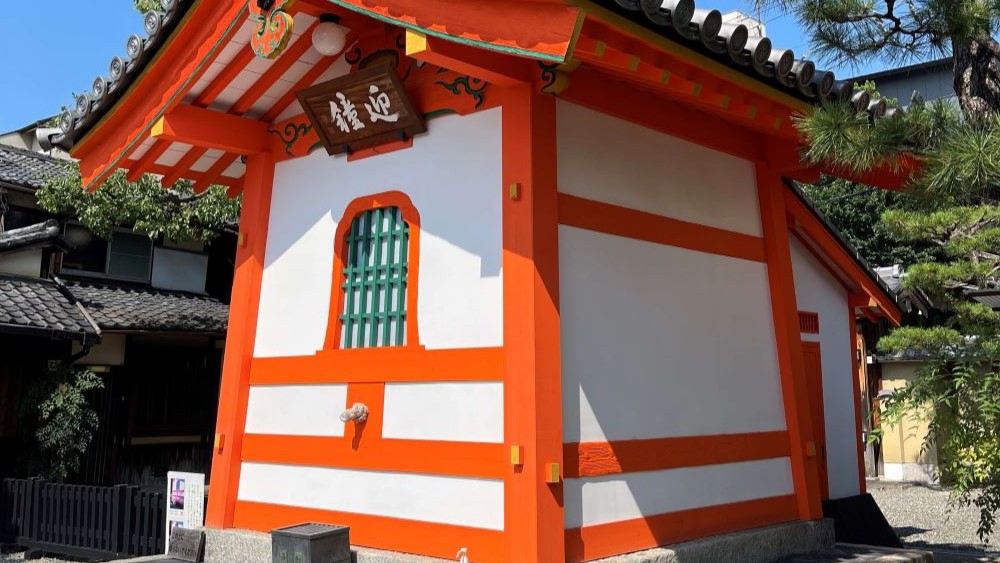
The bonshō at Rokudou Chinno-ji is housed inside an enclosed bell tower (shōrō), and unlike many temple bells, it cannot be seen directly. The bell chamber has solid walls; the bell itself is enclosed within. What emerges through the wall is a hanging rope — the pull cord — allowing worshippers to ring it without entering the chamber or seeing the bell.
This architectural arrangement is unusual and arguably appropriate. The bell’s power is in its sound, not its appearance. What matters is the resonance, the vibration moving outward through air and, supposedly, into other realms.
Beneath the Bell: A Buried Jar and a Sealed Passage
Directly below the bell’s position, a hole has been dug into the earth, into which a ceramic jar (kame) has been buried. This is both practical and mythological.
From an acoustic perspective, the jar creates a resonant cavity beneath the bell, enhancing the depth and sustain of the tone — a technique found in various forms across Asian musical and architectural traditions.
From a ritual perspective, the jar is understood as sealing the opening to the underworld. The crossroads at Rokudo no Tsuji was not merely symbolic — this specific ground was believed to be a literal entry point to the realms below. The buried jar keeps that opening closed under ordinary circumstances, allowing it to be temporarily “opened” — acoustically, spiritually — only when the bell is rung.
Open to All: A Rare Privilege
One of the more practically notable features of Rokudou Chinno-ji’s bell is that visitors can ring it themselves, essentially at any time.
This is rarer than it sounds. The normalization of noise regulations in Japanese cities over the past several decades has steadily reduced the number of temples where public bell-ringing is permitted. Many bells that were once freely accessible are now rung only by priests, only on specific calendar dates, or not at all. A publicly accessible pull-cord, available throughout visiting hours, represents a living practice rather than a preserved relic.
Access
Rokudouchinnou-ji
595 Komatsu-chō, Higashiyama-ku, Kyoto, Japan