At Hasedera in Nara, a bell cast in 1501 rings alongside a conch-shell horn every day at noon — a ritual so ancient that Sei Shōnagon, Murasaki Shikibu, and two other Heian authors all wrote about it. Discover the temple’s mountain-filling beauty and its extraordinary living bell tradition.
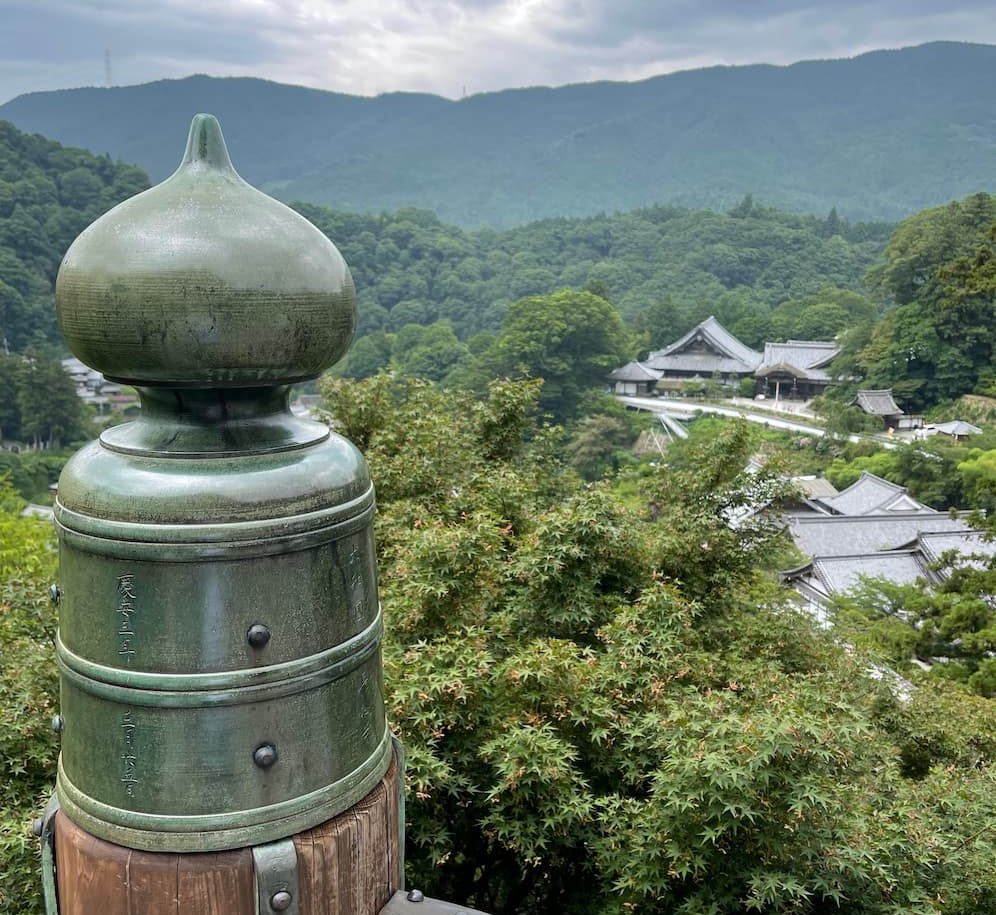
The Temple That Fills a Mountain
Most Japanese temples occupy a plot of land. Hasedera occupies a mountain.
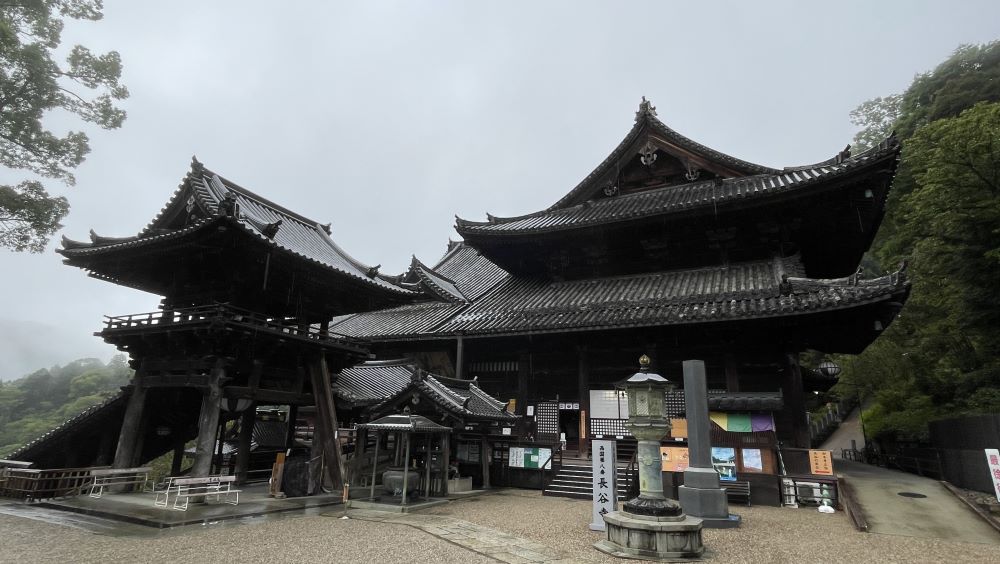
Set in the valley of Hatsuse in Sakurai City, Nara Prefecture, the temple complex spreads across the hillside of Mt. Hase in a way that makes conventional spatial categories feel inadequate. You don’t walk to Hasedera — you walk into it, ascending through successive layers of architecture, garden, and forest until the whole mountain seems to have become the temple, and the temple the mountain.
The founding of Hasedera is traditionally attributed to the period between the late 7th and early 8th centuries, with ancient records citing a year in the reign of Emperor Tenmu or Empress Jitō — somewhere in the range of 686 to 710. The precise date remains debated, but the implication is clear: this is a temple with over 1,300 years of continuous history. Whatever date one accepts, it places Hasedera among the oldest continuously active religious sites in Japan.
The temple belongs to the Buzan school of Shingon Buddhism and serves as its head temple. Its principal object of worship is an eleven-faced Kannon (Jūichimen Kannon) standing nearly ten meters tall — one of the largest wooden Buddhist statues in Japan. This colossal image, carved from a single camphor log according to tradition, has drawn pilgrims from across the country for more than a millennium.
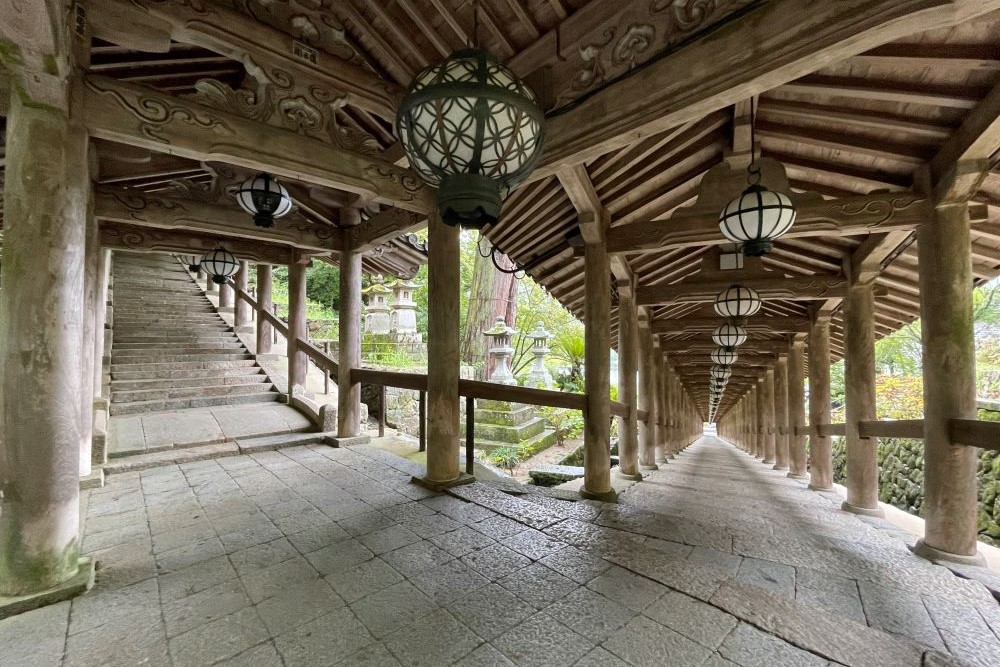
The Covered Gallery: 399 Steps Through Changing Seasons
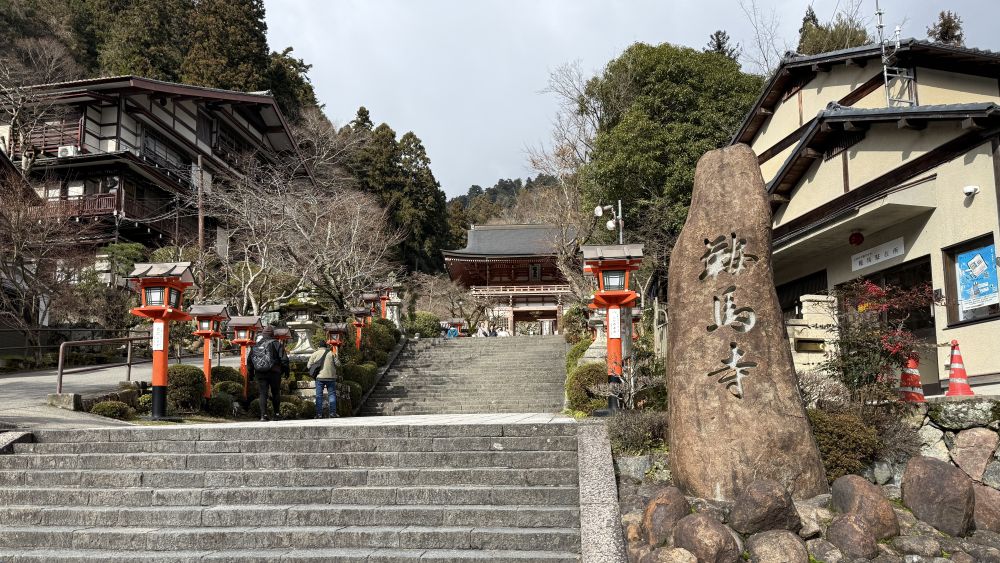
The most immediately striking feature of Hasedera is the nobori-rō — a long covered gallery of 399 stone steps connecting the main gate to the inner sanctuary. Built at a steep angle up the hillside, the gallery is divided into three flights, each sheltered by a continuous wooden roof supported by ancient pillars.
The gallery dates in its current form to a reconstruction in Meiji 22 (1889), and is itself a Nationally Designated Important Cultural Property. What makes it remarkable is not merely the architecture but what grows alongside it: peonies in spring, hydrangeas in early summer, autumn leaves in fall. The temple’s reputation as hana no otera — “the temple of flowers” — owes much to this gallery, where seasonal blooms are cultivated in deliberate abundance along both sides of the ascent. Climbing the 399 steps in any season is the central physical experience of visiting Hasedera, and the flowers mean that even moderate effort feels rewarded at each landing.
The gallery was the setting for a scene in a recent JR Tokai travel campaign featuring actor Suzuki Ryōhei, which introduced Hasedera to a new generation of domestic travelers. But for those who have climbed it in late June, with hydrangeas pressing in from both sides and the sound of water somewhere below, no promotional framing is necessary.
The Clifftop Stage: A National Treasure Above the Valley
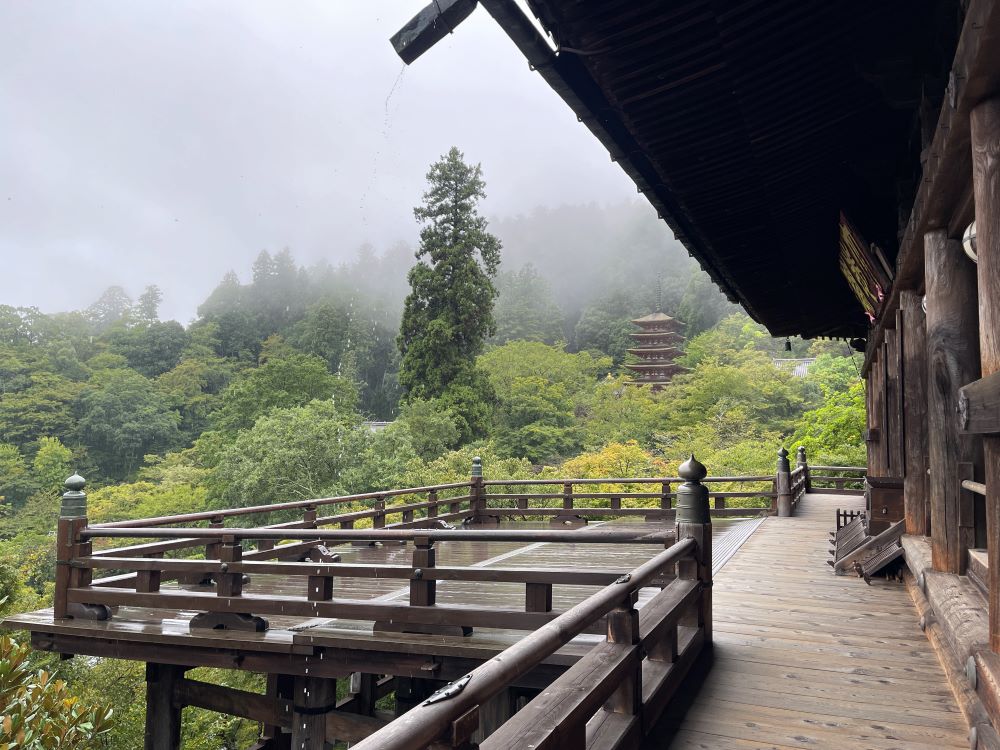
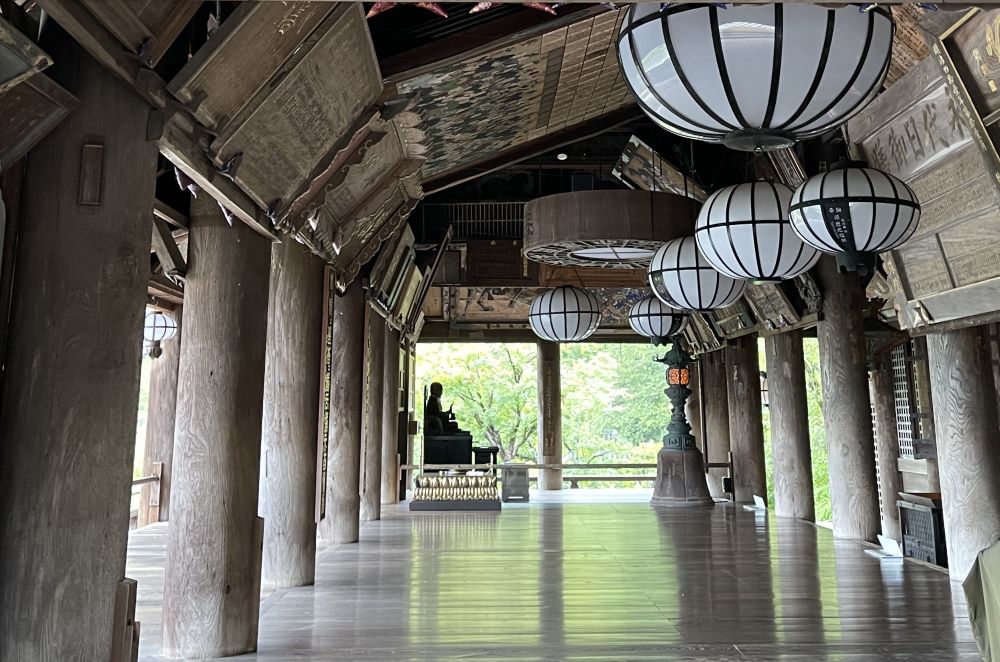
At the top of the gallery, the main hall (hondō) extends out over the cliff face on an enormous wooden platform — a structure so boldly conceived and so carefully executed that it has been designated a National Treasure.
The design is reminiscent of Kiyomizudera in Kyoto, and the comparison is apt: both temples employ the technique of extending a stage out over steep terrain to create a panoramic vantage point. At Hasedera, the stage looks directly down onto the old pilgrimage town below — a compact arrangement of inns, shops, and cedar-roofed buildings that has changed remarkably little in its essential character over the centuries.
From this platform, especially at midday, you can hear the valley. In the right conditions, you can also hear the bell.
Temple Bell
Story
Two Temples, One Legend: Nara and Kamakura’s Shared Origin
Among the more curious facts about Hasedera is its relationship with the Hasedera in Kamakura — a completely separate temple, belonging to a different Buddhist school, located in Kanagawa Prefecture near the Pacific coast.
Despite having no institutional connection, both temples share an almost identical principal image: a wooden eleven-faced Kannon, just under ten meters tall. The traditional explanation for this coincidence is one of Japan’s more quietly beautiful legends.
In 721, the monk Tokudō Shōnin is said to have carved two Kannon statues from a single sacred camphor log. One was enshrined at Hasedera in Nara. The other was released into the sea. For fifteen years, this second statue drifted across the ocean before washing ashore on the Shōnan coast near Kamakura, where it was enshrined in the temple that would become Kamakura’s Hasedera.
The two temples are unrelated by lineage or administration. They share only a name, a legend, and a striking physical resemblance between their central statues. Both temples are also celebrated for their hydrangeas — whether by coincidence or by the long memory of traveling pilgrims, no one can quite say.
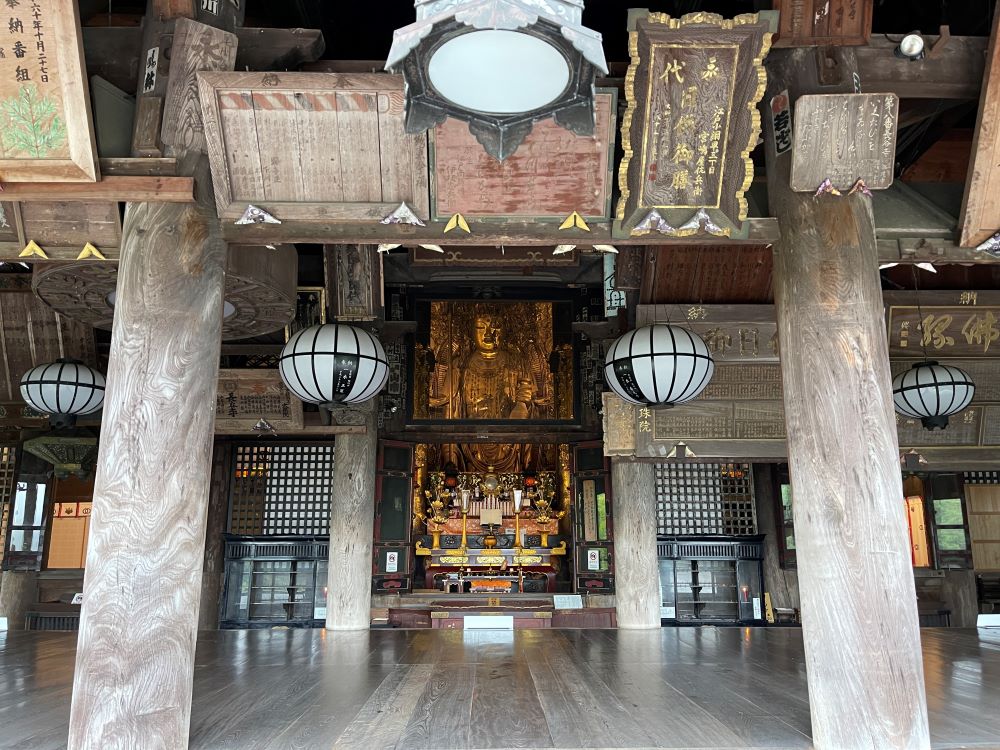
The Bell That Replaced a Poem
Hasedera’s first temple bell was donated in 1019 by a man named Kurita Suketada from what is now Kizugawa City in Kyoto Prefecture. This original bell no longer exists — but it survived long enough to be heard, and admired, by one of the most important literary figures of the Heian period.
Fujiwara no Teika (1162–1241), the poet and editor whose judgments shaped the entire tradition of classical Japanese verse, visited Hasedera and heard the bell ring across the valley. He composed a waka that was later included in the Shin Kokinwakashū, one of the imperial anthologies:
“Years have passed — still I hold to the vow I made; the bell of Hase’s peak tolls across another dusk.”
— Fujiwara no Teika, Shin Kokinwakashū
The poem turns on the word onoe — peak, or mountaintop — and the bell that sounds across it, carrying the pilgrim’s unresolved prayer through yet another twilight. It is a poem about patience, and about sound as the medium through which devotion persists across time.
The Second Bell: Cast in 1501, Still in Use Today
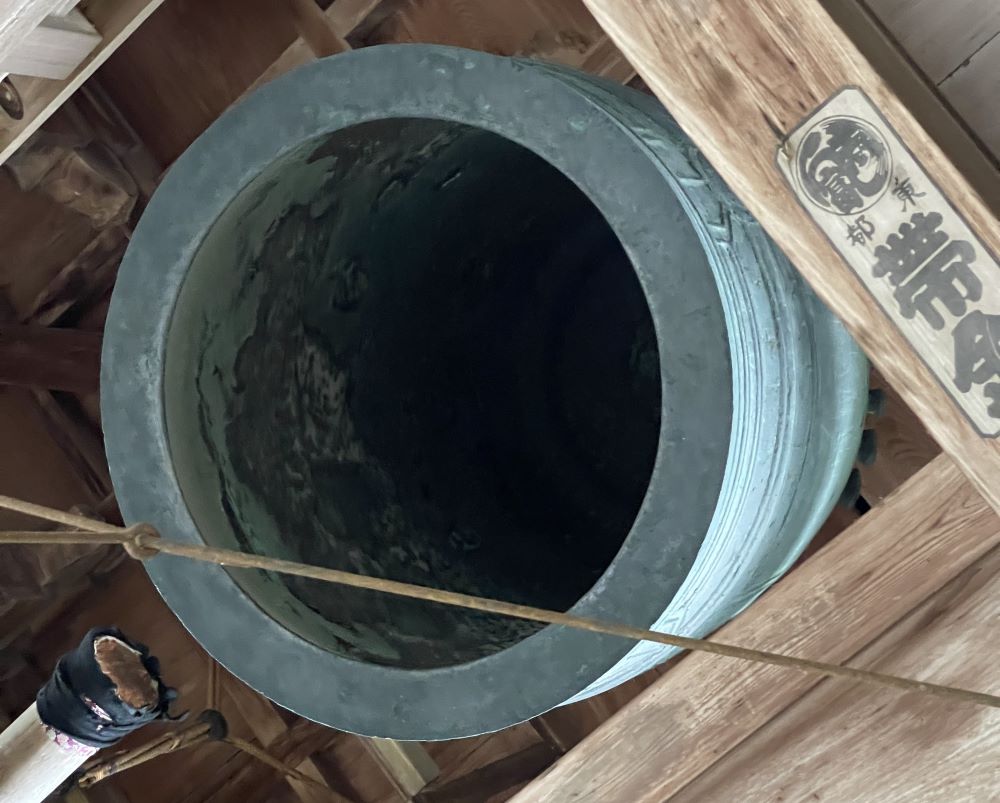
In 1501 (Bunki 1), a new bell was cast. This second bell is the one that hangs in Hasedera’s bell tower today — over 520 years of continuous daily use, making it one of the longest-serving active temple bells in Japan.
This bell is called the Onoe no Kane — “the Bell of the Peak” — a name borrowed from a famous bell at Onoe Shrine in Kakogawa, Hyogo Prefecture. That Onoe Shrine bell has its own legend: stolen and put to use elsewhere, it reportedly rang out “Onoe, Onoe” — a literal cry to return home — until it was restored. When Fujiwara no Teika heard the Hasedera bell and was reminded of the Onoe bell, he seems to have transplanted the name in verse. The bell cast in 1501 inherited that poetic association and has carried it ever since.
The bell’s inscription and surviving temple records confirm its casting date. What the historical record emphasizes, beyond the date, is the bell’s unbroken continuity: it has not been replaced, has not been melted down — an outcome that befell tens of thousands of temple bells across Japan during the wartime metal drives of the early 1940s — and has not been retired to a museum. It hangs where it has always hung.
The Noon Ritual: Bell and Conch Together
What makes Hasedera’s bell practice genuinely unusual is not the bell itself but what accompanies it.
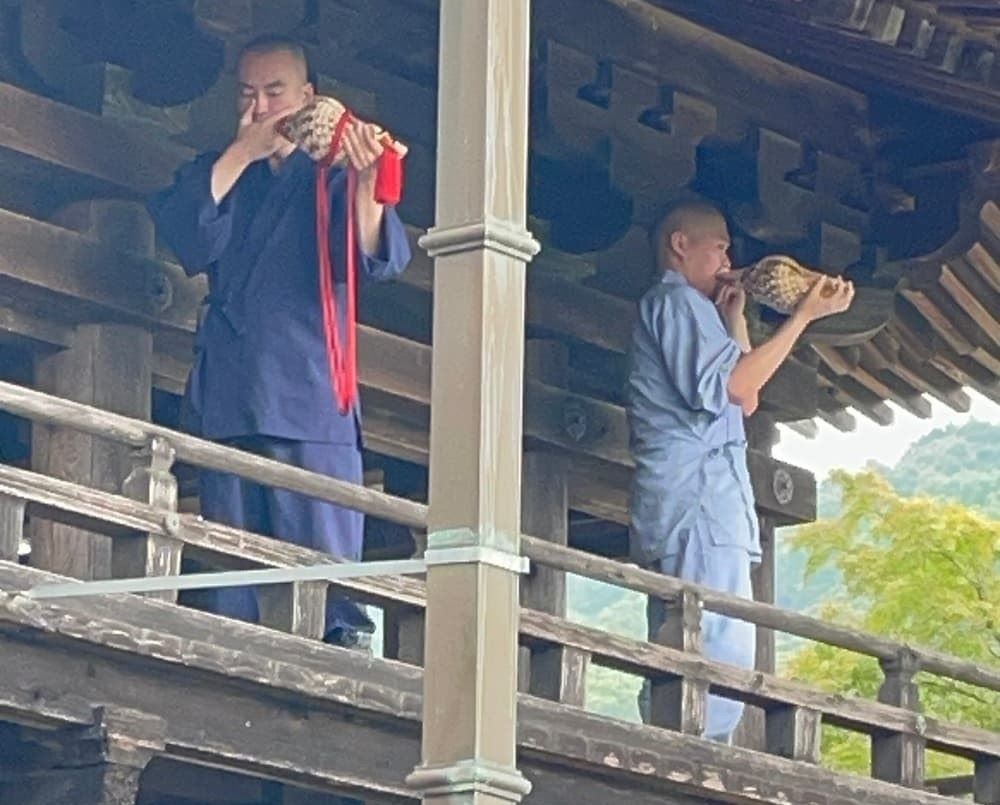
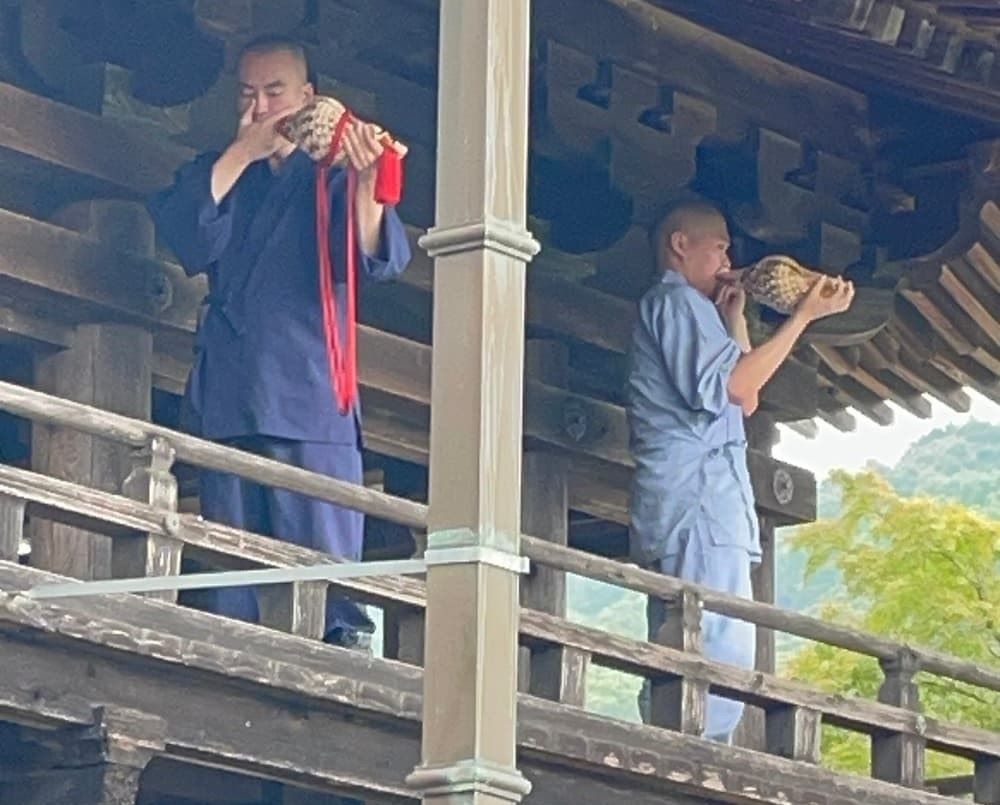
Every day at noon, a monk climbs to the bell tower and performs what the temple calls the toki no kai — “the time-conch.” The bell is struck, and in close sequence, a horagai (conch-shell horn) is blown. The two sounds fill the valley together: the deep, decaying resonance of the bronze bell and the bright, penetrating cry of the conch.
This daily pairing is not a modern invention or a tourist performance. It is documented in classical literature spanning the entire Heian period.
Sei Shōnagon, writing the Pillow Book (Makura no Sōshi) in the late 10th or early 11th century, describes the startling effect of the conch being suddenly blown during a quiet midday at the temple — men and children who had gathered in the old monk’s lodgings, drowsy in the calm afternoon, were jolted when the conch erupted at tremendous volume right beside them. The image is as vivid now as when she wrote it: the specific quality of midday quiet, suddenly torn open by sound.
The toki no kai also appears in the Kagerō Nikki (Gossamer Diary) by Fujiwara Michitsuna’s mother, in The Tale of Genji by Murasaki Shikibu, and in the Sarashina Diary by Sugawara no Takasue’s daughter. Across these four foundational works of Heian prose — written by four different women across roughly a century — the noon bell-and-conch ritual at Hasedera appears as a shared point of reference, as familiar to educated 11th-century readers as the clifftop stage itself.
The fact that this ritual continues unchanged today — at the same hour, in the same place, with the same combination of instruments — is one of the more quietly extraordinary examples of temporal continuity in Japanese religious practice. A visitor who stands on the main hall’s stage at noon and hears the bell followed by the conch is hearing, with only minor acoustic variation, exactly what Sei Shōnagon heard roughly a thousand years ago.
When to Hear It
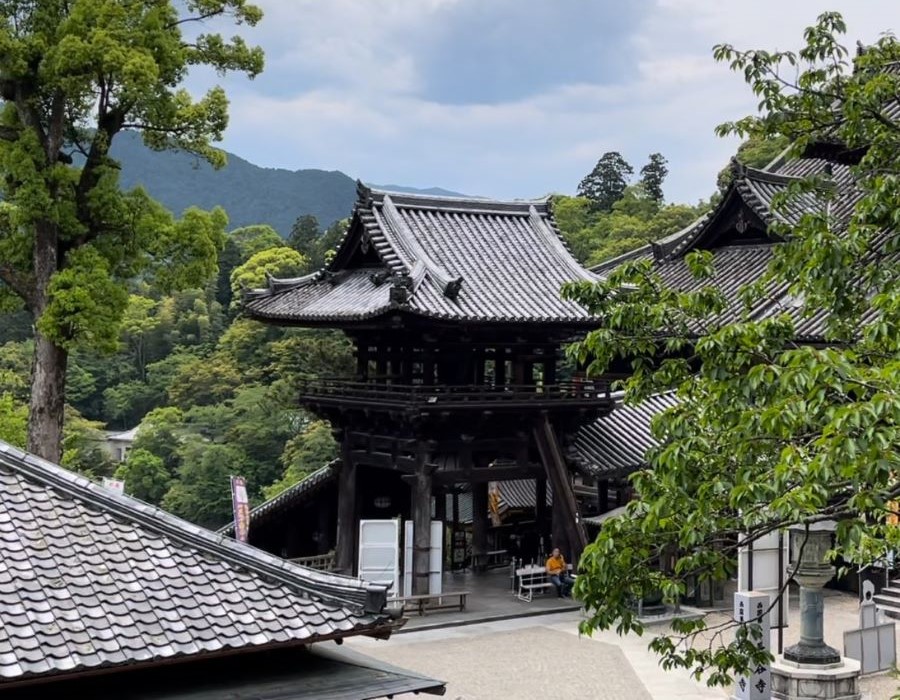
The noon striking occurs daily, weather permitting. The best vantage point is the main hall’s stage (hondō butai), which faces toward the bell tower and provides a clear acoustic line across the inner precinct. The bell is also rung at 6 a.m. (bell only) and at 8 p.m. (conch only). The midday pairing is the rarest and most complete of the three.
Access
Yamato Hasedera
731-1 Hatsuse, Sakurai City, Nara Prefecture