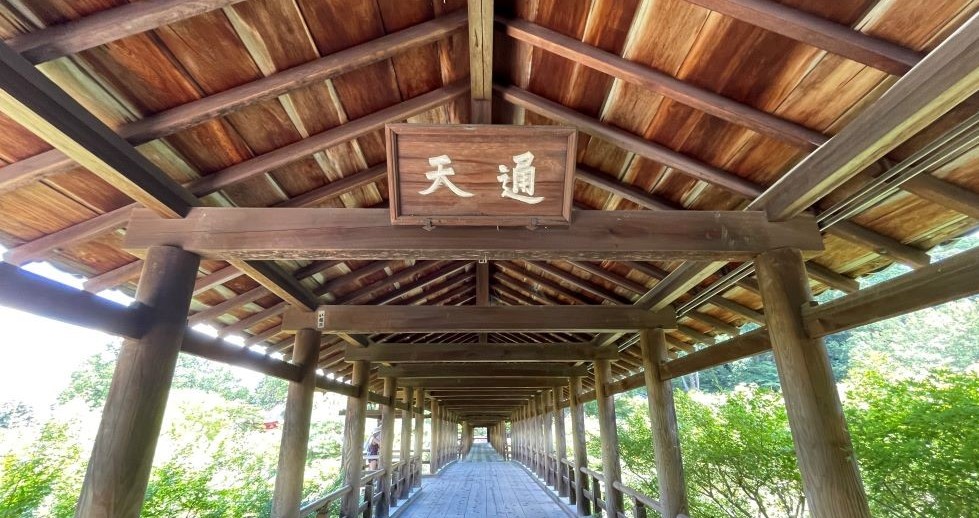
Kyoto has no shortage of famous temples, but Tofukuji occupies a particular place among them. Founded in 1236 during the Kamakura period, its name combines a character each from Tōdaiji and Kōfukuji — two of Nara’s greatest temples — a deliberate statement of ambition from the moment of its founding. The temple’s Tsūtenkyō Bridge has made it one of Kyoto’s most visited destinations, especially in autumn, when the maple canopy below turns the crossing into something close to extraordinary.
But Tofukuji has another tradition, one that most visitors never know about. Every night, at 11:45 PM, a bell rings.
Getting There
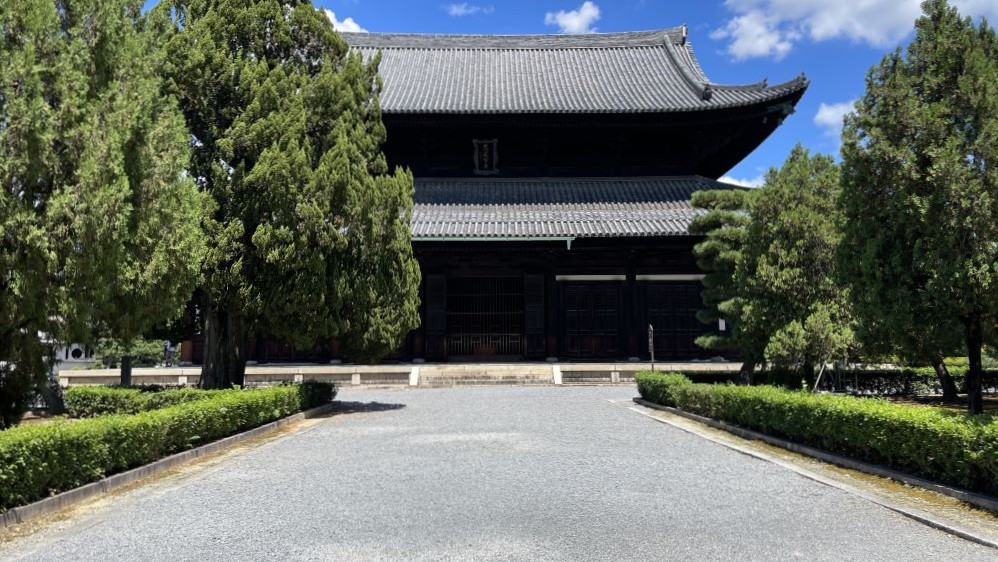
Tofukuji is one stop from Kyoto Station on the JR Nara Line — a two-minute ride to Tofukuji Station, then about ten minutes on foot. The line used to be a quiet local route, but in recent years the crowds heading to Tofukuji have turned it into something resembling a Tokyo rush-hour train, particularly during autumn foliage season. The good news: it’s only one stop, so the crush doesn’t last long.
One thing worth knowing for anyone arriving by train — foreign visitors occasionally mix up Tofukuji and Fushimi Inari, both internationally famous and both served by stations on the same line. If someone asks you for directions to the torii gates while you’re waiting on the platform, you won’t be the first to field that question.
Beyond Autumn
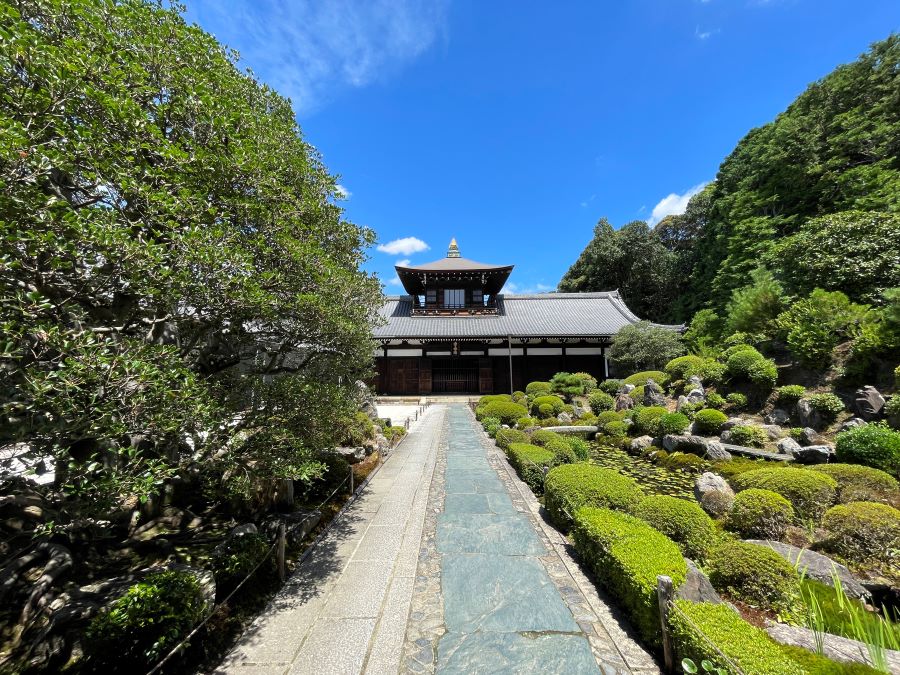
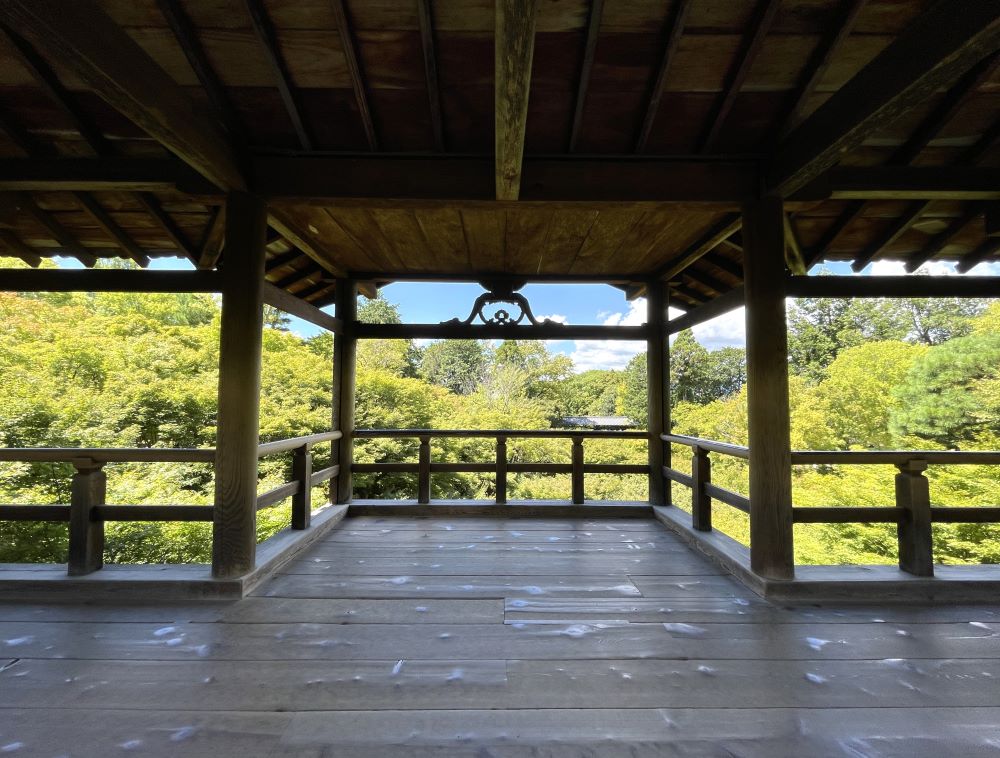
Tofukuji is best known for its autumn foliage, when the crowds rival anything Kyoto has to offer. But the temple rewards visitors in every season. Walking across Tsūtenkyō Bridge outside of peak season feels like moving through the air above a sea of green — the forest canopy stretching out beneath you in every direction. You can also descend into the ravine and walk among the trees at ground level. If anything, the natural beauty of the grounds is easier to appreciate when the crowds thin out.
A Tale of Two Temples
The story behind the Okuri-gane begins with Enni Ben’en (円爾弁円, 1202–1280), a monk who had studied Zen in Song Dynasty China and returned to Japan to become one of the most influential Buddhist figures of the Kamakura period. He served simultaneously as head priest of both Tofukuji and Kenninji — two major Rinzai temples located roughly two kilometers apart in eastern Kyoto.
Each evening, after completing his duties at Tofukuji, Enni would make his way to Kenninji. The bell struck at his departure became known as the okuri-gane — the “farewell bell,” or more literally, the bell that sends someone off. At Kenninji, a corresponding bell would ring to welcome his arrival: the mukae-gane, the “welcoming bell.”
Enni died in 1280, but the ritual did not end with him. At Tofukuji, the farewell bell has rung every night since — not for a living priest making his rounds, but as an act of continuity, a gesture repeated so many times it has become the gesture itself. At Kenninji, the welcoming bell now rings just once a year, in the small hours of June 4th, at 2:00 AM.
The two temples have kept this call and response across eight centuries. One bell speaks every night. The other answers once a year.
A Bell You Have to Listen For
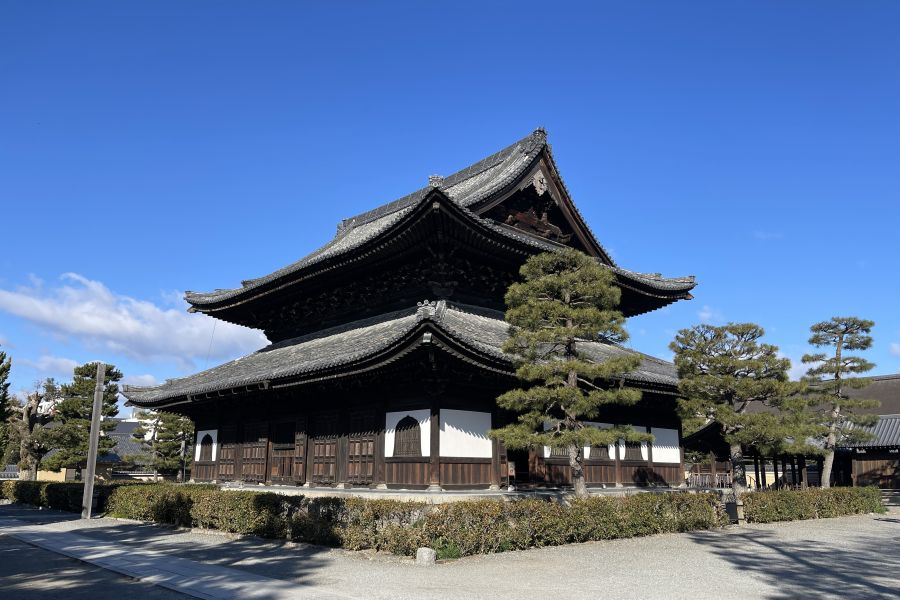
At 11:45 PM, the monk on duty at Tofukuji’s training hall strikes the bell. The sequence runs to 24 strokes in total — three preliminary beats, eighteen main strokes, and three closing beats — a ritual that has continued every single night for some 800 years.
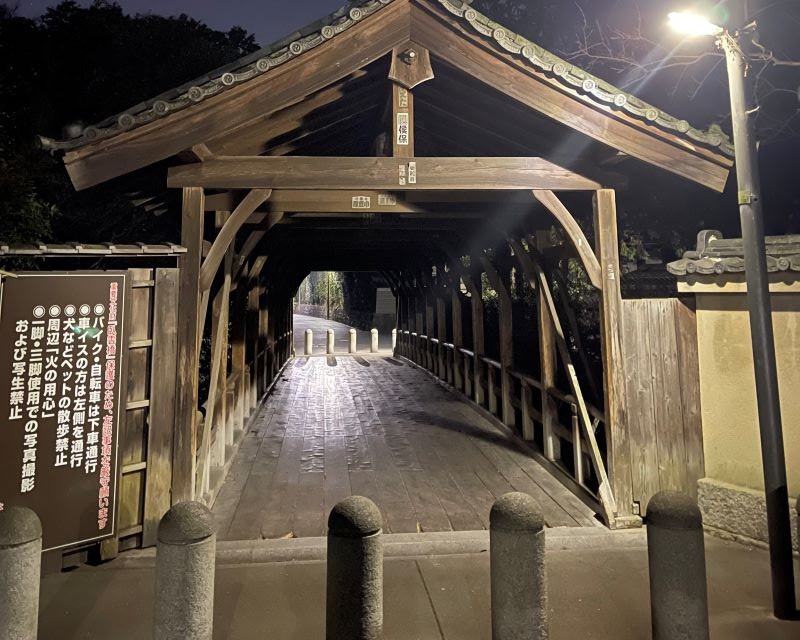
Standing on Gaun-bashi Bridge nearby, you can hear it. Just barely.
The bell itself weighs around 200 kilograms, modest by temple standards, and its voice doesn’t carry far. On a summer night, it arrives as little more than a whisper beneath the ambient sounds of the city — the occasional train on the Nara Line is actually louder. You have to be listening for it, paying attention, or you’ll miss it entirely. In winter, the air sharpens the sound slightly, and the strokes come through with a little more presence.
The temple grounds are closed at this hour, and the streets around Tofukuji are nearly empty. A few passengers move between the station and the surrounding neighborhood, but the area settles into quiet well before midnight. That stillness is part of the experience — standing on the bridge in the dark, waiting, then catching that faint sound threading through the night.
If you want to hear all 24 strokes and still make the last train, leave the bridge around the 10th stroke. Tofukuji Station is close, and the timing works. Or do what the tradition seems to invite: stay until the end, then walk back through the summer night to wherever you’re sleeping.
A Ghost from a Vanished Temple
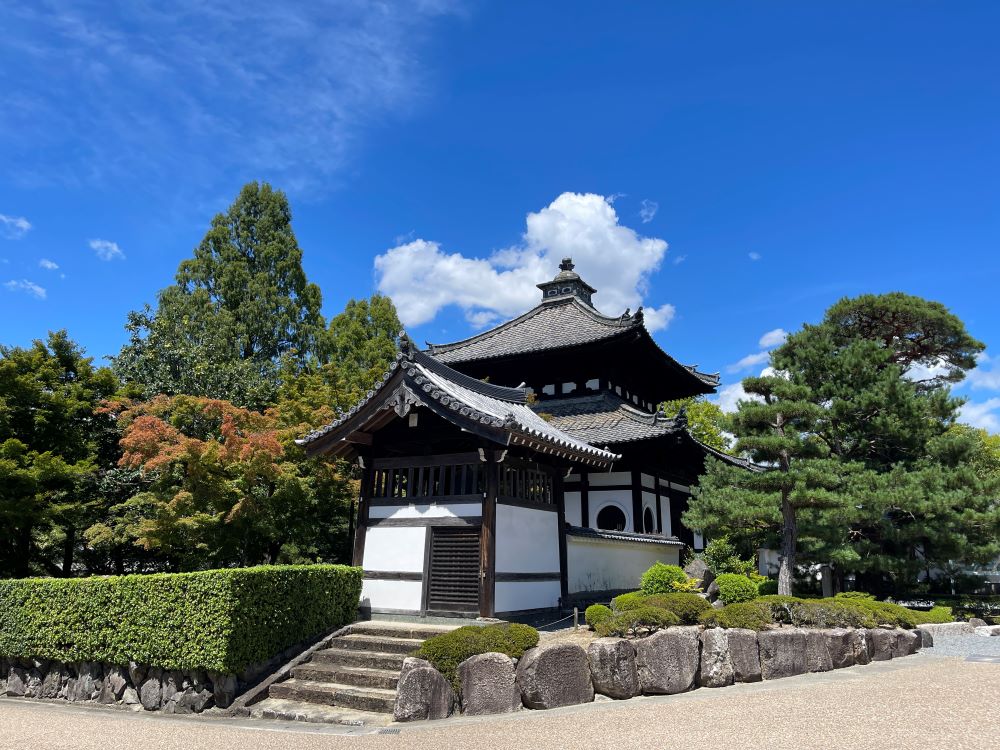
Just inside the Nichimon Gate, a small belfry stands to the left — the Denshōrō, built during the Muromachi period. The bell it houses is considerably older.
Estimated to date from the Nara period (710–794 CE), the bell predates Tofukuji itself by several centuries. Its design closely resembles the celebrated bell at Hōryūji, one of the oldest surviving examples of Japanese bronze casting. How it came to rest at Tofukuji is not entirely clear — the most intriguing theory holds that it was salvaged from Saiji, a great temple that once stood on the western edge of the ancient capital of Heiankyō, the city that would become Kyoto.
Saiji no longer exists. It fell into decline not long after the capital was established, and by the late Heian period it had all but disappeared, leaving almost no physical trace. If this bell did indeed come from Saiji, it is among the very few objects that survived.
The bell is no longer housed in the belfry — it has been moved to a secure storage facility within the temple to protect it. What you see in the Denshōrō today is the structure itself, a quiet reminder that something remarkable once hung there.
Funda-in — Sesshū’s Garden and an Imperial Legacy
Among Tofukuji’s 25 sub-temples, Funda-in offers something the main grounds cannot: quiet. While the approach to Tofukuji can feel like a city street on busy days, Funda-in moves at a different pace — unhurried, tucked away, easy to linger in.
It was here that Sesshū Tōyō (雪舟等楊, 1420–1506) trained as a young monk, staying at Funda-in during his years at Tofukuji. Born in Bitchū Province — present-day Okayama — he had already made a name for himself as an artist before his formal training was complete. Even among his fellow monks, his artistic sensibility was apparently something people noticed and remarked upon.
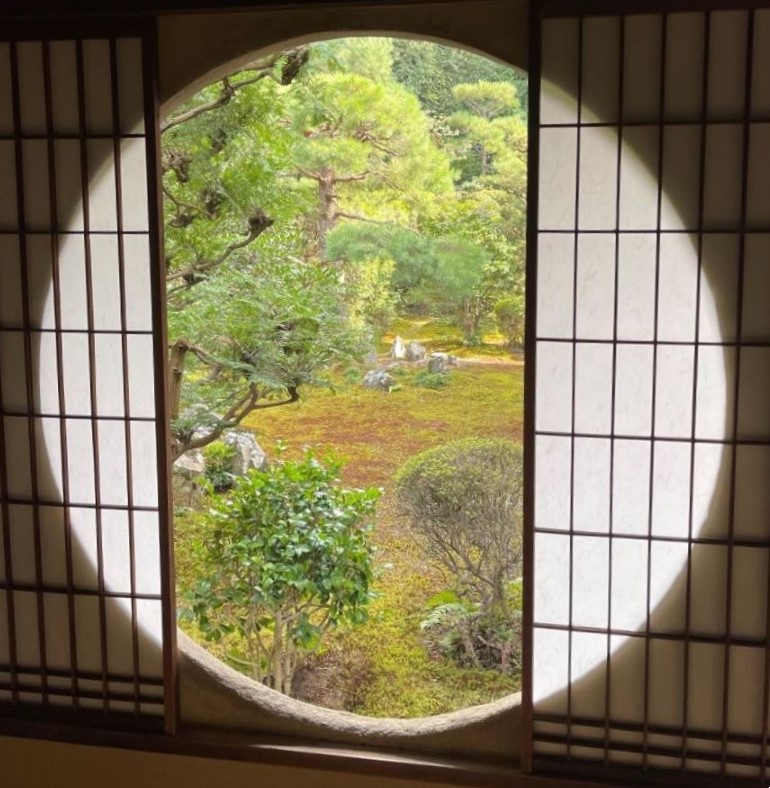
During his time at Funda-in, Sesshū designed a karesansui garden on the grounds. That garden survives. Walking through it today, you are looking at something arranged by the same hands that produced some of the most celebrated ink paintings in Japanese art history.
Funda-in also serves as the family temple of the Ichijō clan, one of Kyoto’s most prominent aristocratic houses. Empress Shōken — consort of Emperor Meiji, born into the Ichijō family — left a collection of furnishings from the Kyoto Imperial Palace at Funda-in when the imperial court relocated to Tokyo in 1869. Each piece bears the chrysanthemum crest of the imperial house.
The collection is smaller than it once was. The crest made the pieces desirable, and over the years many were given away. What remains is kept quietly at the temple, unannounced, without fanfare — the kind of thing you only learn about if someone takes the time to tell you.
Access
Tofukuji Temple
15-778 Honmachi, Higashiyama-ku, Kyoto