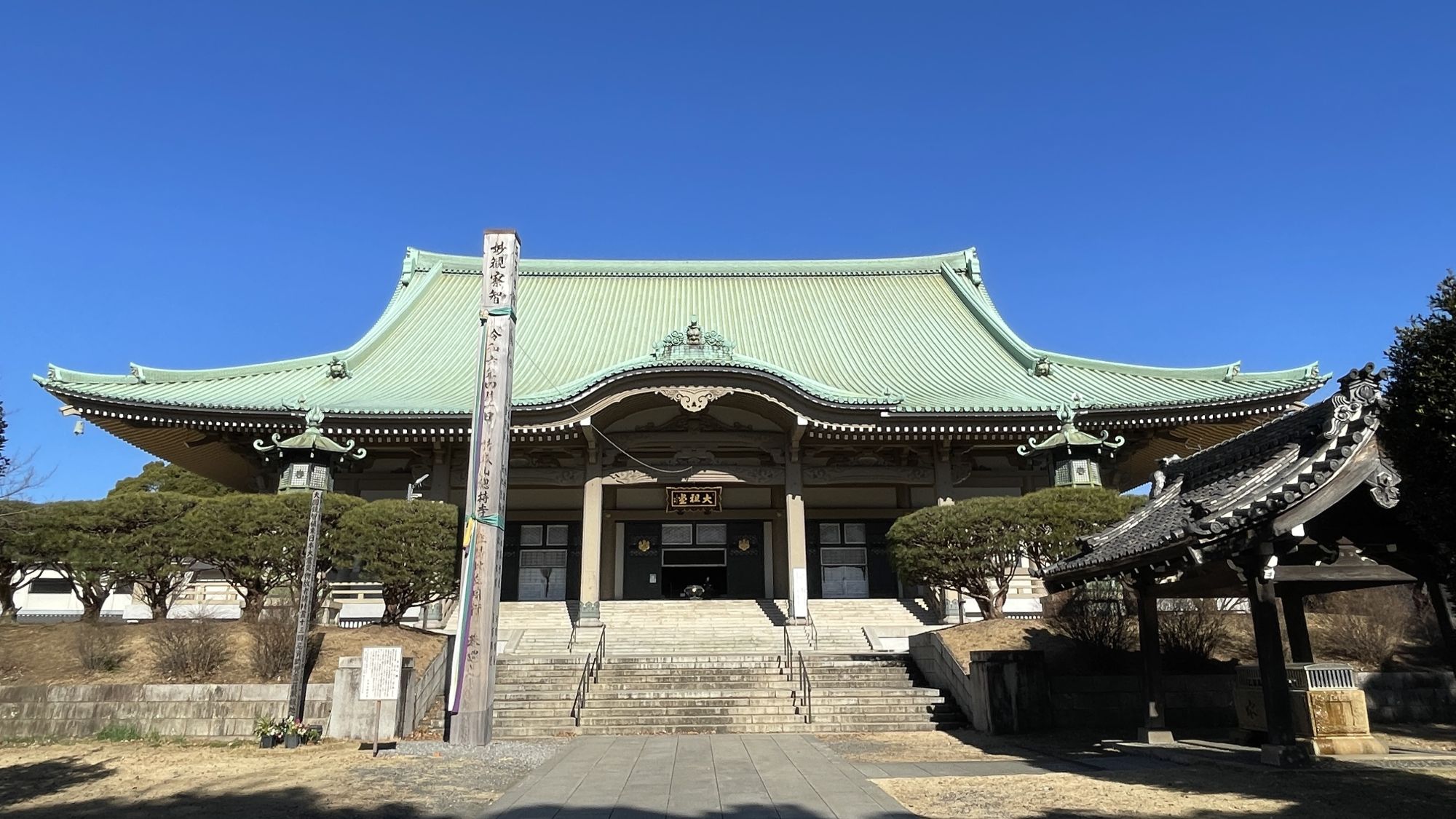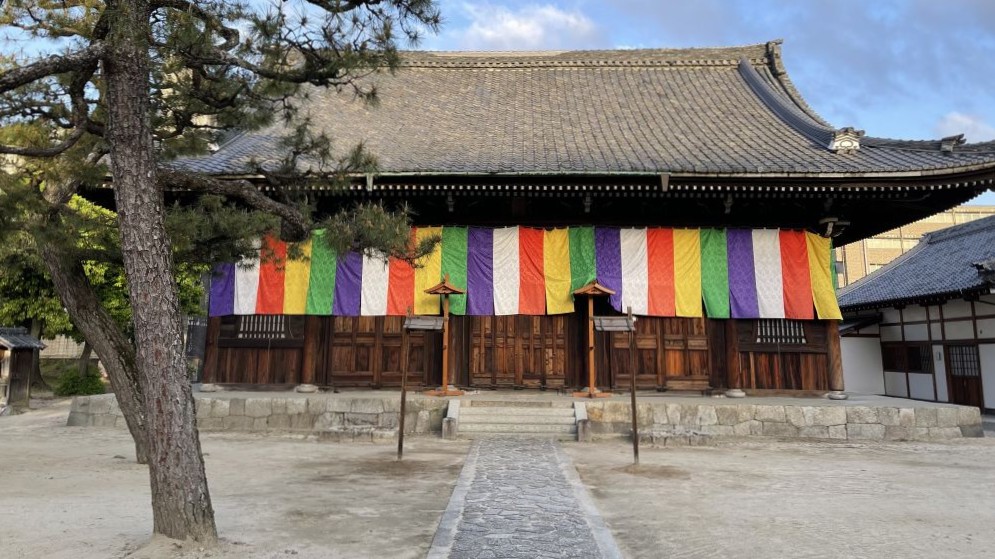
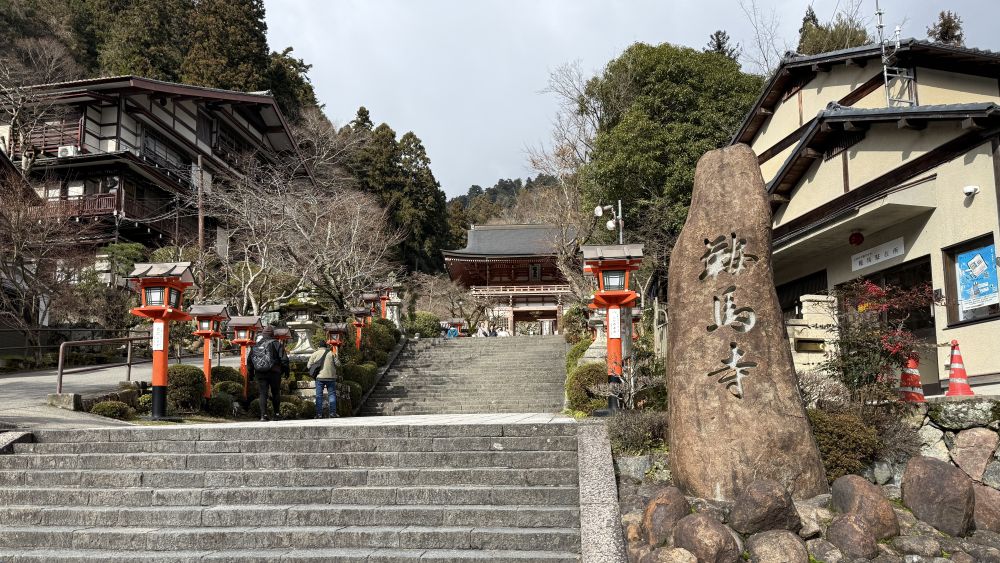
Take the Eizan Electric Railway north from central Kyoto, and the line ends at Kurama Station — at the foot of Mount Kurama. Along with neighboring Kifune Shrine, Kurama-dera is one of Kyoto’s best-known destinations, famous above all as the legendary training ground of Minamoto no Yoshitsune, who spent his boyhood here as Ushiwakamaru.
“Near, Yet Far” — The Path Sei Shōnagon Wrote About
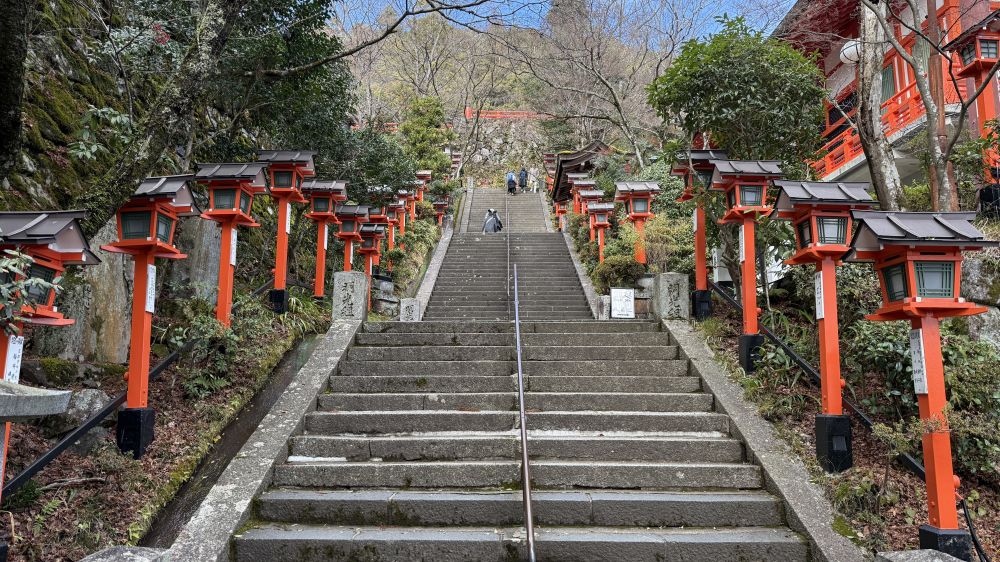
Pass through the Niō Gate and climb the stone steps lined with vermilion lanterns, and the real ascent begins. From the mountain gate to the main hall is roughly a 30-minute climb on foot. In The Pillow Book, Sei Shōnagon listed “the winding road to Kurama” among things that are “near, yet far” — a line that shows this long approach was already well known a thousand years ago. Walking it today, it’s easy to imagine Heian-era pilgrims catching their breath on the very same slope.
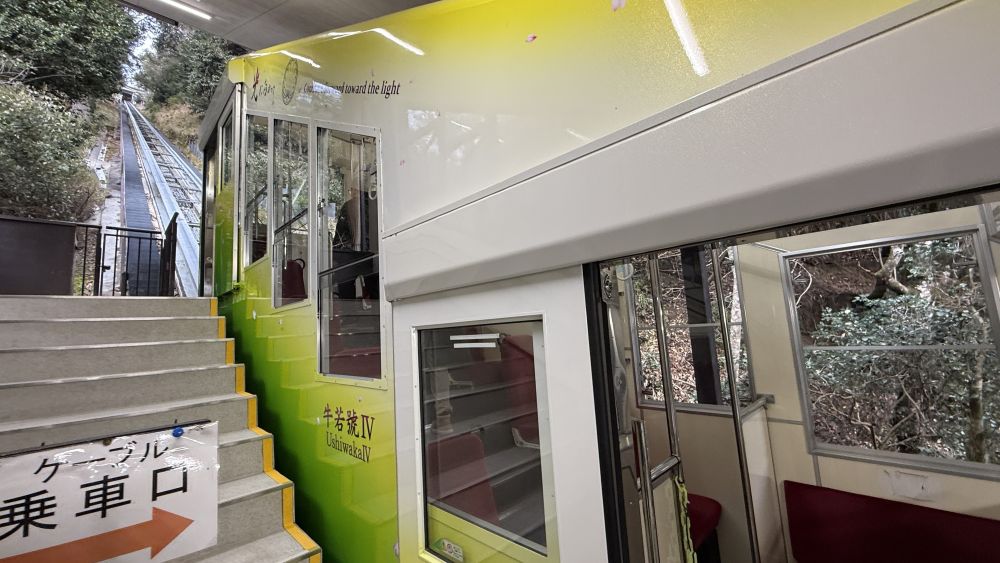
This time, the winding path was shortcut by cable car. The bright yellow-green car, named “Ushiwaka-gō IV,” carries visitors from Sanmon Station to Tahōtō Station in just two minutes of aerial travel — though there’s still another climb to the main hall from there.
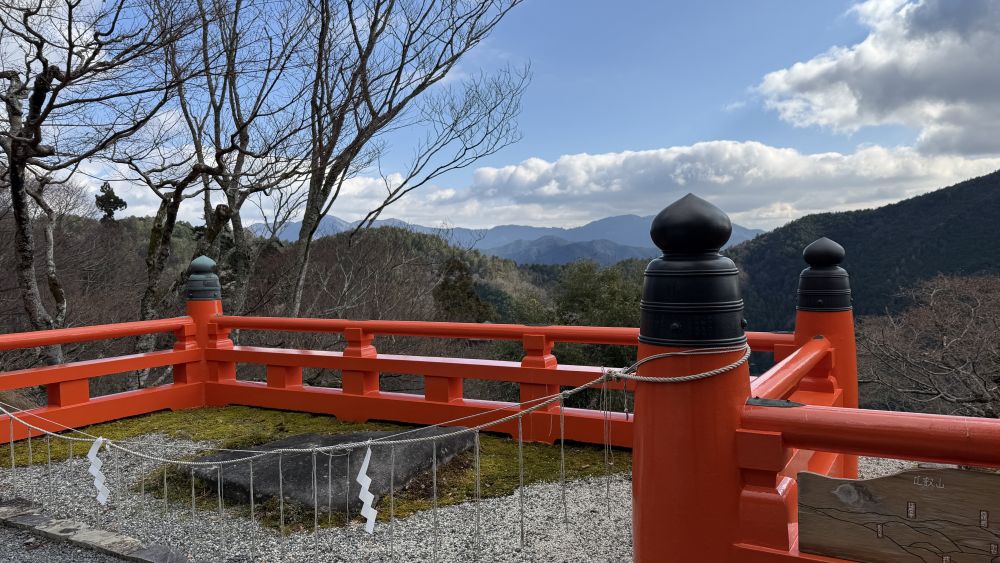
At the top, the approach to the main hall opens onto a striking hexagram-shaped stone pavement, said to represent the center of the universe. Turning around, the ridgeline of Mount Hiei rises clearly across the valley. Having taken the easy way up, the view felt almost too generous a reward.
Japan’s Only Temple-Operated Railway
The Kurama Cable, connecting Sanmon and Tahōtō stations, is the only railway in Japan operated by a religious corporation. The line is also remarkably short — just 207 meters, making it the shortest railway in Japan under the Railway Business Act. The ride itself takes about two minutes; you barely have time to settle in before arriving.
The fare structure is just as distinctive. Officially, riding the cable car is free. Instead, passengers make a “donation” of 200 yen per unit (100 yen for elementary school children) toward the upkeep of the temple’s halls before boarding, and the ride is offered in return as a token of thanks. The reasoning behind this arrangement is practical: if collected as a railway “fare,” it would count as a commercial enterprise and be taxable even for a religious corporation. As a “donation” to the temple, however, it falls under tax-exempt religious activity. It’s a fare in all but name — a careful balancing act that allows a temple to run a railway at all.
The Bell’s Story: Along the Path to Yoshitsune’s Shrine
Behind the main hall, a mountain trail leads to Oku-no-in Yoshitsune-dō, the inner sanctuary dedicated to Yoshitsune. This is Kurama-dera’s other face — a path deep into the mountain forest. The visit fell at year’s end; central Kyoto showed no sign of snow, but once the trail left the main hall behind, faint traces of white lingered on shaded rock faces and on the roof of Yoshitsune-dō. The elevation of Mount Kurama, and the forest growing deeper the farther one goes, made themselves known quietly through the snow.
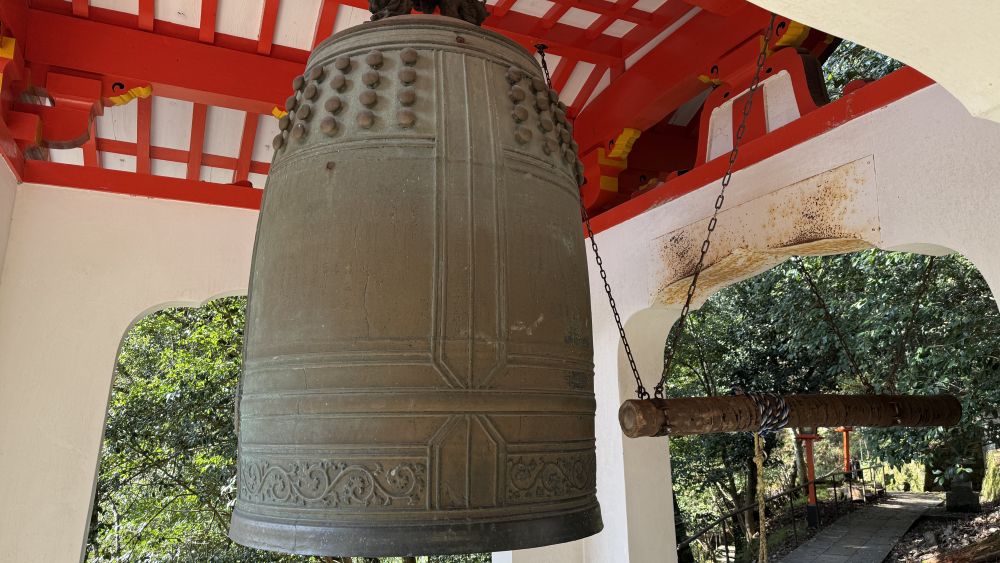
A short climb further, and a bell tower with a beautiful vermilion roof comes into view through the trees. The bell hanging there bears an inscription dating it to 1670, the tenth year of the Kanbun era — cast roughly 350 years ago, during the reign of the fourth Tokugawa shogun, Ietsuna. Its body is clearly divided by horizontal and vertical bands, with an elegant arabesque band around the lower section — a fine example of traditional Japanese bell craftsmanship. In contrast to the liveliness around the main hall, its location along the quiet path to the inner sanctuary lends the bell an even deeper sense of stillness.
Mount Kurama is also known as a haven of native flora and fauna — species such as the Kurama salamander and Kurama-togariga moth carry the mountain’s name for having first been identified here. Amid this rich natural setting, the legend of young Ushiwakamaru training in swordsmanship with tengu spirits feels, somehow, entirely plausible.
Further along the path, the route continues past Yoshitsune-dō and over the mountain to Kifune Shrine. A road once written about by Sei Shōnagon, once run by young Yoshitsune, and now marked by the sound of a Kanbun-era bell — layer upon layer of history that visitors still climb today.
Access
Kuramadera Temple
Address
1074 Kuramahonmachi, Sakyo-ku, Kyoto City, Kyoto.