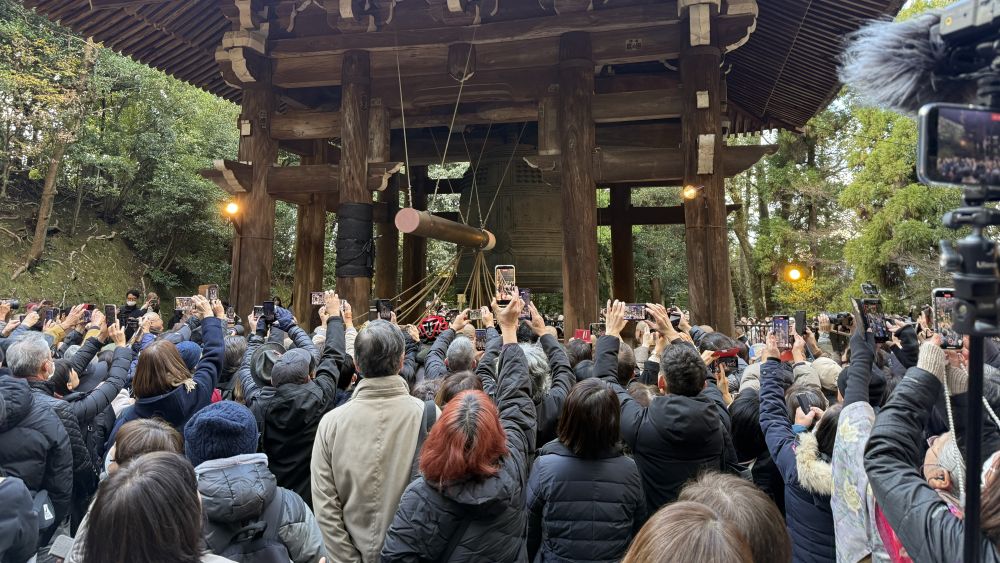
Every New Year’s Eve, Japanese television delivers the same iconic image: seventeen Buddhist monks in ceremonial robes, hauling back on a massive wooden striker in perfect unison, then releasing it with a resounding “Sore!” into a bronze bell the size of a small house. The deep, resonant toll of Chion-in’s great bell — broadcast nationwide on NHK — is as inseparable from Japanese New Year as the countdown is from Times Square.
But the bell has a quieter life too, one that most visitors never see.
The Bell Itself: One of Japan’s Three Great Bells
Chion-in’s great bell weighs approximately 70 metric tons, placing it among the three great bells of Japan. The largest — roughly 80 tons — hangs at Hokoji Temple, also in Kyoto, cast under Tokugawa Ieyasu’s orders and funded by the Toyotomi clan. The inscription on that bell became the pretext for the Osaka Winter Campaign of 1614, when Ieyasu’s advisors interpreted the phrase Kokka Ankō as a veiled curse on the Tokugawa name. The third bell, at Todai-ji in Nara, is smaller at around 26 tons, but was cast over a thousand years ago — a fact that more than earns its place in this company.
Made for a Different Occasion
For all its fame as a New Year’s bell, Chion-in’s great bronze was never cast for that purpose.
The bell was originally made for gyoki — the annual memorial service for Honen, the twelfth-century monk who founded the Jodo (Pure Land) sect of Buddhism and the figure to whom Chion-in is dedicated. Gyoki is the most important ceremony in the Jodo Buddhist calendar. The fact that a 70-ton bell was reserved exclusively for that single occasion speaks to its extraordinary significance.
The association with New Year’s Eve came later — introduced at Chion-in during the Showa period. Even today, the great bell is struck only twice a year: during gyoki in late April, and on New Year’s Eve in December.
Gyoki: The Bell at Eight in the Morning
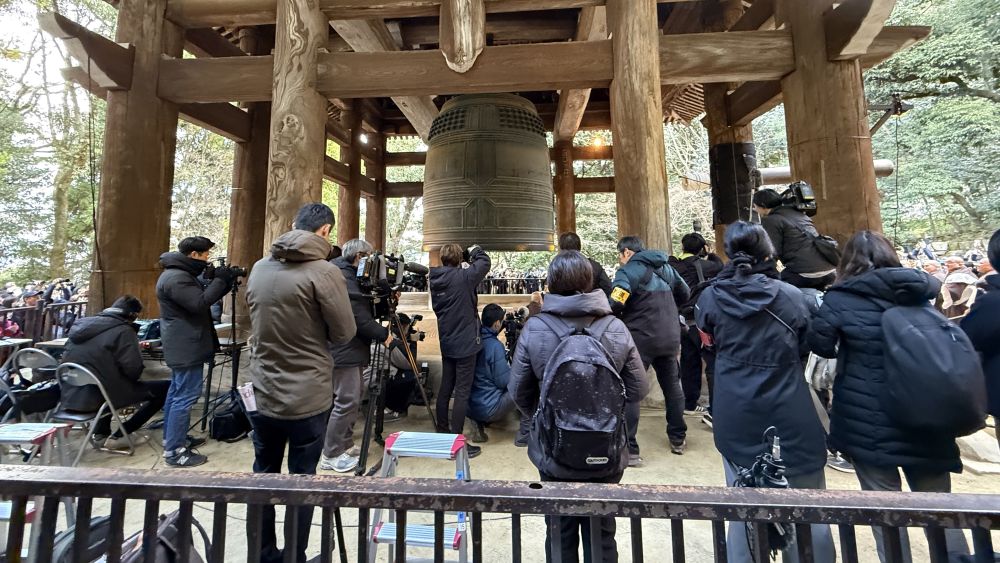
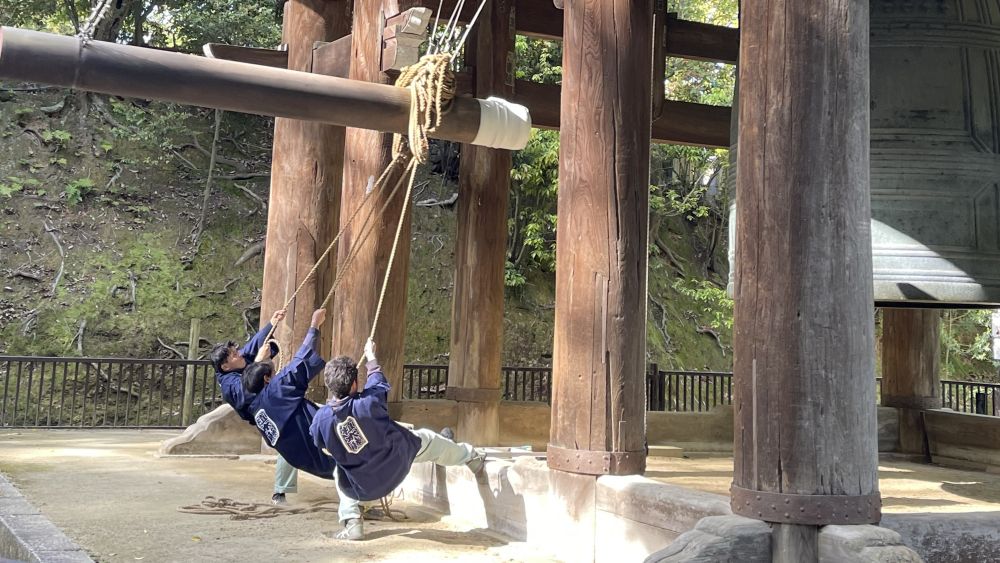
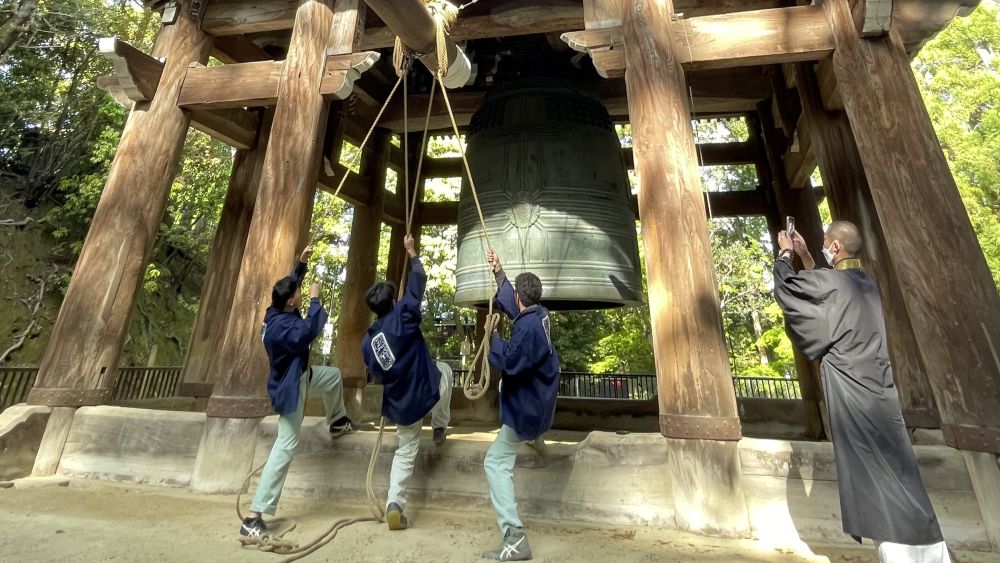
Gyoki runs for one week each year, from April 18th to April 25th, culminating on the anniversary of Honen’s death. Throughout that week, the great bell is struck every morning at 8:00 a.m. — not by monks, but by a local landscaping crew from Kobayashi Gardens, who set up the striker with quiet efficiency and ring the bell 20 times at roughly one-minute intervals. (Technically 19 strikes plus one nochi-sute-gane, a closing stroke counted separately.)
When I visited one April morning, there was almost no one else there. A few foreign tourists drifted over when they heard the sound, but the atmosphere was entirely unhurried. After the round-the-clock frenzy of New Year’s Eve coverage, watching three workmen in ordinary clothes ring one of Japan’s most famous bells with calm professionalism felt almost surreal — in the best possible way.
The Edo-period poet Yosa Buson captured something of this atmosphere in a haiku composed during a winter gyoki:
The bell of Gyoki —
its resonance reaching down
to the ice in the valley
御忌の鐘 ひびくや谷の 氷まで
Temple Bell
Story
MNNIG: An All-Night Nenbutsu Event
During gyoki week, the temple hosts one of Kyoto’s more unusual public events: Midnight Nenbutsu in Gyoki, known by its acronym MNNIG. No advance registration required, no admission fee — just show up.
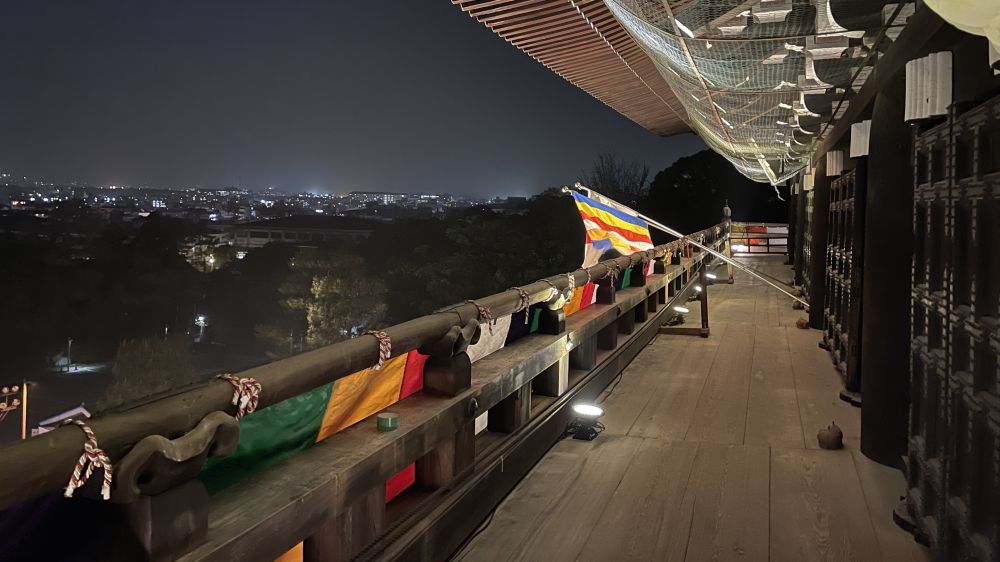
The event runs from 7:00 p.m. to 7:00 a.m., with participants free to come and go as they please. Inside the temple, dozens of people chant Namu Amida Butsu in unison while striking wooden fish drums through the night. The setting alone is remarkable: participants are admitted to the upper story of the Sanmon gate, a National Treasure normally closed to the public, where sixteen Rakan (arhat) statues and other Buddhist figures keep watch over the chanting crowd. The view of Kyoto’s nightscape from the gate’s upper gallery is worth the visit on its own.
The Rehearsal You Didn’t Know You Could Watch
Every year on December 27th at 2:00 p.m., Chion-in conducts a full dress rehearsal of the New Year’s Eve ringing — same monks, same choreography, all 108 strikes in sequence. The striker is adjusted, the monks synchronize their breathing, and the entire ceremony unfolds exactly as it will on the night itself. The only difference is the afternoon light.
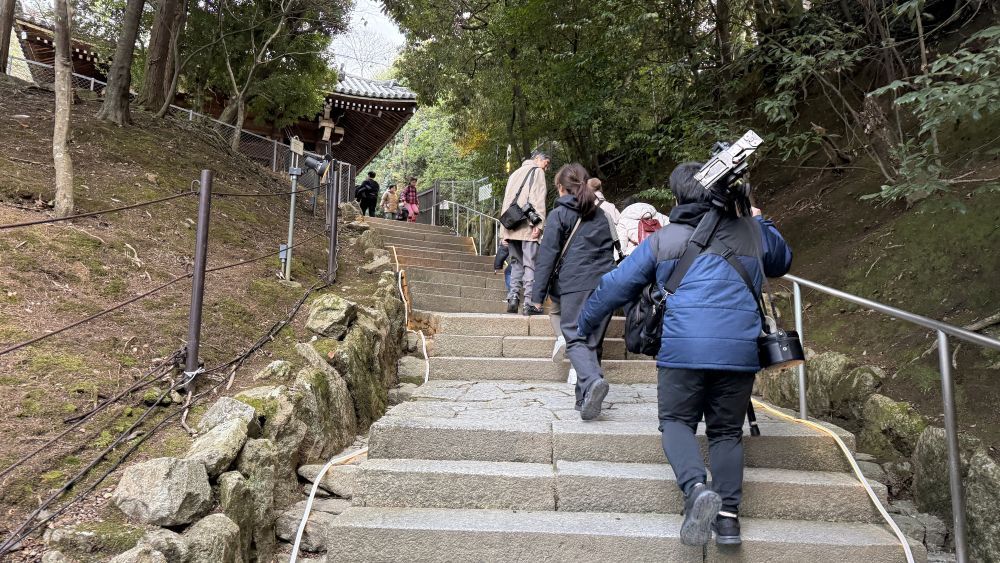
The stone staircase fills steadily as the start time approaches: broadcast crews hauling camera rigs, families, foreign tourists, photography enthusiasts. Even for a rehearsal, the atmosphere is charged. The monks’ call-and-response — “Eeei, hitotsu — sore!” — echoes across the hillside with each stroke, sending a low vibration through the air that you feel as much as hear.
Given that the great bell rings publicly only a handful of times each year, the December 27th rehearsal represents a genuine opportunity: 108 consecutive strikes of one of Japan’s largest bells, in comfortable daylight, with room to actually move around.
A Few More Things Worth Knowing
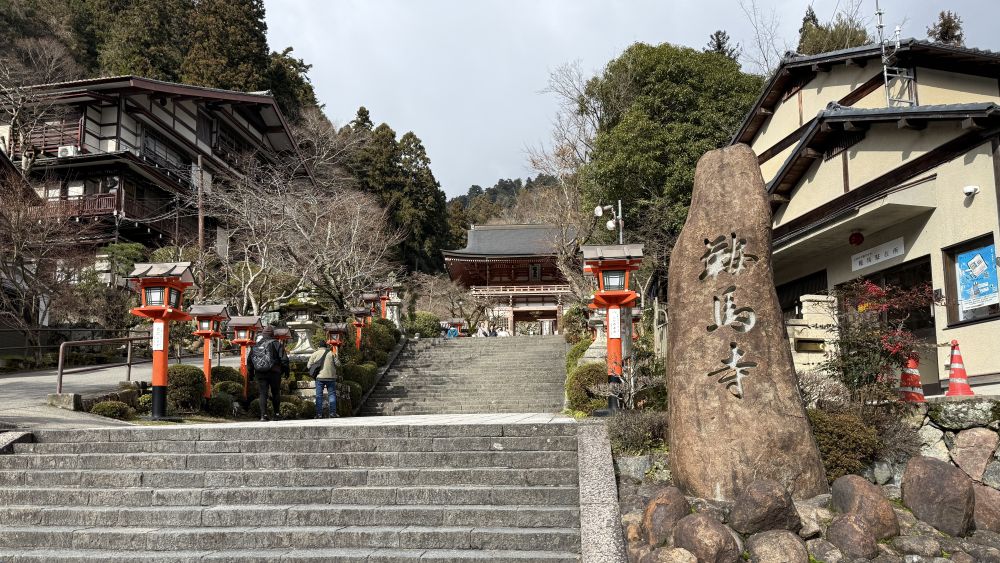
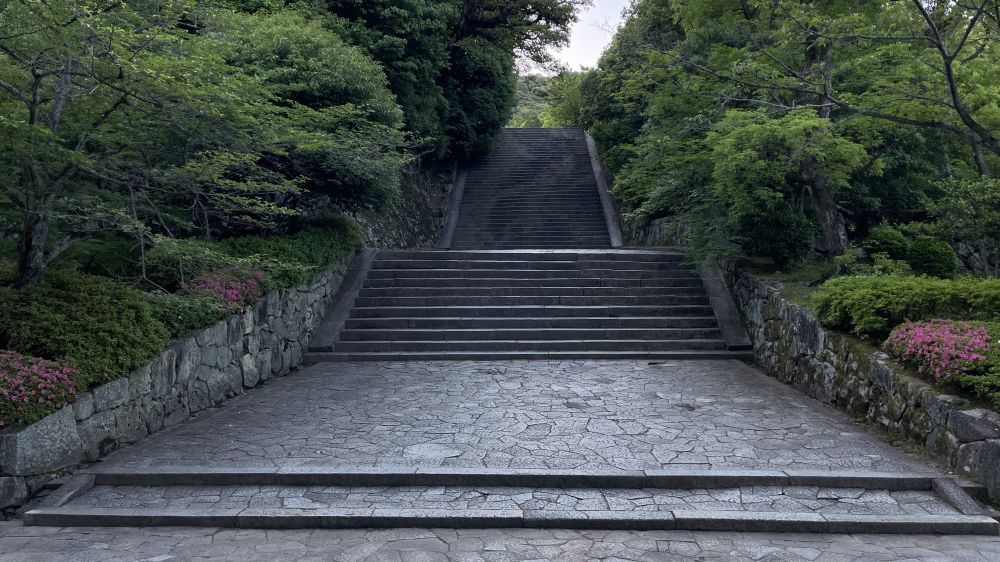
The Last Samurai (2003) filmed its early scene of Tom Cruise’s Captain Algren climbing toward an imperial audience on the stone staircase leading through Chion-in’s great Sanmon gate — the same steps you climb to reach the bell. The gate’s scale and the long straight run of worn stone made it an almost definitive image of historical Japan for international audiences.
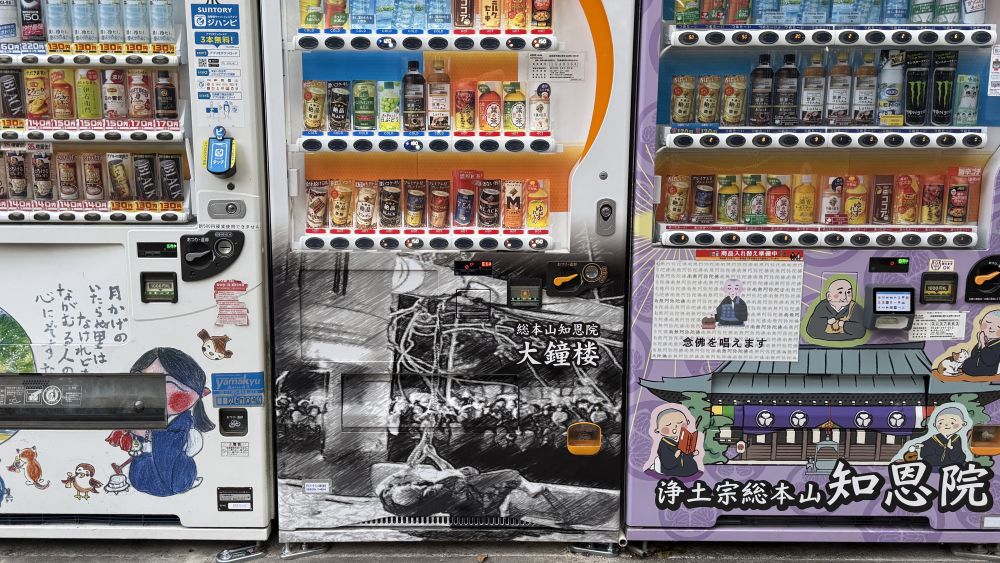
Somewhere along the temple’s approach, watch for a row of vending machines decorated with large illustrations of the great bell. Buy a drink, and a recorded goooon rings out. It is exactly as charming as it sounds.
And for those curious about acoustics: Albert Einstein reportedly visited Chion-in and tested a hypothesis that sound waves directly beneath a ringing bell would cancel each other out, producing silence. The experiment is said to have yielded at least a marked reduction in volume at the right spot. Foreign visitors have been known to replicate the test at Todai-ji in Nara, where standing beneath the bell during ringing is permitted.
Access
CHION-IN
Getting There
Chion-in is located in the Higashiyama district of Kyoto, within easy walking distance of Maruyama Park and Shoren-in Temple.
By subway: Tozai Line to Higashiyama Station (T10), then approximately 8 minutes on foot heading north.
By bus: Kyoto City Bus to Chion-in-mae stop. Several routes serve this stop from Kyoto Station and central Kyoto.
Admission: The main precincts are free to enter. The Yuzen-en garden and Hojo garden charge a separate admission fee.
Gyoki (April 18–25): Free, no reservation required. Morning bell ringing begins at 8:00 a.m.
MNNIG (during Gyoki week): Free, no reservation required. Runs 7:00 p.m. to 7:00 a.m.; drop in and leave as you please.
Dress rehearsal (December 27): Free, no reservation required. Begins at 2:00 p.m.
New Year’s Eve: Free to observe from the precincts. Expect significant crowds; arrive well in advance.