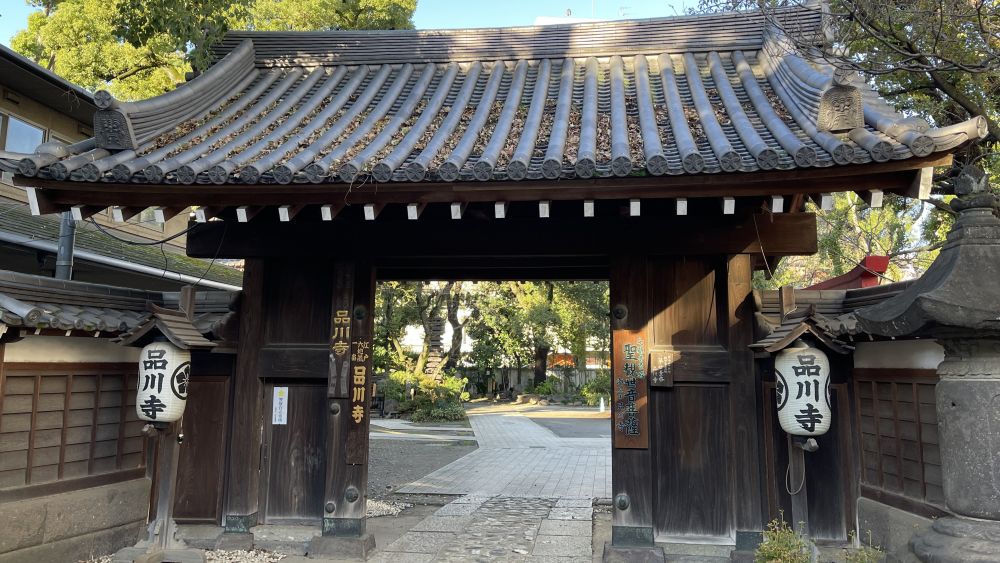
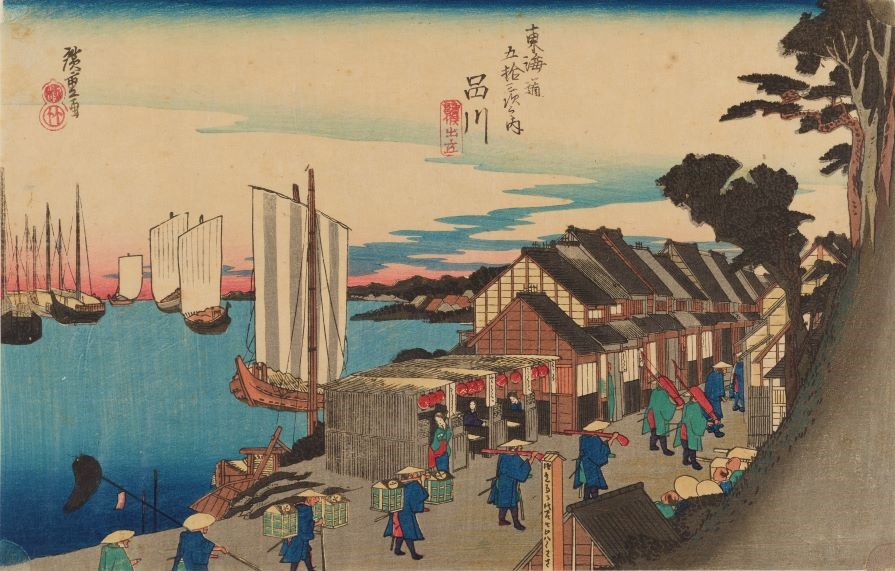
Honsen-ji (品川寺) stands along the old Tōkaidō highway in Shinagawa, Tokyo — and the district itself may owe its name to this temple. The word shinagawa is believed to have developed from the temple’s prominence along this ancient road, one of the five great highways of the Edo period.
The temple traces its founding to the early Heian period and is associated with Kōbō Daishi, the revered monk and founder of Shingon Buddhism. A hidden Buddha image of Suigetsu Kannon (Water-Moon Kannon) is enshrined here, traditionally venerated as a source of solace during major natural disasters.
A Bell Cast for Three Shōguns
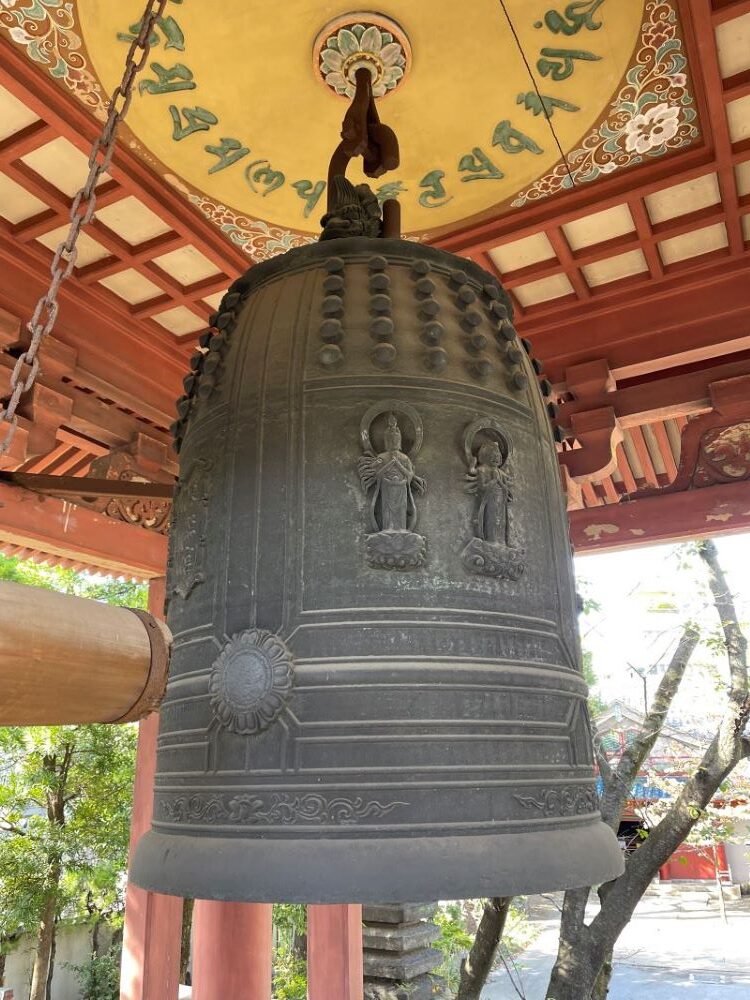
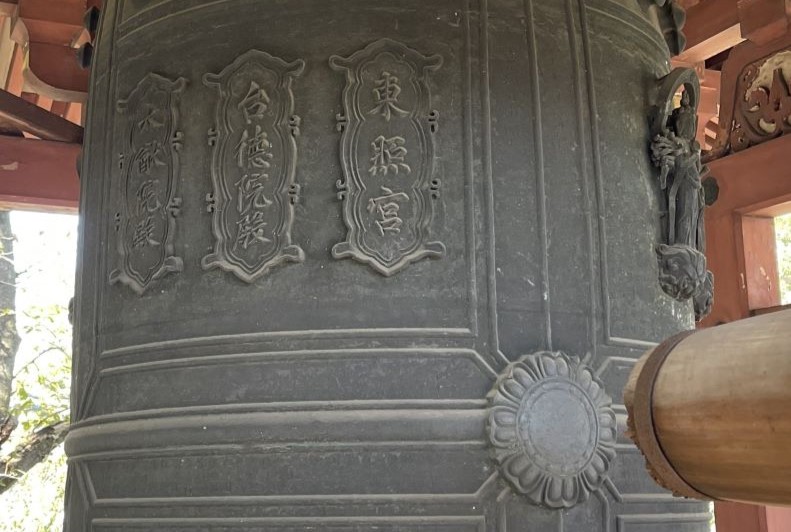
Honsen-ji’s great bronze bell was cast in Kyoto in 1657 (Meireki 3), commissioned to memorialize the first three Tokugawa shōguns — Ieyasu, Hidetada, and Iemitsu — and donated to the temple by the fourth shōgun, Tokugawa Ietsuna. The inscription bears the posthumous titles of all three: Tōshōgū, Daitoku-in-dono, and Taiyū-in-dono. Imagery of Kannon and passages from the Kannon Sutra are engraved in relief on its surface.
Contemporary Edo-period sources, including the Musashi Fudoki and Edo Meisho Zue, described the bell as “a bronze rarity without equal in the world.” Under Ietsuna’s patronage, the temple received a landholding of 4,800 tsubo and expanded into a major monastic complex.
Paris, Vienna, and a Vanishing
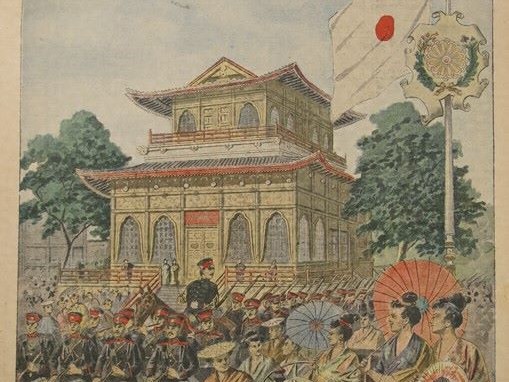
During the turbulent final years of the Edo period, the bell left Japan. It was exhibited at the Paris Exposition of 1867 and again at the Vienna World Exhibition of 1873. The Paris exposition brought together various Japanese domains — including Satsuma — at a moment of intense political fragmentation, and the Tokugawa shogunate is thought to have included the bell as a symbol of its authority and cultural prestige. After the Vienna exhibition, the bell’s whereabouts became unknown.
Rediscovery in Geneva
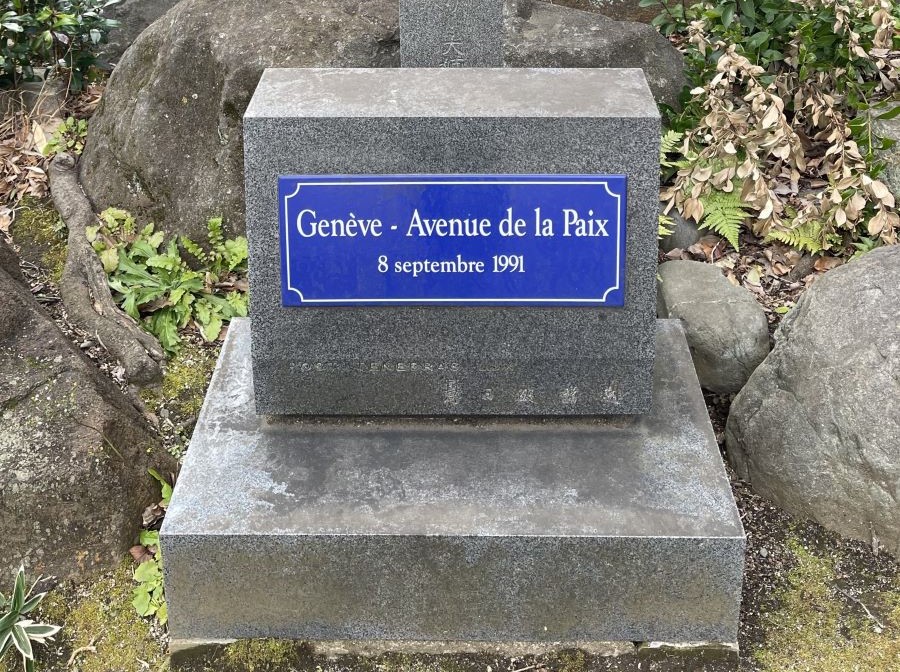
In 1919 (Taishō 8), Yūzō Ishimaru, head of the arts division of Japan’s Ministry of Education, identified the bell at the Musée Ariana in Geneva, Switzerland. Diplomatic efforts to secure its return were led by Foreign Minister Kijūrō Shidehara and others, and in 1930 (Shōwa 5), the city of Geneva agreed to return the bell to Honsen-ji. In exchange, the temple presented a stone lantern to the Ariana, where it remains today as a symbol of friendship between the two cities.
The returning bell was celebrated as yōkō-gaeri no kane — “the bell that came back from overseas.” Its homecoming reception was attended by government ministers and the Swiss envoy to Japan.
Temple Bell
Story
A Bond Between Shinagawa and Geneva
The bell’s journey became the foundation of an enduring international relationship. In 1989, marking the 60th anniversary of the bell’s return, Hōsen-ji donated a second bell to Geneva, and Shinagawa Ward and the city of Geneva were formally designated sister cities.
Today, the bell is designated a jūyō bijutsuhin (Important Art Object). Each New Year’s Eve, visitors come to Honsen-ji to strike it — not only to mark the turning of the year, but in recognition of the bell’s remarkable history as a bridge between Japan and Europe.
Access
Honsen-ji
3-5-17 Minami-Shinagawa, Shinagawa-ku, Tokyo