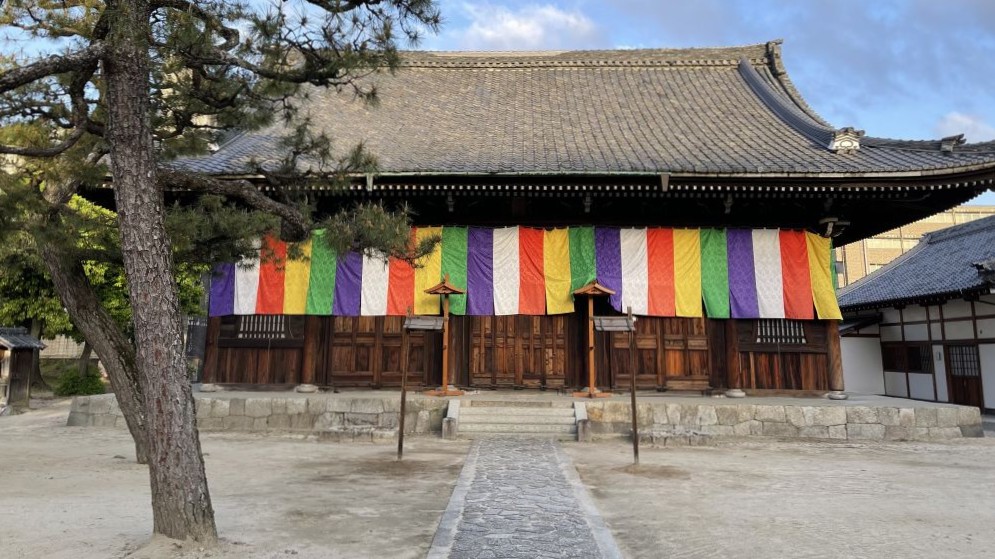
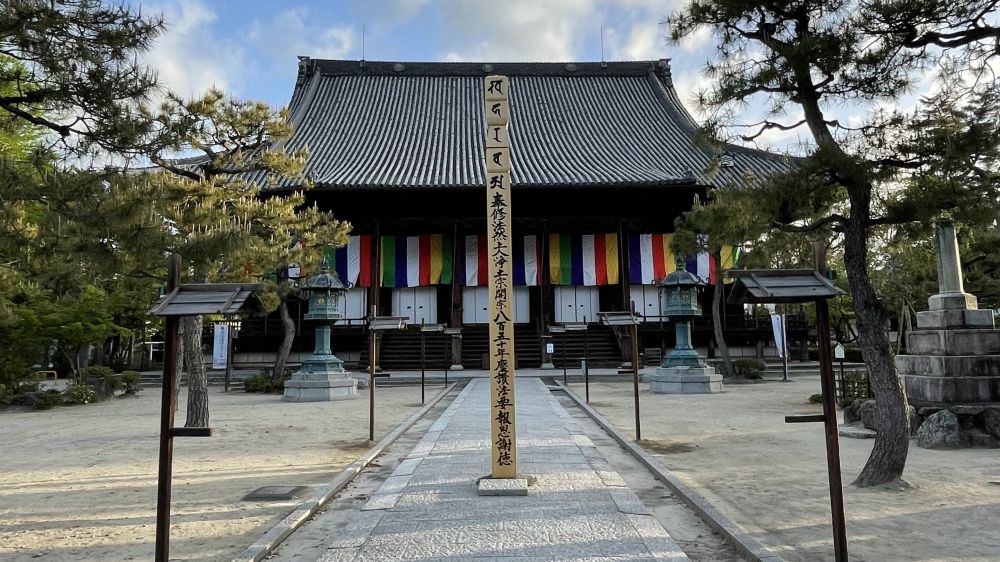
Just beside Kyoto University, at the heart of the lively student district known as Hyakumanben, stands Chion-ji, the head temple of the Jōdo-shū sect’s Hyakumanben lineage. In fact, “Hyakumanben” is not an official place name at all — the area came to be called this because of the temple itself, and it has long been beloved by locals as the symbolic center of a neighborhood lined with student eateries. Every morning at 6:00, the temple’s bell tolls across the quarter, marking the start of the day even before the streets fill with students.
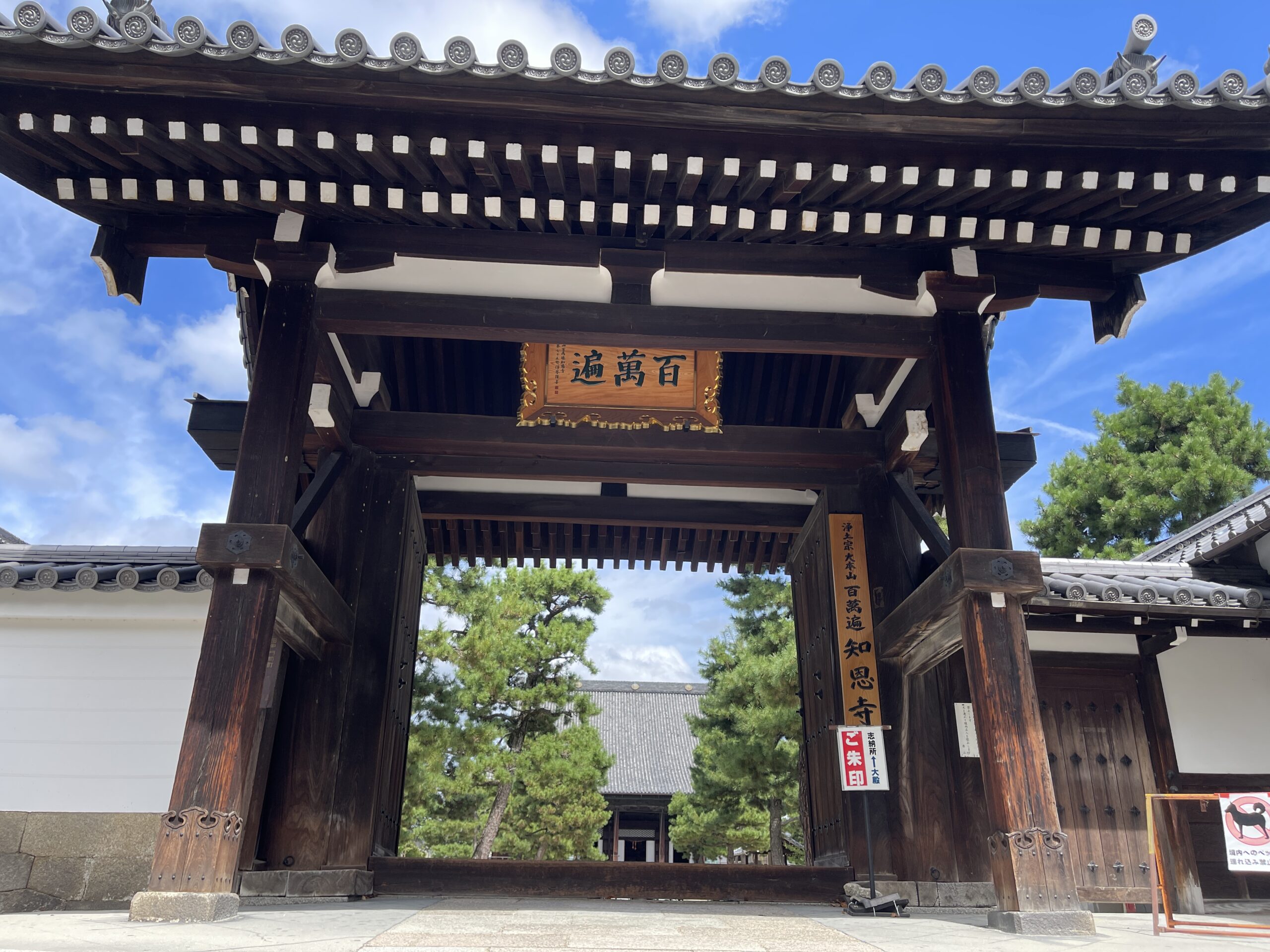
Where the Name “Hyakumanben” Comes From
The name traces back to the reign of Emperor Go-Daigo. In 1331, a major earthquake struck Kyoto, followed by an outbreak of epidemic disease that claimed many lives. At the emperor’s command, the temple’s head priest, Kūen, chanted the nembutsu prayer one million times over seven days — and the epidemic is said to have subsided as a result. From this event, the temple came to be known as Hyakumanben, “one million recitations.”
Temple Bell
Story
A Belfry Designated an Important Cultural Property
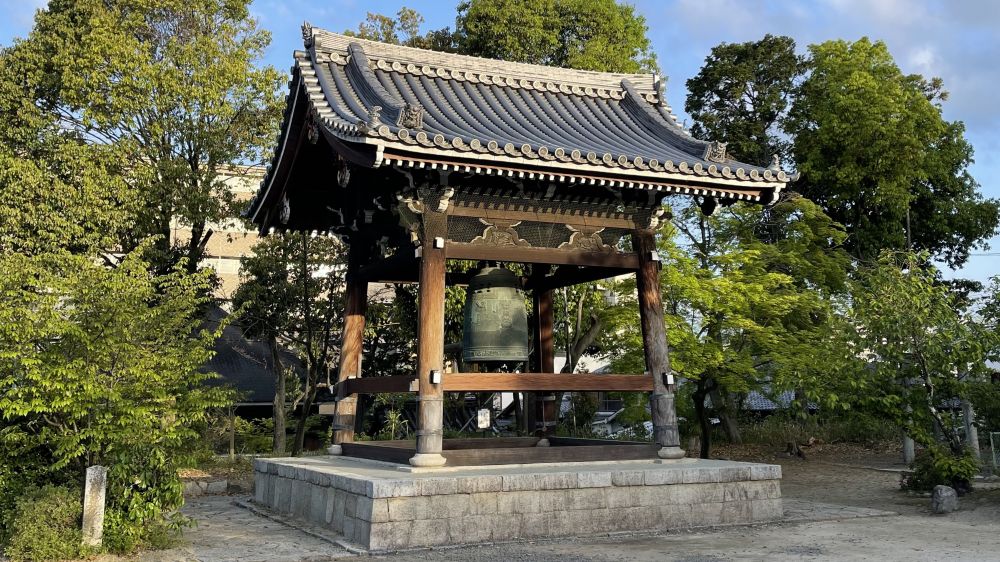
Passing through the main gate toward the temple’s central hall, visitors find an imposing bell tower standing to the left. Built in 1703, it has been designated a National Important Cultural Property. Its solid wooden structure stands quietly amid the bustle of the student quarter, carrying the weight of history within it — and it is from here that the 6:00 AM bell still rings out each day.
A Bell with Korean Influence
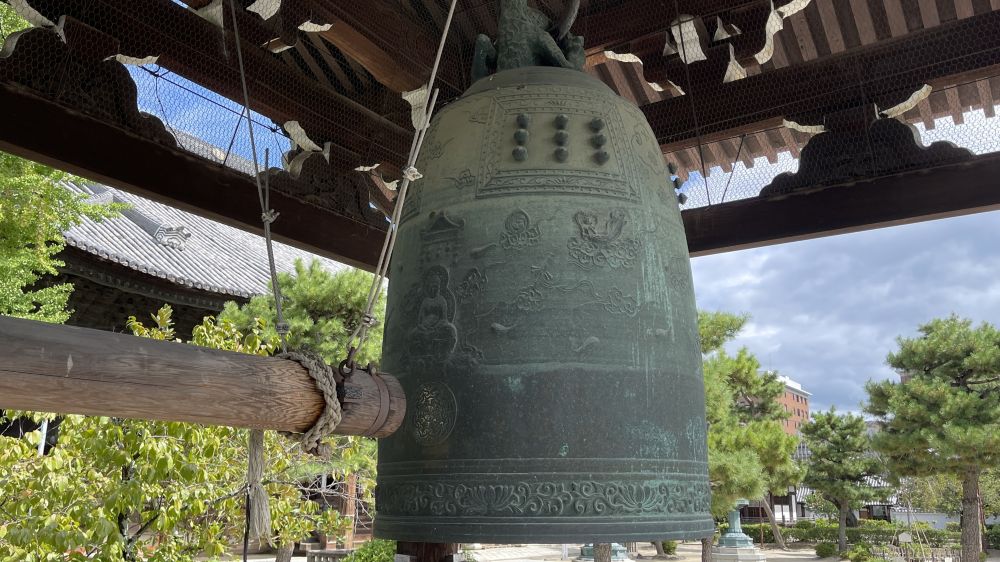
The bronze bell hanging in this belfry was cast in 1669 by the founder Wada Kunitsugu, a master craftsman of his time. Its decoration, depicting Buddhist figures and celestial beings, shows clear influence from Korean bell-making traditions — a rare and valuable work that hints at the cultural exchange of the era.
Access
Hyakumanben Chion-ji Temple
Address
103 Tanaka Monzen-chō, Sakyō-ku, Kyoto