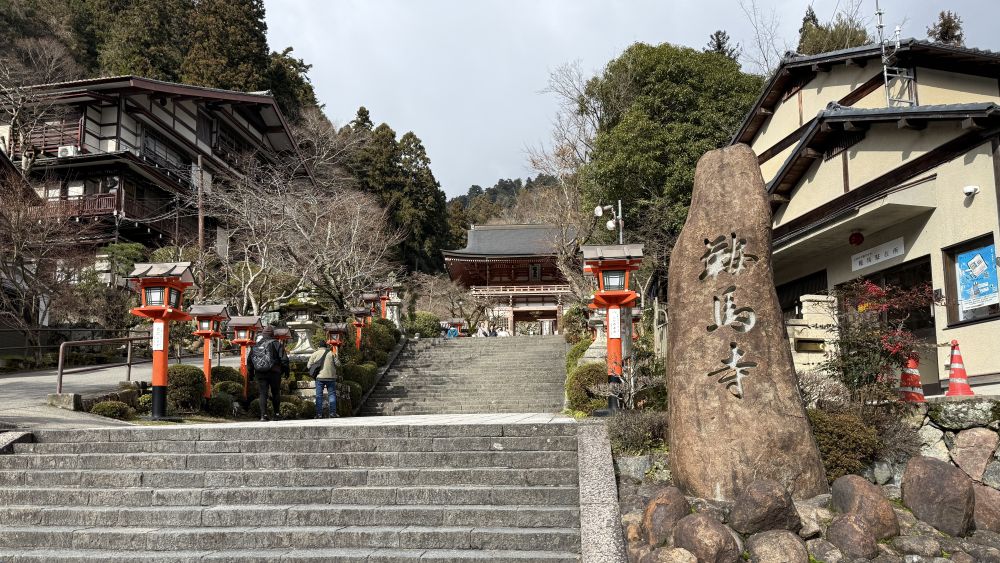
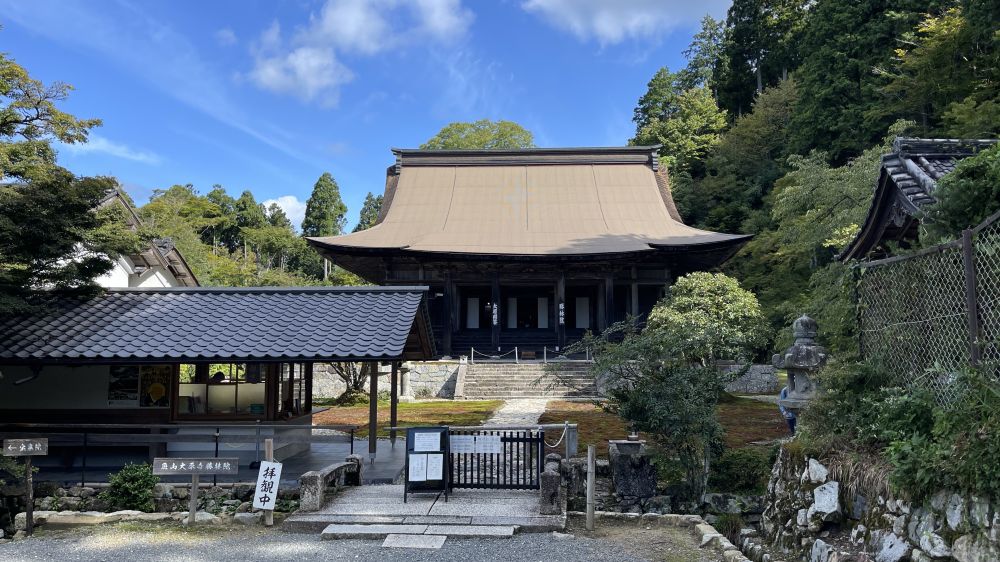
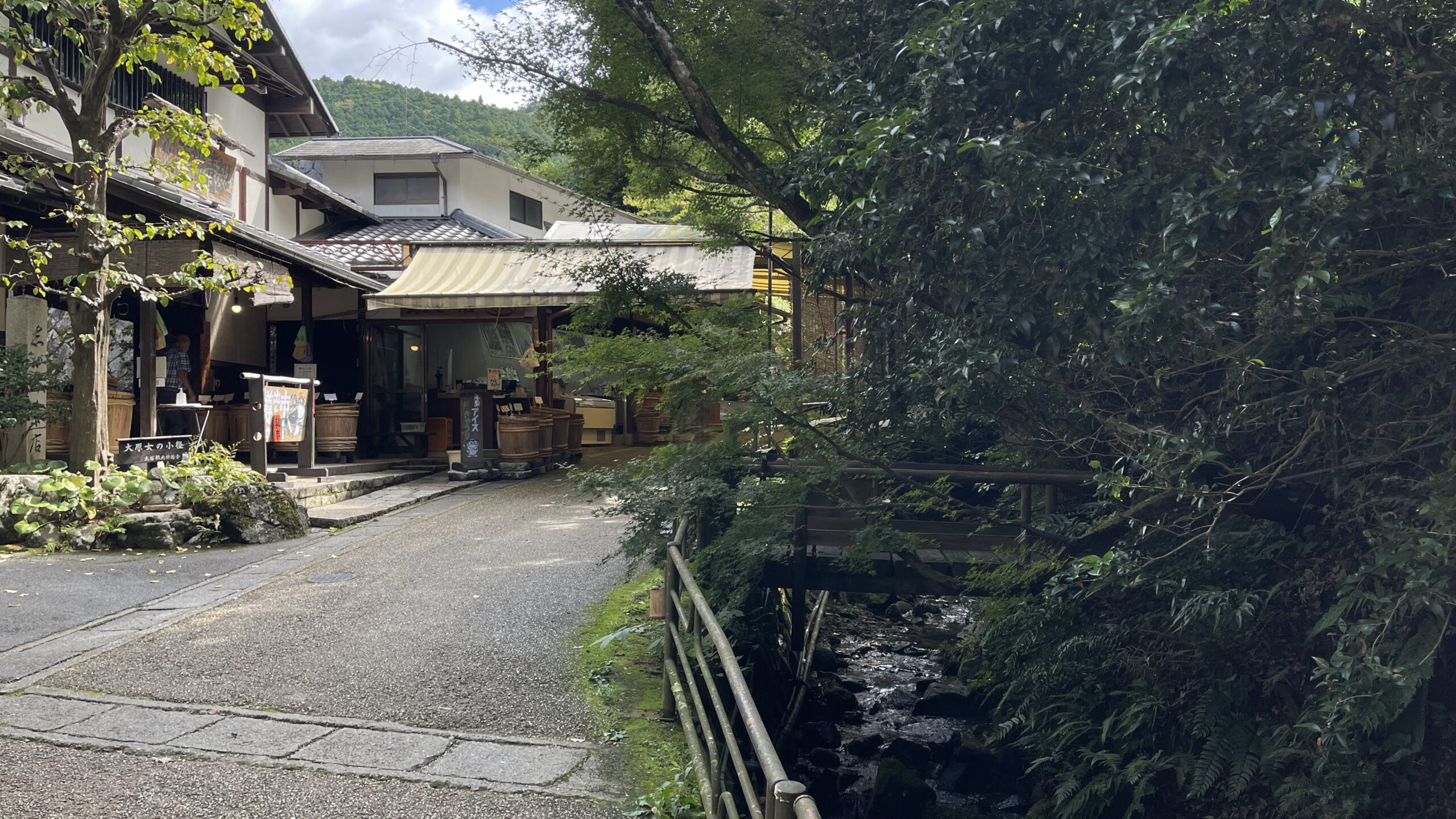
About an hour by bus from Kyoto Station, the road ends at Ōhara. From the bus terminal, a ten-minute walk along the Ro River and Ritsu River leads past shops selling the region’s famous shiba-zuke pickles, the old-fashioned atmosphere of the valley still intact. At the end of that path, just beside Sanzen-in, stands Shōrin-in.
Ōhara developed as a training ground for monks of Enryaku-ji on Mount Hiei, and until the end of the Edo period, Shōrin-in and the nearby Raigō-in were together known as “Daigen-ji,” forming a single large temple complex. Shōrin-in itself is said to have been founded in 1013.
The Zen no Tsuna: A White Cord Linking Worshippers to Amida
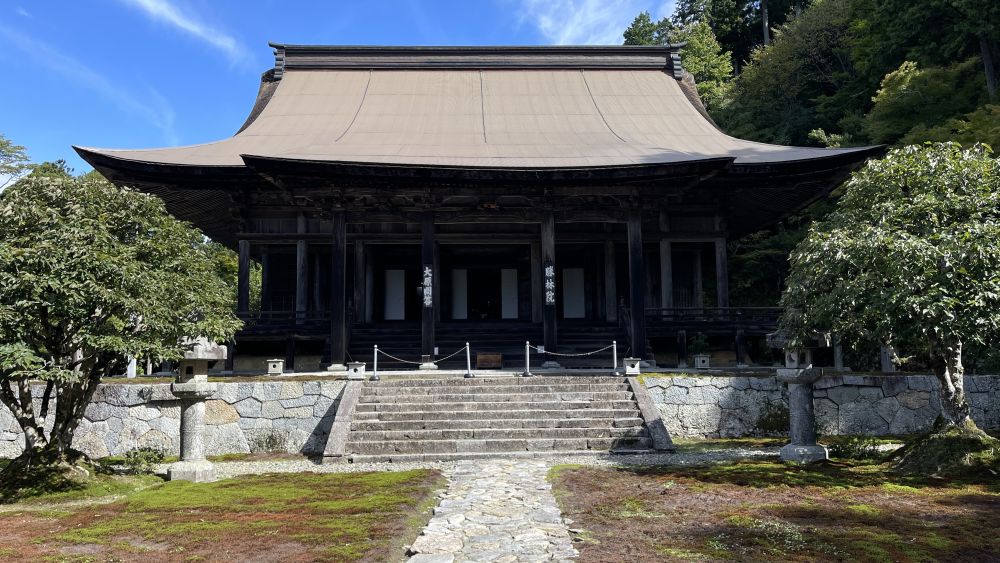
The temple’s principal image, a statue of Amida Nyorai carved in 1533, has an unusual feature: a white cord extends from the Buddha’s hand, left within reach so that visitors can hold it themselves. Known as the zen no tsuna (“cord of virtue”), it represents a direct, physical connection between Amida and the people who come to pray — a tangible expression of the wish for a peaceful passage to the Pure Land, still maintained today.
Temple Bell
Story
An Ancient Bell from the Heian Period
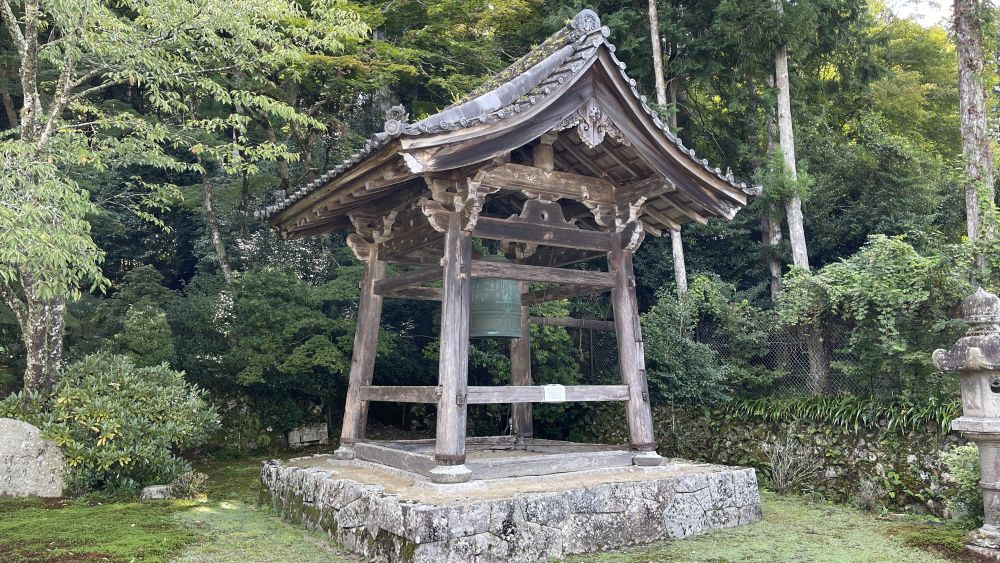
The bronze bell hanging in the temple grounds is believed to date from the early Heian period, making it one of the oldest bells in the region. It has been designated a National Important Cultural Property. Its decoration is simple but powerful, and even after more than a thousand years, its tone remains clear. Unlike the bells of most temples, which are rung daily, Shōrin-in’s bell sounds only on special occasions.
A Single Toll for the Departed
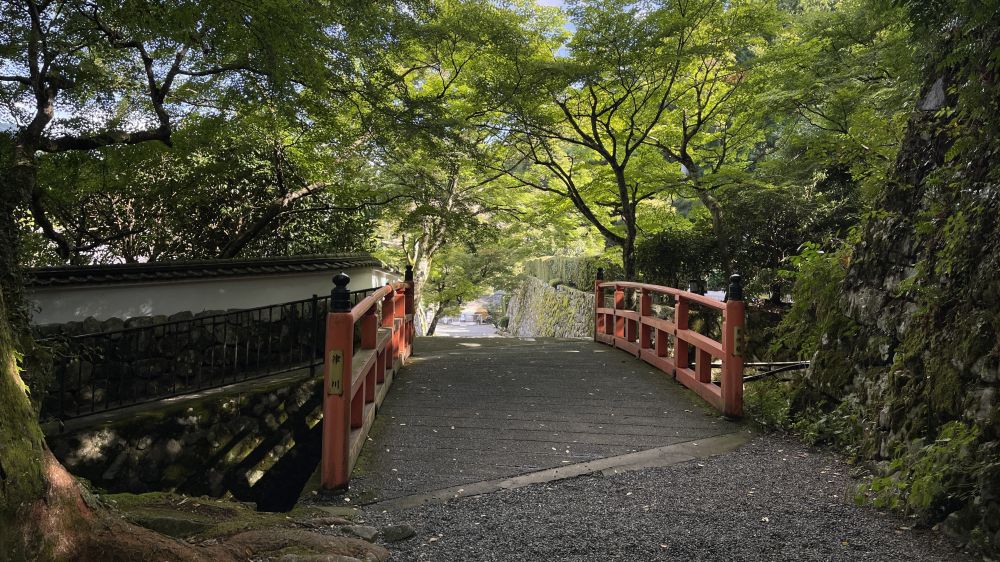
Shōrin-in’s bell is struck only for funerals in the local community. When a resident of Shōrin-in-chō, Raigō-in-chō, or Nagase-chō passes away, the coffin is placed at Raigō-bashi, the “Bridge of Welcoming.” From there, the zen no tsuna — the sacred cord connected to the Amida statue — is extended all the way to the coffin, and mourners hold strips of white cloth tied to it, symbolically linking themselves to the deceased. As the monks chant sutras, a male relative of the departed strikes the temple bell exactly once. The sound is believed to reach Amida Nyorai and guide the soul of the deceased to the Pure Land. This custom is said to date back to the Kamakura period and remains an exceptionally rare living tradition.
Access
Shourin-in Temple
Address
187 Shōrin-in-chō, Ōhara, Sakyō-ku, Kyoto City, Kyoto Prefecture